
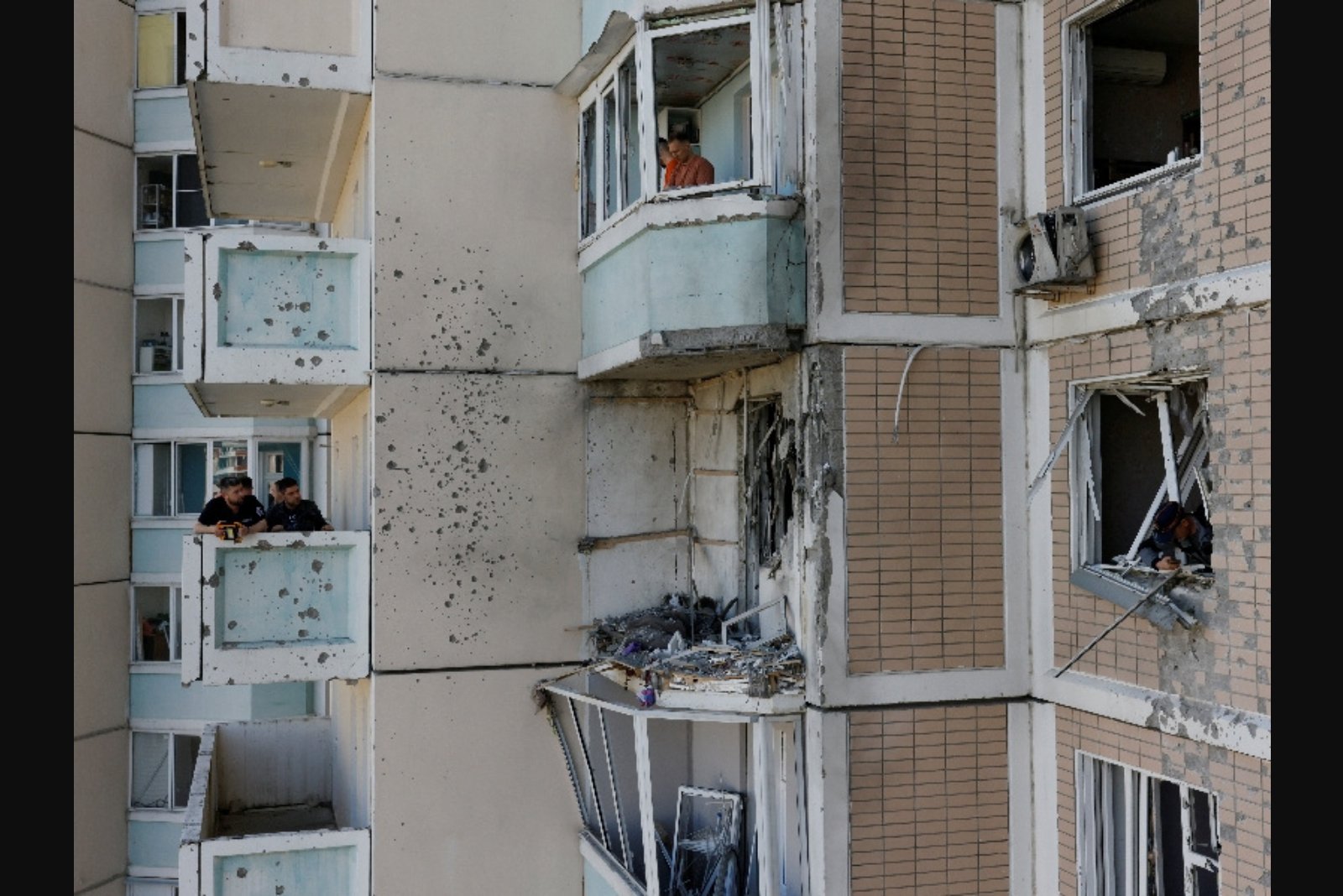
At least four people lost their lives after a sustained overnight drone assault struck areas in and around Moscow and the Belgorod region, local Russian officials said on Sunday. Authorities reported three deaths in the Moscow region and one in Belgorod, which borders northeastern Ukraine.
Russia’s defence ministry said by midday that air defences had downed in excess of 1,000 Ukrainian drones over Russian territory during the previous 24 hours. Moscow municipal and regional officials described widespread defensive operations and localized damage.
Ukraine’s president had warned of retaliation following what Kyiv described as Russia’s most intense drone and missile barrage on Kyiv in a two-day span since the conflict began more than four years ago. In a post on X, the Ukrainian president included footage showing a drone in flight, plumes of black smoke and emergency crews working to extinguish fires. He said: "Our responses to Russia’s prolongation of the war and its attacks on our cities and communities are entirely justified." He also stated that Ukrainian forces could reach targets over 500 km (310 miles) from the border despite dense air defence systems around Moscow, and added: "We are clearly telling the Russians: their state must end its war."
The Russian foreign ministry levelled an accusation that Kyiv was striking civilian targets. TASS quoted the ministry spokeswoman Maria Zakharova as saying: "To the sound of Eurovision songs, the Kyiv regime, financed by the EU, carried out yet another mass terrorist attack." Officials on both sides, however, deny intentionally targeting civilians.
Scope of the strikes and local damage
Moscow Mayor Sergei Sobyanin, cited by TASS, said air defences had intercepted 81 drones heading for the capital since midnight, calling it the largest attack on Moscow in more than a year. He reported 12 people wounded, primarily close to the entrance of an oil refinery, and said three houses were damaged. He added that the "technology" of the refinery itself had not been harmed.
Moscow regional Governor Andrei Vorobyov reported that a woman was killed when a home in Khimki, north of the capital, was hit, and that rescuers were searching the wreckage for another person. Two men were reported killed in the village of Pogorelki in the Mytishchi district. Vorobyov said several residential high-rises and infrastructure facilities sustained damage.
Moscow’s Sheremetyevo airport said debris from drones had fallen on airport grounds, but that the incident caused no damage to airport operations.
Context and tactical focus
Ukrainian forces have increased the frequency and reach of drone operations inside Russia in recent weeks, focusing on industrial targets including oil refineries, fuel depots and pipelines. Officials on both sides have framed strikes as attempts to degrade the other side's infrastructure, while publicly denying deliberate attacks on civilian populations.
Information about the attack is based on statements released by regional and national officials on both sides, including casualty counts, damage reports and claims about the number of drones intercepted.