
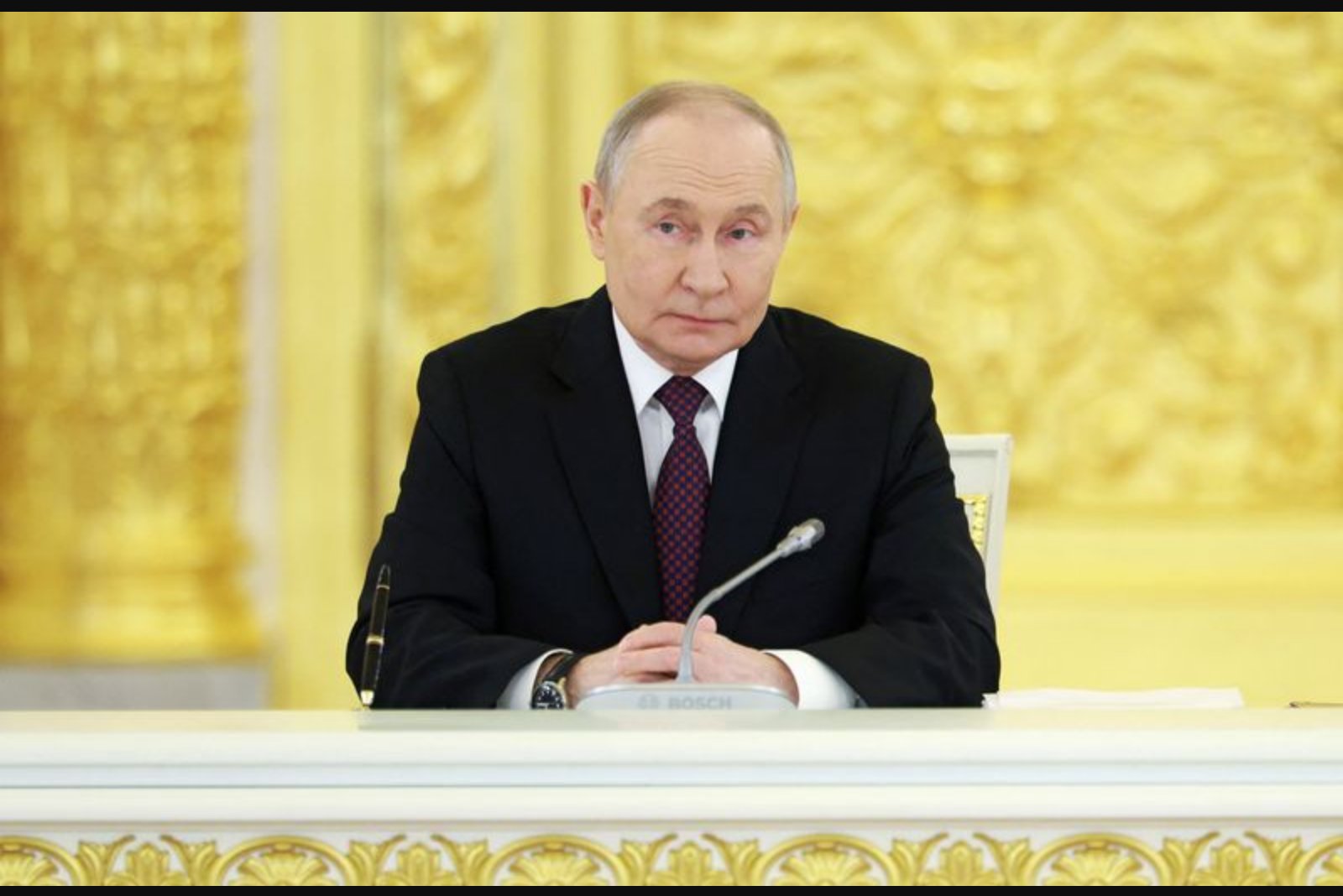
Moscow, March 3 - The Kremlin said on Tuesday that President Vladimir Putin will communicate Arab leaders' concerns to Iran over Tehran's strikes on oil infrastructure in the region, as the conflict involving Iran continued to expand.
On Monday, Putin conducted a string of telephone calls with leaders from four Arab Gulf states and proposed using Moscow's relationship with Iran - described as a strategic partnership - as a channel to attempt to de-escalate tensions.
Kremlin spokesman Dmitry Peskov told reporters that the president intended to press the point with Iranian counterparts. "Putin will certainly make every effort to contribute to at least a slight easing of tensions," Peskov said. He added that "yesterday's discussions with virtually all of his interlocutors focused on Putin conveying his deep concern about the strikes on their infrastructure to our colleagues in Iran, taking advantage of the dialogue we maintain with the Iranian leadership."
Market reaction was evident on Tuesday, when oil prices rose for a third consecutive day. The upward movement followed Iranian strikes directed at energy infrastructure in Gulf countries and attacks on tankers in the Strait of Hormuz, actions the Kremlin said were in response to U.S. and Israeli operations.
Over the weekend, Putin sent a note of condolence to President Masoud Pezeshkian expressing sympathy to the family of Iranian Supreme Leader Ayatollah Ali Khamenei, but the Kremlin has not publicised any additional contact with senior Iranian officials since the strikes started on Saturday.
Peskov also noted that Putin has not held a conversation with U.S. President Donald Trump, and that there are no plans for such a call at this time.
Context and implications
The Kremlin framed its role as a potential intermediary, citing sustained channels of dialogue with Tehran. The immediate market impact noted in this sequence of events was confined to oil prices, which reacted to the reported strikes on energy assets and maritime targets.
Beyond the Kremlin statements and market moves, the published information is limited to the telephone contacts, the condolence note, the reported strikes beginning on Saturday, and Peskov's remarks on the absence of a Putin-Trump conversation.
Reporting limitations
The Kremlin has not disclosed further direct contacts with senior Iranian leadership since the weekend strikes, and no additional diplomatic engagements or outcomes have been reported.