
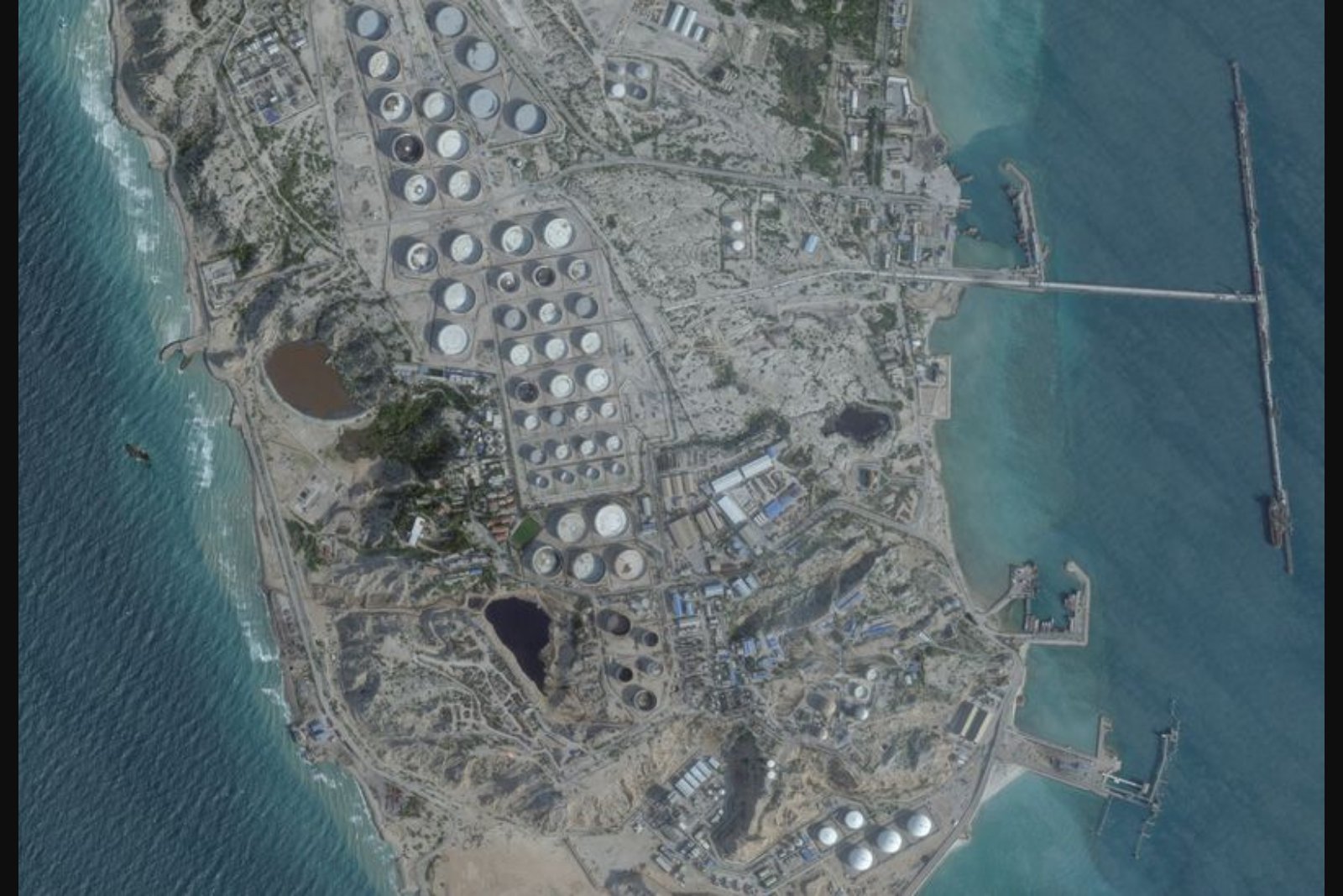
U.S. operations on Friday that destroyed military targets on Kharg Island have drawn attention to the strategic role the island plays in Iran's oil exports. Kharg handles roughly 90% of the country's seaborne shipments, making it a focal point for both market participants and Tehran's national security calculations.
President Donald Trump posted on social media that the U.S. "totally obliterated every MILITARY target" on Kharg and added a warning that oil infrastructure could be targeted if Iran continues to interfere with shipping in the Strait of Hormuz. The strikes come amid heightened concern about the integrity of Kharg's network of pipelines, loading terminals and storage tanks, any impairment of which could remove meaningful volumes from global markets.
Data from TankerTracker.com and Kpler indicate Iran has continued to ship crude at a pace of between 1.1 million and 1.5 million barrels per day following a period of increased output ahead of the February 28 launch of the war by Israel and the U.S. Markets were looking for signs that the strikes had harmed Kharg's facilities because even limited disruptions there could further tighten an already volatile global supply situation.
Analysts warn of substantial potential market impact if Kharg's oil-handling capability were materially degraded. "You take out Kharg infrastructure, then you take 2 million bpd out of the market for good - not until the Straits get fixed," said Dan Pickering, chief investment officer for Pickering Energy Partners, summing up the scale of risk traders are weighing.
Iran's armed forces issued a public statement on Saturday, reported by Iranian media, that any attack on the country's oil and energy infrastructure would trigger strikes on energy facilities owned by oil companies cooperating with the U.S. in the region. The comment signals Tehran's intent to link defensive action to the protection of its export outlets.
Market-watchers also flagged the risk of escalation. "I'm very concerned it elevates the temperature and Iran has less to lose and it seems to escalate. Iran when backed into a corner is highly emboldened to act," said Patrick De Haan, an analyst with U.S. fuel price tracker GasBuddy.
Complicating the outlook, Iran has all but shut shipping through the Strait of Hormuz, a chokepoint that channels about 20% of global oil flows and sends most of that supply to Asia. Kharg sits 16 miles (26 km) off Iran's coast and about 300 miles (483 km) northwest of the Strait of Hormuz. The island's surrounding waters are deep enough to allow very large crude carriers to berth, vessels that cannot approach Iran's shallower mainland terminals.
Much of the crude leaving Kharg is destined for China, the world's largest crude importer. Kpler data show Iranian oil accounted for 11.6% of China's seaborne imports so far this year, with independent refiners in China attracted to Iranian barrels by what had been steep discounts because of U.S. sanctions. Kpler figures also show Iran exported 1.7 million bpd of crude so far this year, of which 1.55 million bpd moved through Kharg.
Prior to the conflict, Kpler reported Iran's exports rose to about 2.17 million bpd in February, and a peak shipping week of 3.79 million bpd was recorded in the week of February 16. These flows underscore how pivotal Kharg has been to Iran's ability to increase seaborne exports in recent weeks.
Kharg's on-island storage capacity is roughly 30 million barrels, and JP Morgan, citing Kpler data, estimated the island held about 18 million barrels of crude as of early March. Satellite imagery reviewed by TankerTrackers.com showed multiple very large crude oil tankers loading at Kharg on Wednesday, illustrating the island's role as a major export hub.
Iran ranks as the third-largest producer within OPEC, supplying about 4.5% of global oil. The country's combined liquids output is made up of roughly 3.3 million bpd of crude plus about 1.3 million bpd of condensate and other liquids.
For traders, refiners and regional governments, the intact operation of Kharg's pipeline and terminal network is a central variable in near-term market stability. Observers will be watching for official assessments and satellite imagery to determine whether the U.S. strikes inflicted damage that curtails the island's export capacity, and whether Tehran follows through on threats against energy infrastructure tied to companies cooperating with the U.S.