
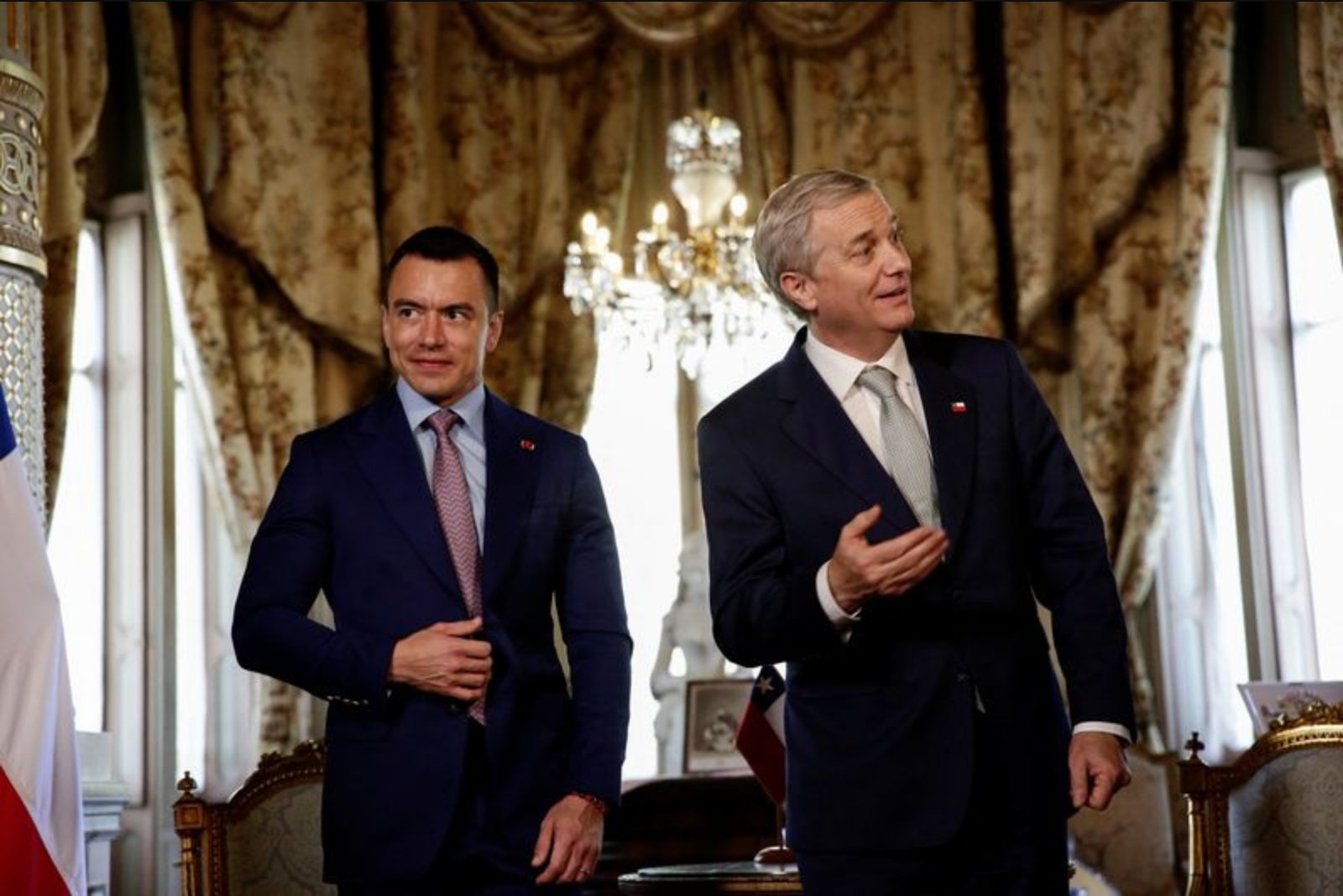
Jose Antonio Kast assumes the presidency this week after winning office on a platform that emphasised economic expansion, deregulation and reductions in public spending. Local financial markets had rallied following his December victory, but recent global developments linked to the Iran war have injected fresh volatility into commodity prices and broader markets - challenges the new administration will need to manage from day one.
Members of Kast’s economic team told reporters that there are currently no economic contingency plans in place, but they did not elaborate on how the recent market shocks might affect their stated agenda.
Election promises and a shifting backdrop
Kast campaigned as an 'emergency government' focused on swift fixes to issues he said mattered to Chileans. Kenneth Bunker, a political analyst and academic at the University of San Sebastian, noted the centrality of economic growth to that message. "(Kast) was elected on a promise of being an ’emergency government’ that was going to fix things that mattered to Chileans quickly," Bunker said, adding that while the president's priorities are likely to remain unchanged, real-world constraints - notably movements in the exchange rate, inflation and economic growth - could limit the speed and scope of implementation.
Bunker warned that if the government fails to secure the growth it anticipates, several elements of its reform and spending plans could be postponed.
Commodity swings and fiscal exposure
Chile’s economy is highly exposed to swings in international commodity markets. As the world’s largest copper producer and the second-largest lithium producer, the country depends heavily on prices for those exports. Copper, Chile’s dominant export and its main source of fiscal revenue, climbed from under $10,000 per ton last June to a peak of $13,618 at the end of January. The outgoing government has noted that every cent increase represents an additional $27 million to $35 million for the Chilean treasury.
Prior to the Iran war, forecasts suggested Chile could secure up to $4 billion in extra revenue from rising copper prices. Since those peaks, however, the metal has become more volatile, sliding as much as 8% from recent highs before recovering somewhat - reaching $13,098 as of Tuesday.
At the same time, Chile imports nearly all of its oil, which leaves the economy vulnerable to upward pressure on energy costs. Oil prices climbed to nearly $120 a barrel after the outbreak of the Iran war, exacerbating concerns about inflation and the broader economic impact of rising commodity costs.
Inflation risks and external-shock sensitivity
Analysts are warning that the geopolitical shock could push inflation higher. In a report surveying emerging markets, Oxford Economics said the Iran conflict has "increased inflation risks considerably." Their oil shock simulation identified Central and Eastern Europe, Chile and India as among the economies most affected, with Q2 inflation estimates rising between 0.4 percentage points and 1.7 percentage points.
Marcela Vera, an economist at the University of Santiago, stressed Chile's vulnerability to external disturbances. "(Chile) is very sensitive to external shocks, very sensitive, whether they be geopolitical, military, or fluctuations in global markets," she said, noting that the country's economic model relies heavily on primary exports and benefits from relatively few financial protection barriers and many free trade agreements.
Vera added that the economic impact of a prolonged conflict would extend beyond oil prices to include higher logistics costs and a stronger pass-through to the dollar - effects that could become chronic if the war endures for months.
Market reactions and policy buffers
Following the election the benchmark IPSA stock index continued its upward trajectory and reached a peak in late January, marking about a 65% gain from a year earlier. The Chilean peso had also strengthened since July on the back of robust copper prices, touching multiyear highs in early February.
Those gains have reversed somewhat as global uncertainty and rising oil prices have taken their toll. The stock market has fallen more than 10% from its recent highs, while the peso has depreciated roughly 5% amid the turbulence.
Chile does maintain a fuel stabilisation mechanism - MEPCO - that operates on three-week cycles and helps smooth out temporary spikes in fuel costs. Still, economists caution that while MEPCO can mitigate the immediate impact of higher oil prices, it does not fully eliminate pass-through to inflation and broader costs in the economy.
Reflecting that dynamic, a JPMorgan report noted that MEPCO "does not eliminate pass-through effects" and consequently raised its inflation forecast by 20 basis points to 3.6% for December, warning that risks were "tilted to the upside."
Outlook for the new administration
The incoming government faces a short-term task of navigating a volatile international environment while trying to deliver on an agenda that assumes stronger economic growth. Policy options, timing and fiscal leeway may be constrained by shifts in copper revenues, rising energy costs and exchange-rate movements. How the administration responds to those pressures will determine whether its campaign commitments can be advanced on the timetable it envisages - or whether some plans will face delays pending more stable global conditions.