
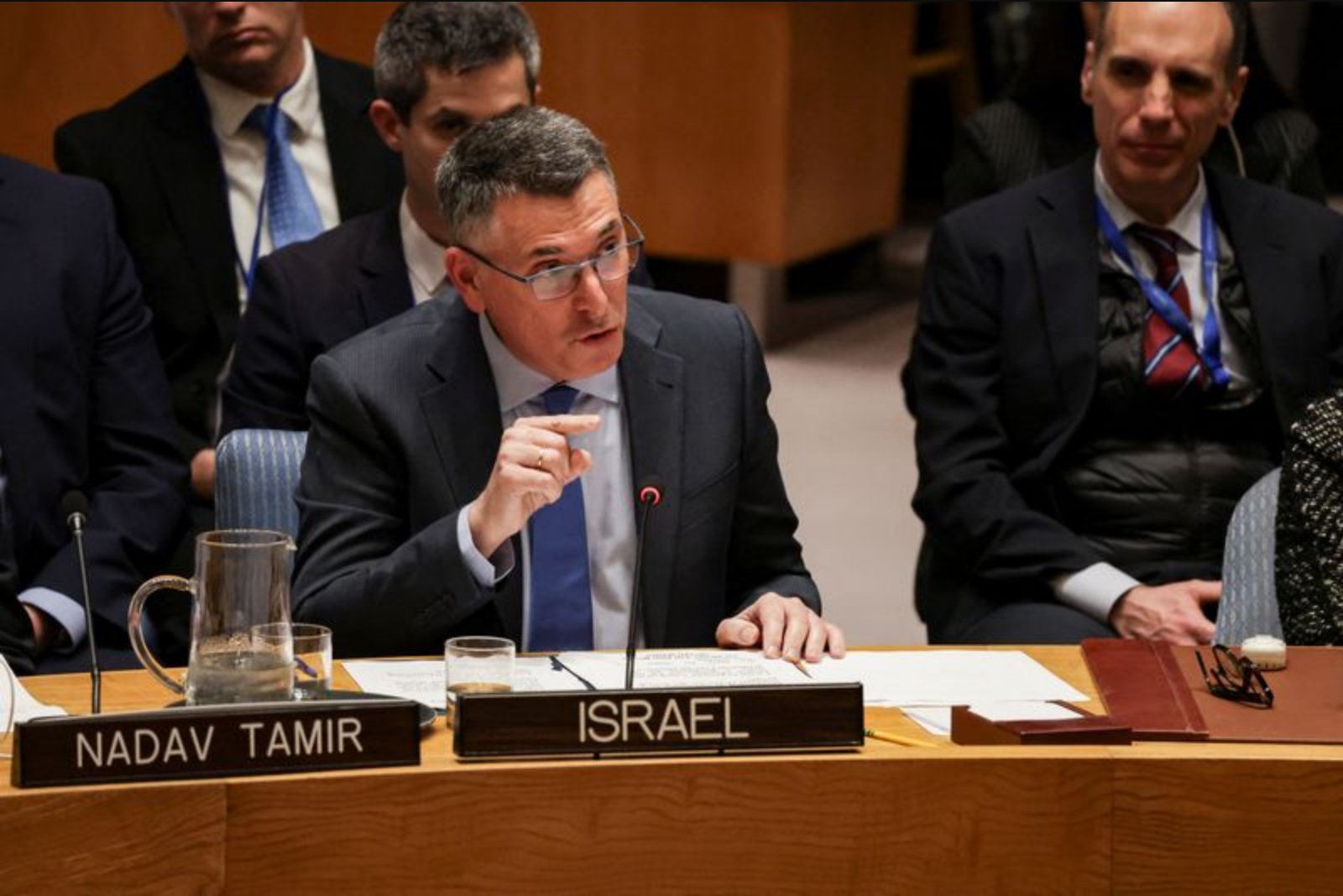
ZAZIR, northern Israel, March 15 - Israeli Foreign Minister Gideon Saar on Sunday denied media reports suggesting Israel was facing a shortage of ballistic missile interceptors after more than two weeks of hostilities marked by repeated attacks attributed to Iran and Iran-backed Hezbollah in Lebanon.
The claims, which a U.S. news website published on Saturday and attributed to an unnamed U.S. official, said Israel had informed Washington it was running critically low on interceptors. Asked directly about that account, as well as a separate Israeli media report that suggested Israel was preparing to hold direct talks with Lebanon, Saar replied: "For both questions, the answer is no."
An Israeli military source also rejected the suggestion of a shortage, telling reporters that the armed forces were equipped to handle an extended military campaign.
Independent figures cited by Israeli research bodies show a significant volume of strikes since U.S. and Israeli actions against Iran on February 28. The Institute for National Security Studies at Tel Aviv University has recorded close to 300 ballistic missiles fired at Israel by Iran, alongside "hundreds of drones," according to the institute's tally referenced by officials. The Israeli military has noted that about half of those missiles carried cluster munitions and that daily missile launches have fallen markedly from the levels seen in the conflict's first days.
Hezbollah has engaged in rocket fire at Israel from Lebanon since March 2, with the Lebanese group stating its actions were in response to the killing of Iran's supreme leader at the outset of the U.S.-Israeli campaign against Iran.
Separately, Israeli media reported on Saturday that direct negotiations between Israel and Lebanon could take place in the coming days, citing two sources described as having knowledge of the matter. An Israeli radio report on Sunday added a related detail, saying that Ron Dermer, a close confidant of Prime Minister Benjamin Netanyahu and a former cabinet minister, visited Saudi Arabia last week to explore a new diplomatic initiative that could lead to talks with Lebanon once current military operations against Hezbollah conclude. A spokesman for the prime minister did not immediately reply to a request for comment.
Energy Minister Eli Cohen, interviewed on Army Radio on Sunday, did not confirm the reported talks with Lebanon and expressed skepticism that a deal could be achieved before the Lebanese government takes decisive steps against Hezbollah. Cohen also said that Israel's security cabinet - the compact group of senior ministers who make major security decisions - had discussed revoking the 2022 Israel-Lebanon maritime border agreement, though he noted no formal action has been taken.
The denials from senior Israeli officials follow a period of intensified cross-border exchanges and public reporting that raised questions about military inventories and diplomatic openings. Authorities have publicly countered the notion of a critical shortfall in interceptors and stressed preparedness for a protracted campaign, while the prospect of direct talks with Lebanon remains subject to confirmation and contingent on broader political and security developments.
Key points
- Israeli Foreign Minister Gideon Saar denied reports that the country is critically low on ballistic missile interceptors and also rejected reports of imminent direct talks with Lebanon.
- Independent and military tallies indicate nearly 300 ballistic missiles and hundreds of drones have been fired at Israel since late February, with around half of the missiles reported to have carried cluster munitions.
- Israeli officials signaled that the military is prepared for a prolonged campaign and that discussions have taken place about the 2022 Israel-Lebanon maritime border deal, though no action has been taken.
Risks and uncertainties
- Continued missile and drone launches from Iran and rocket fire from Hezbollah maintain an elevated security risk - sectors such as defense suppliers, insurance, and regional shipping could be sensitive to ongoing hostilities.
- Uncertainty around whether direct talks between Israel and Lebanon will occur leaves diplomatic outcomes unresolved - energy and maritime interests tied to the 2022 border agreement could face ambiguity until positions are clarified.
- Public conflicting reports about military inventories versus official denials create information uncertainty that may affect market and policy assessments related to defense readiness.