
Summary
Israeli airstrikes on Beirut escalated sharply, killing at least 10 people and destroying a 10-storey building near the city centre amid the third week of fighting with Iran-backed Hezbollah. At the same time, Israeli aircraft struck bridges over the Litani River that link southern Lebanon to the rest of the country, destroying at least two, the Lebanese state media reported. The Israeli military said the bridge strikes were intended to prevent Hezbollah from moving fighters and weapons. The confrontation has produced heavy casualties inside Lebanon, mass displacement, and mounting fears of a broader ground operation.
Beirut strikes and the central city impact
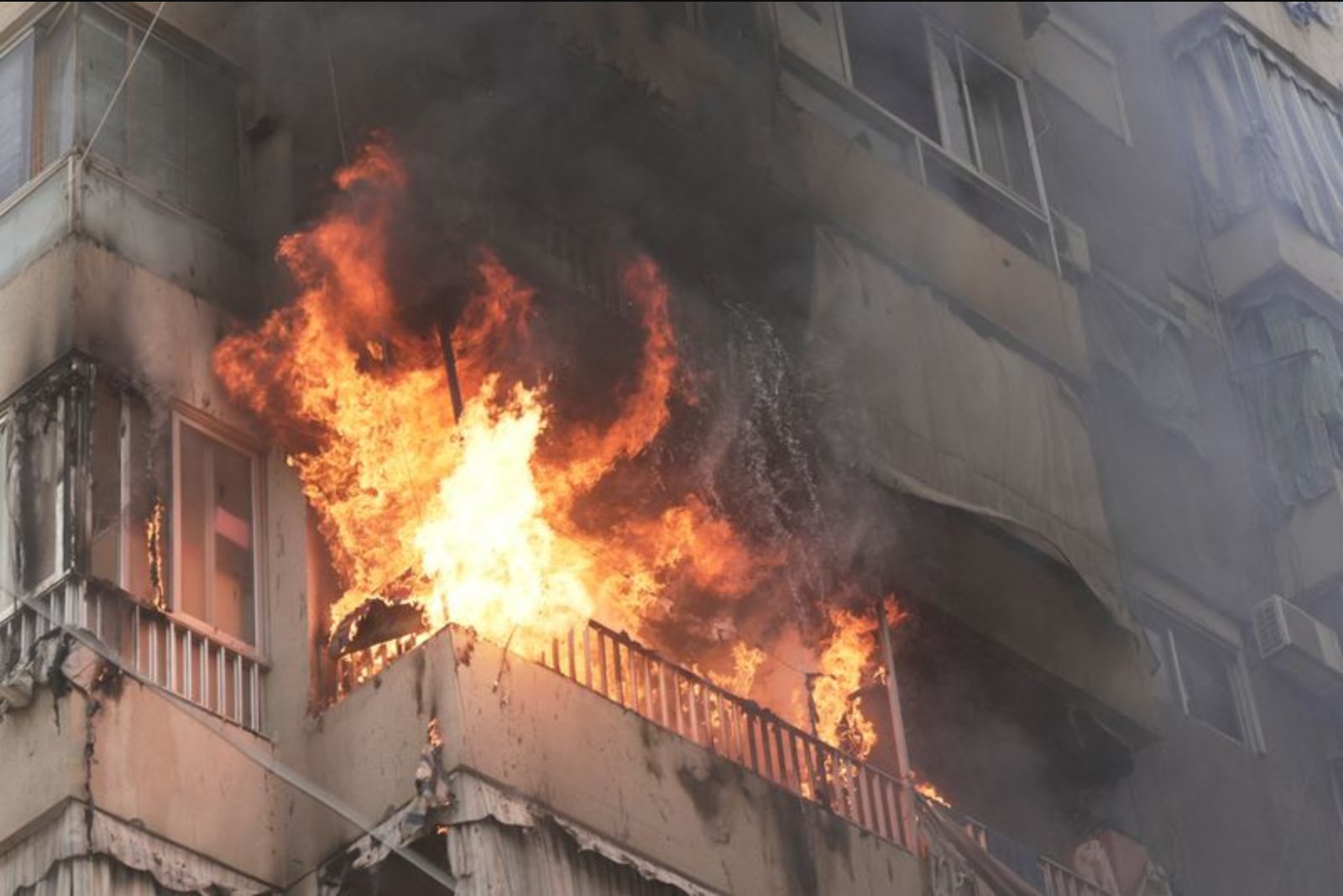
Multiple air raids in central Beirut hit four different buildings over an eight-hour period, including a 10-storey structure that was levelled near the city centre. Lebanese authorities reported at least 10 fatalities from the Beirut strikes. The targeted areas are within walking distance of the Lebanese government headquarters and are historically mixed neighbourhoods where many Shi’ite Muslims live.
Hezbollah-run media reported the death of one of its broadcasters, Mohammad Sherri, and his wife in one of the strikes in the Zuqaq al-Blat neighbourhood. Witnesses and residents described scenes of destruction and people fleeing after warnings and strikes.
"It’s just an operation to hurt, to terrify people, to terrify children. What is there here?" said Abu Khalil, a Beirut resident who helped neighbours leave the Bachoura district after a military warning preceded the strike that levelled the 10-storey building.
Bridges over the Litani - severing southern Lebanon
In a further escalation, Israeli warplanes struck bridges spanning the Litani River that connect southern Lebanon to the rest of the country. Lebanese state media said at least two bridges were destroyed. Israel’s military explained the strikes as an effort to prevent Hezbollah transferring fighters and weapons and reiterated an earlier warning calling on residents to leave the south.
Israeli Defense Minister Israel Katz said the military had destroyed two additional bridges over the Litani that he said were being used by Hezbollah to smuggle weapons and operatives. He described the action as "a clear message to the Lebanese government: the State of Israel will not allow such a reality." The military had already destroyed a bridge in southern Lebanon on Friday and distributed leaflets in Beirut warning of Gaza-scale devastation.
There are growing fears inside Lebanon that cutting southern Lebanon off from the rest of the country could create conditions for a large-scale Israeli military operation into Lebanese territory. An Israeli military officer commanding troops operating in Lebanon said his forces are "prepared to do all kinds of operations" if ordered to establish positions as far north as the Litani, nearly 30 kilometres north of the Israeli border.
Casualties, hospitals and rescuers under strain
The toll inside Lebanon has been severe. The conflict has become the deadliest spillover of the wider U.S.-Israeli confrontation with Iran since the Iran-backed group fired at Israel in support of Tehran on March 2. Lebanese authorities say more than 900 people have been killed in Lebanon and about 1 million displaced, with thousands more wounded.
At the Jabal Amel University Hospital in the southern port city of Tyre, Dr. Wael Mroueh described the nature of the injuries staff were treating. "Victims are coming without lower extremities, (needing a) craniotomy, with open wounds and all those things together. The victim is coming torn up and in bad shape," he said. As strikes around Tyre intensified, doctors had initially sheltered with their families at the hospital but, with roads at risk of closure, they began to leave north with relatives.
Lebanon’s health ministry reported that at least 40 medical workers have been killed in Israeli strikes on Lebanon since March 2. A strike on Tuesday night wounded 11 rescuers in the south and badly damaged the civil-defence centre, according to its head, Hussein Fakih.
Military claims, counterclaims and financial targets
Israeli forces said they carried out preventative strikes that blunted what the military described as a planned large rocket attack by Hezbollah. Lebanese security sources said some 100 rockets were fired in the exchange that preceded the escalation in Beirut. Overnight waves of strikes targeted Hezbollah infrastructure across Lebanon, the Israeli military said.
In a military statement, Israel said it had "struck assets" of Al-Qard Al-Hassan, a financial institution run by Hezbollah, in Beirut, and that the Israeli navy had targeted Hezbollah militants in the city, without specifying precise locations. Human Rights Watch has previously determined that strikes on branches of Al-Qard Al-Hassan during an earlier conflict in 2024 amounted to war crimes, saying Hezbollah-affiliated civilian institutions are not lawful military targets.
Ground activity and international monitoring
The United Nations peacekeeping force in southern Lebanon reported it had noted "heavy exchanges of fire, intensified air and ground activity, and increased presence of Israeli forces inside Lebanese territory" overnight. Those observations underline the heightened military activity on both sides and the intensifying risk to civilians and critical infrastructure.
Operational and humanitarian consequences
The destruction of bridges and repeated strikes close to central government precincts and residential neighbourhoods have immediate humanitarian and logistical consequences. Severing transport links from the south limits movement for civilians, complicates medical evacuations, and constrains the delivery of aid. The damage to civil-defence infrastructure and the casualties among medical and rescue personnel reduce local capacity to respond to further attacks.
So far, no fatalities have been reported in Israel from Hezbollah rocket and drone attacks, though the Israeli military said two of its soldiers were killed in southern Lebanon.
What remains uncertain
While military statements outline the tactical rationale - disrupting movement across the Litani and degrading Hezbollah infrastructure - it remains unclear how sustained strikes and bridge destruction will affect the wider dynamics on the ground, including displacement routes, the safety of civilians remaining in the south, and whether further ground orders will be issued to extend positions northward toward the Litani.
This analysis draws on statements from Lebanese authorities, hospital officials, military spokespeople, and reports from international observers to provide a consolidated account of the strikes, their immediate human impact, and the risks they present to civilian life and infrastructure in Lebanon.