
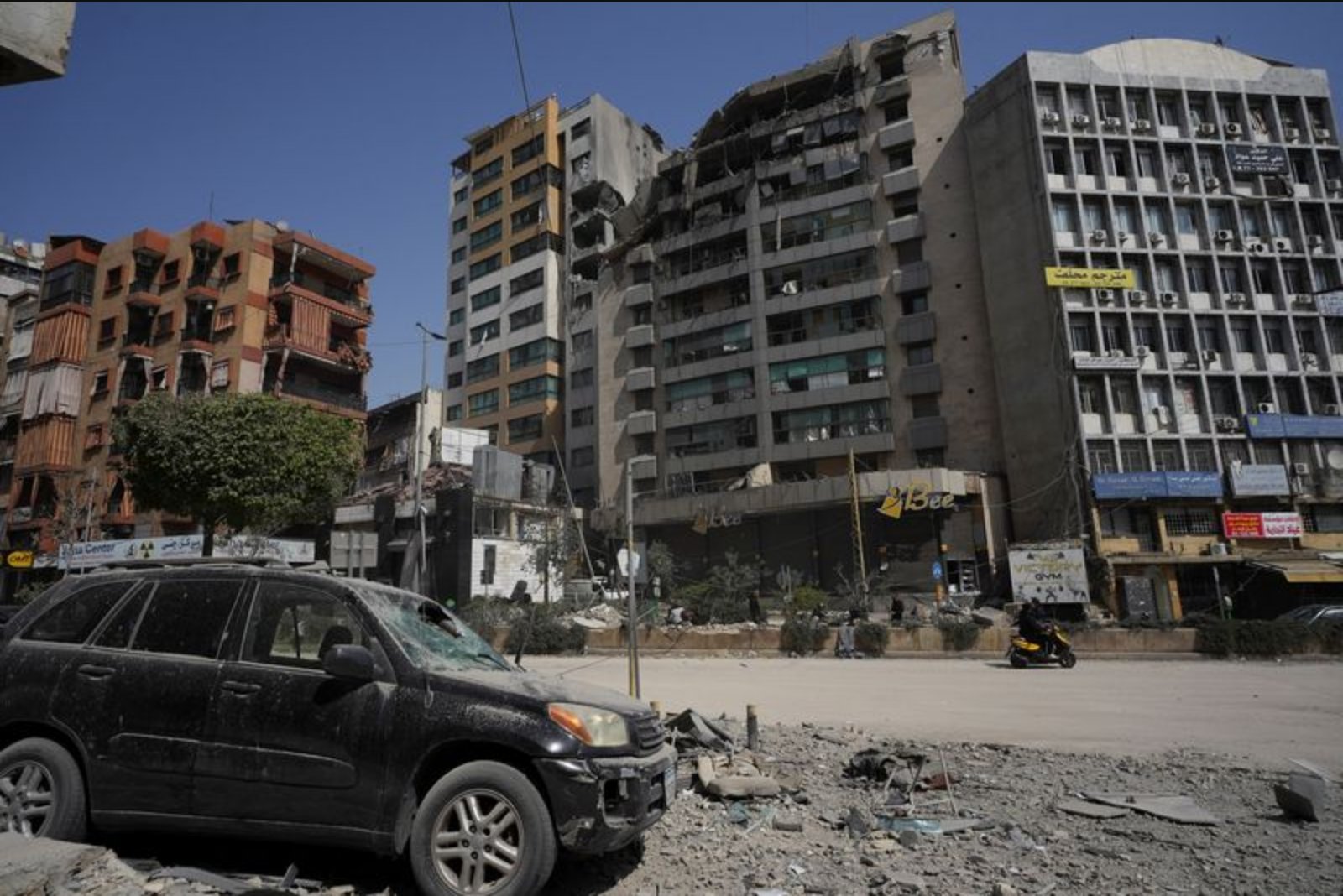
Israeli airstrikes struck buildings in the heart of Beirut on Thursday, including targets in the Bachoura neighbourhood and another near the Grand Serail, the Lebanese government's headquarters, intensifying Israel's campaign against Iran-backed Hezbollah and deepening Lebanon's involvement in the wider Middle East conflict.
The strike in Bachoura struck at about 5:30 p.m. (1530 GMT), roughly 1 km (mile) from the Grand Serail, according to accounts of the incident. Prior to that attack, the Israeli military issued a warning to residents that they were near a Hezbollah facility it intended to target. A subsequent warning was issued for residents in Zhukaq al-Blat before an additional strike that hit a building even closer to the Serail.
Earlier on Thursday, a pre-dawn airstrike hit a seafront sidewalk where dozens of displaced families had erected tents and were sleeping outdoors, killing 12 people, the Lebanese health ministry said. Witnesses at the scene included displaced residents who voiced shock and despair. One man identifying himself as Abu Ali asked, "Who’s in these tents? There are children, elderly people, and women in them. Israel... what justification will it create for last night’s strike?" Another displaced man at the scene, Mahmoud Kassem, said: "My heart is dead."
The strikes on Beirut follow an escalation in exchanges between Israel and Hezbollah. A day earlier, Hezbollah launched what has been described as its largest rocket salvo of the conflict. Israel's defence minister said the military had instructions to broaden the campaign, and Israel's military chief described operations in Lebanon as likely to be extended.
"This operation will not be short. We will bring additional troops and capabilities to the north ... We continue moving forward," Israeli military chief Eyal Zamir said.
Hezbollah and Iran have been firing at Israel with rockets and drones on a daily basis since the group opened fire on March 2, an action it said aimed to avenge the killing of Iran’s supreme leader. The latest large-scale volley, late on Wednesday, prompted heavy Israeli strikes on the Hezbollah-controlled southern suburbs of Beirut. The Israeli military said Hezbollah and Iran conducted a combined attack, firing 200 rockets and 20 drones as Iran launched ballistic missiles towards Israel; Iran’s Revolutionary Guards said they had carried out a joint operation with Hezbollah.
Zamir said that only two launches out of hundreds fired at Israel on Wednesday night had struck Israeli territory.
On the ground in Lebanon, the military campaign has concentrated on the south and east of the country and the Hezbollah-controlled southern suburbs of Beirut. Lebanese authorities say the toll from Israeli attacks has reached 687 people, including 98 children, 62 women and 18 medics. Earlier descriptions of the casualties characterized the number as nearly 700.
The military offensive has prompted mass displacement. Israel has ordered evacuations covering southern Lebanon and expanded its instructions on Thursday to include additional areas of the south. Those evacuation orders now cover around a tenth of Lebanon and have prompted more than 800,000 people to flee their homes, according to authorities.
"We promised quiet and security to the communities of the north, and that is exactly what we will deliver," Israeli Defence Minister Israel Katz said at a meeting with senior military officials. Katz also warned Lebanese President Joseph Aoun that if the Lebanese government could not prevent Hezbollah from attacking Israel, "we will take the territory and do it ourselves," according to a statement issued by Katz's office.
Lebanon’s cabinet has moved to rein in armed non-state activity, having last week outlawed any military activities by Hezbollah, and officials said last year the country aims to establish a state monopoly on arms. In the diplomatic arena, Lebanese Foreign Minister Youssef Raggi summoned the Iranian charge d’affaires over the joint attack, a source familiar with the matter said.
U.N. officials highlighted the human cost of the offensive. Imran Riza, U.N. resident coordinator in Lebanon, told Reuters: "The cost on civilians is too high," and urged U.N. member states to press the parties to respect international humanitarian law. He added that displacement was expected to rise and that there were no current signs of the situation calming.
The conflict has included targeted strikes that Israel says have killed members of Iran’s Quds Force in Lebanon, including an attack on a hotel in Beirut’s seafront Raouche district on Sunday.
As combat operations continue, warnings to civilians, expanding evacuation orders and stark casualty figures underscore the widening toll of the war and the potential for prolonged military engagement in Lebanon and around Israel's northern frontier.
Summary
Israeli airstrikes struck central Beirut near the Grand Serail and in the Bachoura neighbourhood, after Hezbollah and Iran conducted a large-scale rocket and drone attack. Israeli officials signalled a sustained and expanded campaign in Lebanon. The strikes, concentrated in southern and eastern Lebanon and in Hezbollah-controlled areas of Beirut, have caused hundreds of deaths and displaced more than 800,000 people. U.N. officials warned the civilian cost is high and expected displacement to increase.
Key points
- Israeli strikes hit buildings in central Beirut, including the Bachoura neighbourhood about 1 km (mile) from the Grand Serail; warnings were issued to residents prior to strikes.
- The Lebanese health ministry reports 687 people killed by Israeli attacks, including 98 children, 62 women and 18 medics; earlier descriptions put the toll at nearly 700.
- Evacuation orders now cover roughly a tenth of Lebanon and have displaced more than 800,000 people; U.N. officials warn civilian costs are high and displacement is likely to rise.
Risks and uncertainties
- Escalation risk - Continued exchanges between Israel, Hezbollah and Iran raise the prospect of further military escalation in Lebanon and across Israel's northern frontier, with implications for regional stability.
- Civilian humanitarian risk - Large-scale displacement and concentrated strikes in populated areas increase the potential for more civilian casualties and strain on humanitarian response capacity.
- Political and territorial uncertainty - Israeli statements that it may act if Lebanon's government cannot prevent Hezbollah attacks create uncertainty over territorial control and governance in affected areas.