
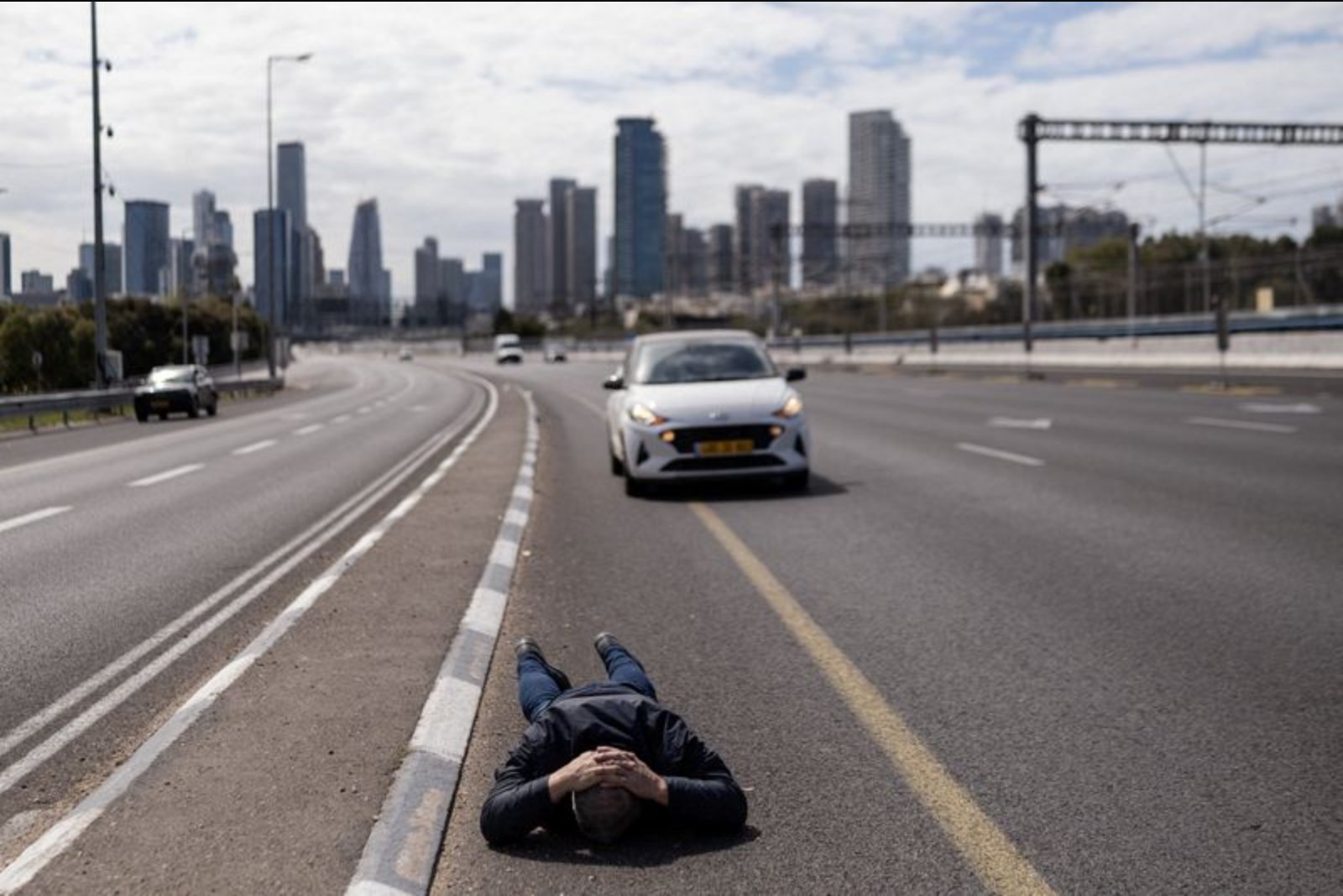
Iran is pursuing a strategy that rests on attrition and economic disruption rather than seeking a swift military victory. The approach relies on sustained missile and drone strikes, pressure on key energy routes and actions intended to force a political response from Washington by increasing costs across regional and global markets.
At the center of this campaign are the Islamic Revolutionary Guards Corps (IRGC), which sources inside Iran say have taken direct operational control. The Guards are reported to be managing the battlefield, implementing contingency plans that were prepared ahead of the conflict and selecting targets to maximise strategic and economic impact.
An internal power shift appears to have accompanied the military posture. According to Iranian insiders, the IRGC played the decisive role in elevating Mojtaba Khamenei as supreme leader following the opening U.S.-Israeli strikes that killed Ayatollah Ali Khamenei. Observers say this development underscores the Guards’ enhanced influence as kingmakers within the state.
Analysts describe Iran’s posture as existential and all-encompassing. "For them, they are waging an existential fight. This is an all-out war," said Fawaz Gerges of the London School of Economics. He added that Iran’s leadership views its survival as being at stake and is willing to accept wide-ranging destruction in pursuit of survival.
Alex Vatanka, a senior fellow at the Middle East Institute who specialises in Iranian politics, likened Tehran’s position to that of an injured animal: more dangerous because it is wounded. Those assessments reflect the mindset behind the escalation of strikes across the Gulf region, which have targeted energy hubs from Qatar to Saudi Arabia with the explicit objective of driving up costs for neighbours, for Europe and for the United States.
U.S. political messaging has been resolute. U.S. President Donald Trump told Republican lawmakers on Monday that the military campaign would continue until Iran is "totally and decisively defeated" and predicted the conflict would end soon. He added that once the U.S. military operation concludes, Tehran would lack weapons to threaten the United States, Israel and U.S. allies for an extended period.
Iranian planners say they expected a confrontation with Washington and Israel and had prepared a layered response long before hostilities began 11 days ago. With limited options remaining, Tehran appears to be executing those plans, converting the conflict into a gruelling war of attrition designed to exhaust adversaries politically and economically.
Operational and domestic consequences
The IRGC’s dominance over military strategy has translated into changes beyond kinetic operations. Insiders describe measures that suggest preparation for sustained wartime conditions. For instance, goods that previously lingered at ports for weeks are now being cleared promptly, with administrative formalities deferred. Officials say this is part of a shift toward a war economy to ensure supply chains continue to operate under stress while consolidating IRGC control over state functions.
Maintaining internal cohesion is crucial to the leadership. Observers and contacts inside Iran report no widespread protests, no prominent elite defections and no obvious fractures within the ruling establishment so far. One insider depicted Tehran as a city under near-constant bombardment yet still functioning: "The windows shake day and night," the person said. "But life goes on." Shops and banks remain open, supplies are available and most residents have not fled the capital.
Far from eroding support for the state, the strikes may be hardening national solidarity. The same insider noted that despite long-standing grievances with the government, a surge in unity is emerging as infrastructure is hit and discussion of potential internal insurgencies gains visibility. "People are not prepared for Iran to disintegrate," the person said, and suggested that sentiment may be extending the leadership’s timeframe for response: "I don't know if the regime will survive in the long term. But for the next couple of weeks, it will not collapse."
How long can the campaign continue?
A central unknown in the conflict is the longevity of Iran’s missile campaign, which analysts say forms the backbone of Tehran’s strategy. U.S. officials assert that a large share of Iran’s missile arsenal has been destroyed, while regional sources estimate that Tehran may still retain more than half of its pre-war stockpile. If that latter estimate is accurate, it would imply Iran could continue launching missiles for several more weeks.
Mohannad Hage Ali, a senior fellow at the Carnegie Middle East Center, said the timeframe for sustained missile launches is a pivotal variable. Those weeks could be consequential as economic pressures accumulate at home in the United States and among its allies, and as energy markets respond to continued disruption.
The Guards’ operational reach also extends into governance and economic management. The expedited clearance of goods at ports and the prioritisation of logistics are described by officials as steps to maintain supply lines and normalcy in essential services while under attack, ensuring that the state’s administrative apparatus continues to function amid hostilities.
Strategic calculus and who yields first
Strategists in the region now frame the contest as a duel of endurance. On one side is Iran’s capacity to sustain missile and drone strikes; on the other is the ability of the United States and Israel to absorb the military, economic and political costs of countering those attacks.
"The big question is who blinks first in this all‑out war—Donald Trump or Iran’s leaders?" said Fawaz Gerges.
Tehran’s aim is to drive energy prices higher and inflict economic pain on Western economies, thereby testing U.S. political will. Early indicators suggest the strategy is already having tangible effects: oil prices have risen, fuel costs are increasing and political unease is growing in Washington as the economic fallout collides with the approach of midterm elections in November.
Gerges suggested that under mounting domestic and international pressure, President Trump could seek a way to declare the operation finished, pointing to the killing of Iran’s supreme leader and the destruction of key military and nuclear infrastructure as grounds to cite victory.
For Iran, mere survival of the regime would constitute a form of victory. Even if significant elements of its strategic infrastructure are destroyed, the leadership could still present survival against a powerful coalition as a triumph. The result, analysts warn, may be a wounded but still dangerous Iran - a state whose dislocation could produce unpredictable behavior in the region.
The unfolding conflict remains fluid, and many outcomes hinge on variables that are not yet resolved: the durability of Iran’s weapons stocks, the degree of economic pain borne by Western electorates, and the capacity of the state in Tehran to maintain cohesion under sustained pressure. For now, the war’s defining characteristics are endurance, disruption and a high-stakes test of political will.