
Key point - Operational normalisation in Gulf export routes now depends on Iran agreeing to halt attacks or threats on shipping, industry sources say.
A letter circulated this week by a leading Gulf oil exporter bluntly underscored a shifting reality for buyers: the consignor could not say which port would be used for April shipments, only that supply might flow from either the Red Sea or the Gulf. For a regular buyer who received the notice while attacks and counter-attacks were unfolding across the region, the choice had a pithy interpretation: "I might as well call Iran to find out when this war ends so I can get my oil." The remark reflects a widening perception among market participants - both inside and outside the Middle East - that Iran will effectively decide how quickly global energy markets can reopen.
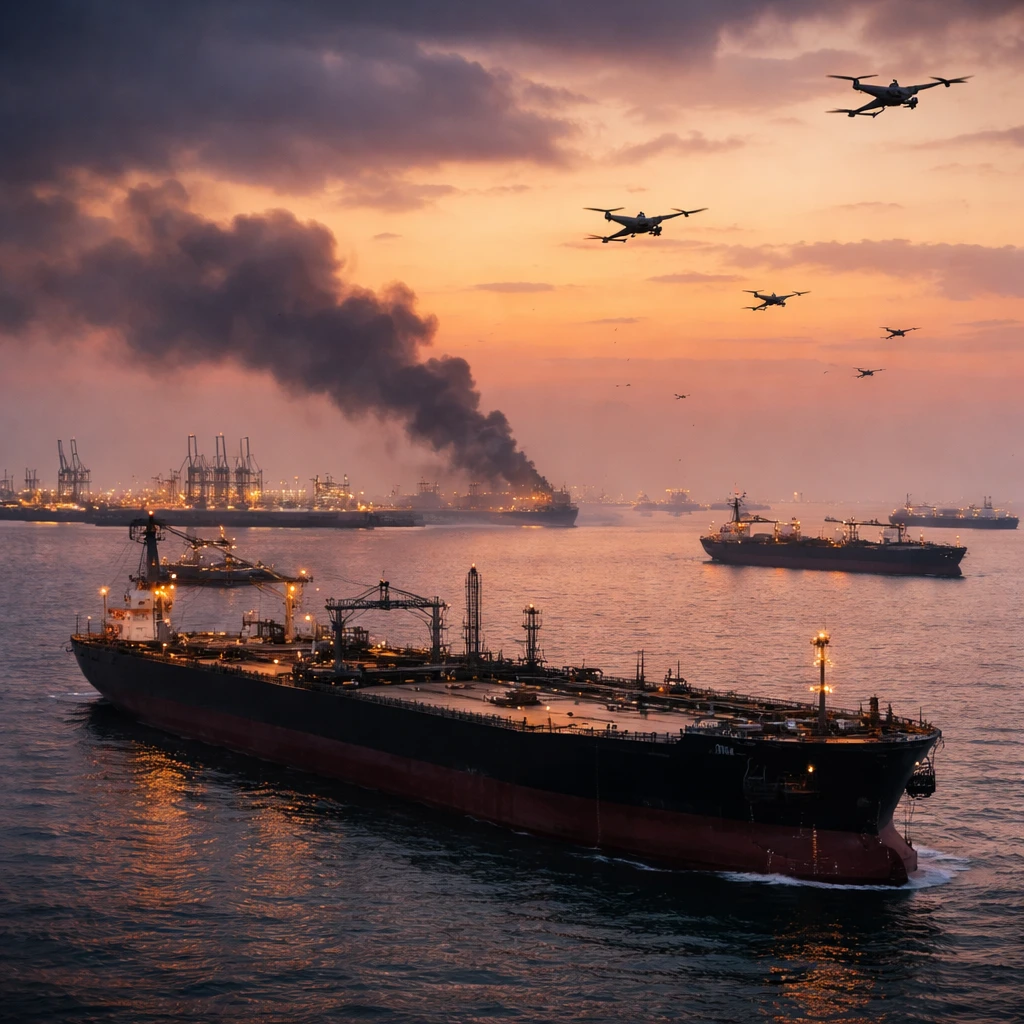
Those views draw on several linked developments. The International Energy Agency has described the current turmoil as the most severe oil and gas supply disruptions ever. Iran’s response to strikes by the United States and Israel has included firing drones and missiles at vessels transiting the Strait of Hormuz. The attacks have had the practical effect of shutting down roughly 20% of global oil and liquefied natural gas (LNG) flows to refineries, petrochemical facilities, power plants and other energy-intensive industries worldwide.
U.S. political leadership has repeatedly indicated they are close to winning the conflict, with suggested timeframes ranging from days to weeks. Yet executives at regional energy firms and their international counterparts caution that a declaration by the United States or Israel that combat operations have ceased would not, on its own, re-open shipping lanes or restore production.
At the heart of this gap between political statements and operational reality is Iran’s capacity to manufacture and deploy low-cost drones. That ability gives Tehran an asymmetric tool to disrupt or paralyse shipping for an extended period, even after a formal cessation of hostilities has been announced by its adversaries. Senior Gulf energy industry officials say naval escorts proposed by the U.S. would not be sufficient to normalise traffic unless Iran agreed to stop its attacks or threats against shipping. One such official said his tankers would remain idle until Tehran provided guarantees of safe passage.
Experts caution that if the U.S. and Israel declare victory on terms that Iran rejects, Tehran may respond by demonstrating it has not been defeated - potentially escalating the use of mines and drones to inflict further disruption. Neil Quilliam from the think tank Chatham House framed the risk in those terms, noting how such actions would serve as proof to Iran’s domestic and regional audiences that it remained capable of hitting back.
The cycle of action and retaliation has already hit key infrastructure. Drones were reported to have targeted the United Arab Emirates' oil loading hub at Fujairah just hours after the U.S. struck military targets on Kharg Island, Iran’s principal oil export terminal. Analysts and former intelligence officials warned that the pattern of strikes sends a broader message: there are no guaranteed safe harbours in this confrontation and Washington cannot unilaterally set the terms of escalation. RBC Capital’s Helima Croft put it plainly: "Iran is sending a message that there is no safe harbour in this conflict and that Washington will not control the terms of escalation," adding that proxy attacks from Yemen, Iraq and elsewhere remain a possibility.
Those proxies include Yemen’s Iran-aligned Houthi fighters, who analysts say could raise the stakes further for the energy and shipping industries by striking Saudi Arabia’s Red Sea port of Yanbu. Yanbu is the kingdom’s only available alternative for oil exports at the moment; an attack there would further strain already fragile export routes.
Market consequences and supply hits
The cumulative effect of the strikes, defensive measures and route closures has been a collapse in confidence in both export corridors and the region’s ability to defend its energy infrastructure. An adviser to the Iraqi government on energy described the situation as having exposed structural weaknesses that will take months to repair. In parallel, insurance premiums for ships and cargoes are set to rise and may be harder to obtain because underwriters perceive a sustained higher risk.
The operational fallout to date has been severe. Attacks attributed to Iran or related actors have forced shutdowns at refineries in Saudi Arabia, the UAE, Bahrain and Israel, triggering spikes in oil and gas prices of up to 60% in some assessments. Even with a quick halt to hostilities, analysts - including those at major investment banks - expect weeks of ongoing market disruption.
Producers have also curtailed output because they cannot move barrels to market. Saudi Arabia’s national oil company has suspended production from two large offshore fields, Safaniya and Zuluf, a move that has reduced the company’s output by about 20%. Iraq, the region’s second-largest producer, has seen production fall by 70%, while the UAE, the third-largest OPEC producer, has halved its output, analysts reported.
Across the Middle East, cumulative oil output cuts now total an estimated 7-10 million barrels per day, equivalent to 7-10% of global demand in analysts’ calculations. On the LNG side, Qatar has fully halted its liquefied natural gas production, removing roughly 20% of world LNG supplies from the market and warning customers that some cargoes may not be delivered until May. Industry sources cited safety as the primary driver for these suspensions - "It is simple - it is safety. We cannot risk lives," one source said.
Operational and financial frictions ahead
Industry executives and analysts warn of additional complications beyond immediate supply losses. A slow return of global oil companies to the Gulf could delay restarts at fields that have been temporarily shut, increasing the risk of damage to reservoirs if normal operations are not resumed in a controlled manner. Repairing damaged infrastructure will take months, and the higher cost and reduced availability of insurance will elevate commercial risks for shippers and buyers.
In short, the restart of international energy flows looks set to depend not only on military developments or declarations of victory, but on Tehran’s calculus about the safety and acceptability of conditions for shipping. Until Iran chooses to halt maritime attacks and threats, many market participants say they will treat Gulf export routes as too risky for routine operations.
What this means for markets and industry
The immediate sectors most affected include crude oil and LNG markets, shipping and ports, refinery operations, petrochemicals and energy-intensive industries that depend on steady feedstock and power supplies. Financial markets tied to these sectors - including commodity trading, maritime insurance and the equities of oil and gas producers - will continue to reflect elevated volatility while the uncertainty persists.
For now, the decisive lever to reopen global energy markets appears to lie with Iran’s willingness to cease maritime attacks and threats - a condition that, according to industry officials, must be met before normal shipping patterns and production can confidently resume.