
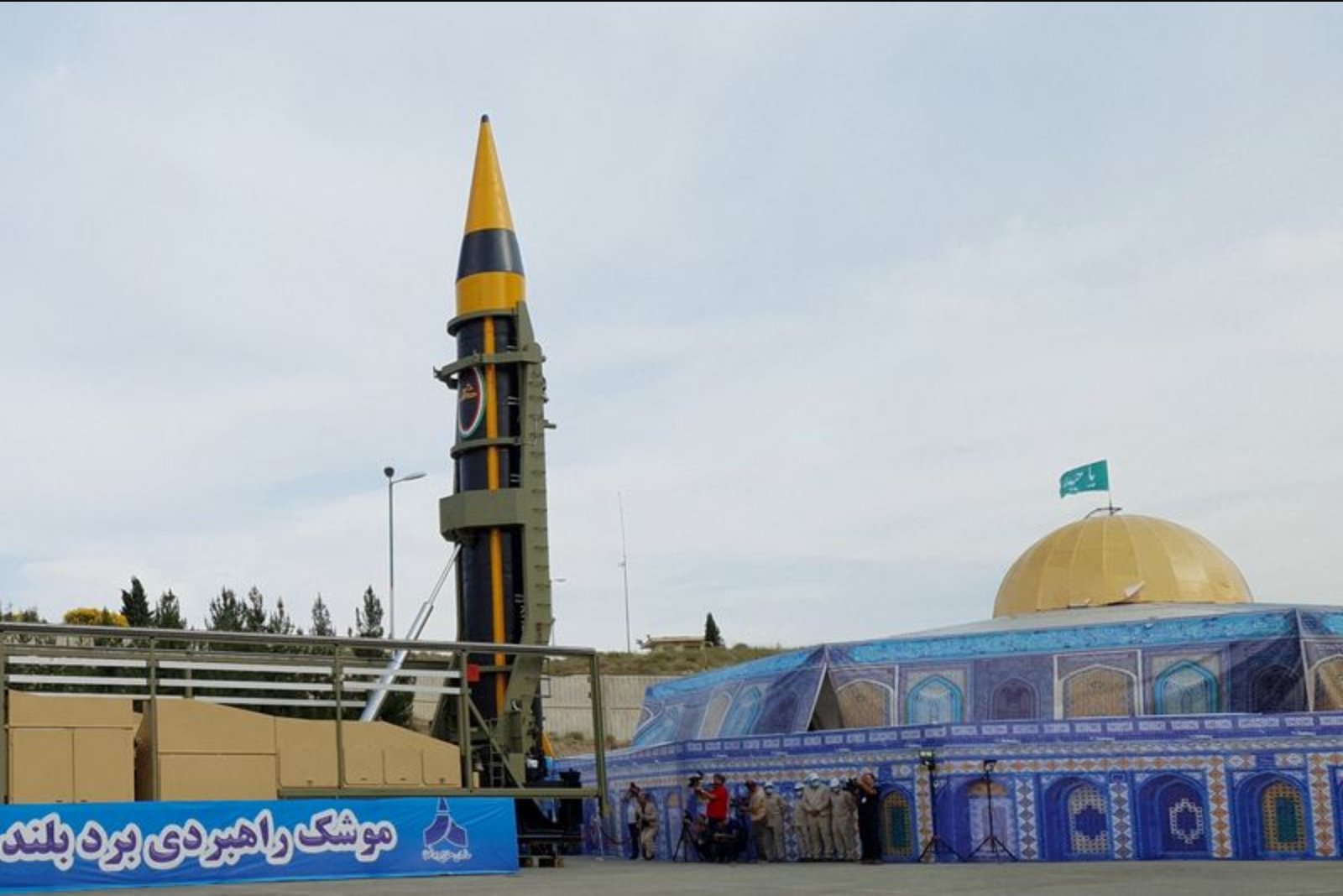
Iran held a fresh round of nuclear negotiations with the United States on Thursday in Geneva, where the country's missile inventory has been a persistent point of contention in talks. The following outlines the technical definition of ballistic missiles, the known types and ranges within Iran's stockpile, recent combat use, and reported development and deployment practices.
What is a ballistic missile?
A ballistic missile is a rocket-propelled weapon that is guided while ascending but follows a largely free-fall trajectory for the majority of its flight. Such systems are designed to carry warheads that may be conventional or, potentially, biological, chemical or nuclear in nature. Western governments characterize Iran's ballistic missile force both as a conventional military threat to stability across the Middle East and as a possible means to deliver nuclear warheads if Tehran were to develop them. Iran rejects any intention to produce atomic weapons.
Types of Iranian missiles and their ranges
Authorities in the United States' intelligence community have assessed that Iran possesses the largest stockpile of ballistic missiles in the Middle East. Iranian officials have publicly described a self-imposed operational range limit of 2,000 km (1,240 miles), arguing that this scope suffices for national defence and permits strikes as far as Israel.
Many of Iran's missile facilities are located in and around the capital region. There are at least five reported subterranean "missile cities" across several provinces, including Kermanshah and Semnan, along with sites sited closer to the Gulf.
Independent analysts and research organisations list a number of long-range systems capable of reaching Israel. Those identified include:
- Sejil - cited with a 2,000 km range by one research centre;
- Emad - cited with a 1,700 km range;
- Ghadr - cited with a 2,000 km range;
- Shahab-3 - cited with a 1,300 km range;
- Khorramshahr - cited with a 2,000 km range;
- Hoveyzeh - cited with a 1,350 km range.
A semi-official Iranian news outlet published a graphic in April 2025 listing nine missiles it said could reach Israel. That graphic included the Sejil, which it described as capable of exceeding 17,000 km per hour and providing a 2,500 km range, alongside missiles named Kheibar, cited with a 2,000 km range, and Haj Qasem, cited with a 1,400 km range.
Other technical compilations from Washington-based research groups enumerate shorter-range and developmental systems, including:
- Shahab-1 - estimated range about 300 km;
- Zolfaghar - estimated range about 700 km;
- Shahab-3 - variously estimated at 800-1,000 km;
- Emad-1 - described as under development with an estimated 2,000 km range;
- A Sejil model listed as under development with a suggested range spanning 1,500-2,500 km.
Recent operational use
Iran employed ballistic missiles during a 12-day war with Israel in June 2025, launching strikes into Israeli territory that resulted in dozens of fatalities and damaged buildings. Post-conflict assessments from research institutes indicated that Israeli forces "likely destroyed around a third of the Iranian missile launchers" over the course of the fighting. Iranian officials have stated that Tehran has recovered from the damage sustained.
During the same period of hostilities, Tehran launched missiles at the U.S. Al Udeid air base in Qatar in response to U.S. involvement in Israel's air campaign. Iran reported providing advance warning of that strike and said there were no casualties. Following that action, Washington announced a ceasefire hours later.
Iran's Islamic Revolutionary Guards Corps has cited missile use in other operations. In January 2024 they said they struck what they described as Israel's spy headquarters in Iraq's semi-autonomous Kurdistan region and also fired missiles against Islamic State militants in Syria. Tehran has additionally reported missile strikes on two bases of a Baloch militant group in Pakistan.
Saudi Arabia and the United States have publicly stated they believe Iran was responsible for a combined drone and missile attack on Saudi oil facilities in 2019, an allegation Tehran denies. In 2020, Iran launched missiles at U.S.-led forces in Iraq in retaliation for the U.S. drone strike that killed Major General Qassem Soleimani of the Revolutionary Guards.
Strategy, deployment and technological development
Iran frames its ballistic missile forces as a deterrent and as a means of retaliation against the United States, Israel and other potential regional adversaries. Analysts have described a persistent focus on dispersal, protection and survivability for the missile force.
One 2023 report by a senior fellow at a U.S.-based defence policy institute noted that Iran continues to expand underground missile depots equipped with transport and firing systems, plus production and storage capabilities. Iranian authorities have said that in 2020 they conducted the first launch of a ballistic missile fired from underground.
The same analysis observed that Iran's experience reverse-engineering foreign designs and producing multiple missile classes has allowed technical adjustments - such as stretching airframes and employing lighter composite materials - intended to extend range. In June 2023 Iranian officials presented what they described as a first domestically produced hypersonic ballistic missile. Hypersonic weapons are defined by their ability to travel at least five times the speed of sound along complex trajectories, characteristics that complicate interception.
Research organisations note that Iran's missile programme draws heavily on North Korean and Russian design concepts and has, in some assessments, benefited from assistance from other countries. Iran's inventory also includes cruise missiles, such as the Kh-55, an air-launched weapon described in reporting as nuclear-capable with a range of up to 3,000 km.
What is clear and what remains limited
The publicly available record documents a broad and diverse Iranian ballistic missile capability, subterranean infrastructure intended to increase survivability, and operational use in recent years. The record also reflects discrepancies among technical estimates and proprietary assessments about ranges, development status and the scale of damage inflicted in conflicts. Those differences underline the challenge of precise attribution and quantification based on open reporting alone.
As negotiations continue in Geneva, Iran's missile forces remain a central security consideration that interlocutors cite in diplomacy, military planning and regional political calculations.