
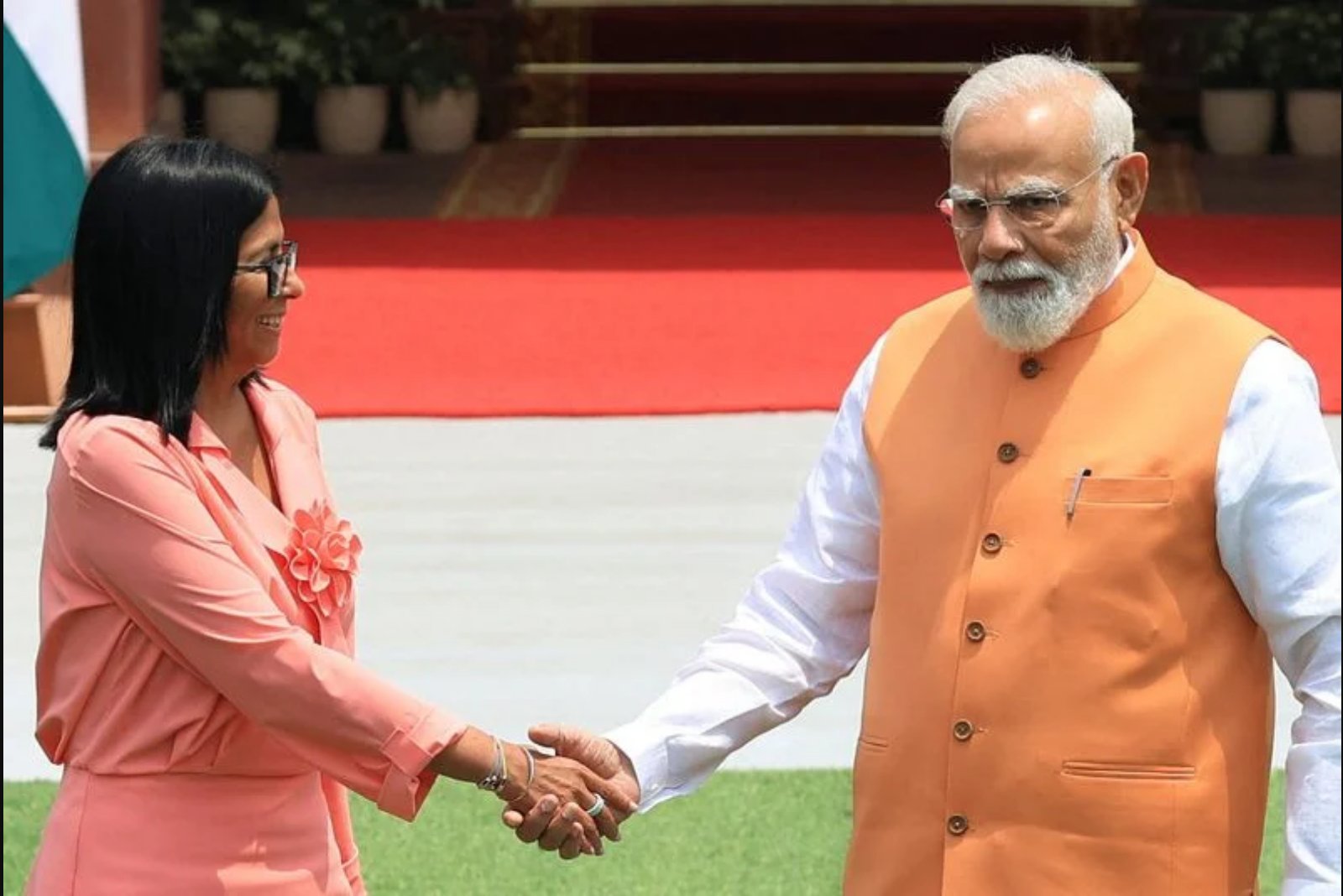
NEW DELHI, June 4 - India and Venezuela have taken steps to strengthen bilateral cooperation in the energy sector as international crude supplies face disruption from the Middle East crisis. Interim President Delcy Rodriguez arrived in India with a sizable ministerial delegation and held talks with Prime Minister Narendra Modi on Thursday focused on oil-related collaboration.
Following the meetings, Rudrendra Tandon, Secretary (East) in the Indian foreign ministry, briefed media on the substance of the discussions. He said the two governments concentrated on co-operation spanning both upstream exploration and production activities and downstream refining and processing projects.
"We are working with a government that is friendly, that wants a partnership with India," Tandon said. "We want to reciprocate that. Venezuela has traditionally been a close friend. We have collaborated very closely at the international level, so we are just going back to normal."
Tandon added that Venezuela regards India as a "preferred partner" in the energy domain, and that Rodriguez planned visits to Indian oil refining facilities during a trip that concludes on June 7. He also said Rodriguez was expected to meet senior figures from India's energy industry in the financial hub of Mumbai.
India has recently been a significant buyer of Venezuelan crude. In May, India was the second-largest importer of Venezuelan oil with purchases of 427,000 barrels per day, placing it behind the United States. India’s Reliance Industries has emerged as one of the three largest purchasers of Venezuelan crude in recent months.
Additional data showed Venezuela was on track to become the fourth-largest supplier of oil to India in May, according to market-tracking information referenced by officials.
The timing of Rodriguez's visit coincides with supply challenges facing India, the world's third-largest oil importer and consumer. Indian officials say these difficulties have been driven by the U.S.-Israeli war with Iran, a conflict that has effectively shut the Strait of Hormuz - a maritime route that previously carried more than 40% of the South Asian nation's crude oil imports.
India had halted purchases of Venezuelan crude last year after the United States, under President Donald Trump, authorized a 25% discretionary tariff on countries buying oil from Venezuela. Purchases resumed when sanctions were eased in February under a major oil supply agreement between Washington and Caracas. Under that arrangement, reached after the U.S. capture of President Nicolas Maduro in January, Washington controls proceeds from Venezuelan oil sales through bank accounts administered by the Treasury Department, with commercial terms aligned to its guidance.
The meetings in New Delhi mark a recalibration in ties around energy trade, with officials from both sides emphasising mutual interest in rebuilding a closer partnership in areas ranging from upstream investment to refinery throughput and commercial arrangements. Rodriguez's scheduled visits to refining sites and meetings with industry leaders underline Caracas's intent to deepen practical engagement with India's energy sector during the course of the trip.
Summary of developments
- Delcy Rodriguez led a ministerial delegation to India, holding talks with Prime Minister Narendra Modi on June 4.
- Discussions focused on upstream and downstream energy cooperation, as described by Rudrendra Tandon at a media briefing.
- India was reported to import 427,000 barrels per day of Venezuelan oil in May, ranking it second only to the United States, with Reliance among the largest buyers.
- Rodriguez’s visit runs through June 7 and includes planned visits to Indian refining facilities and meetings with energy company leaders in Mumbai.
Context noted by officials
Indian officials highlighted that the visit comes amid disruptions to crude supply lines tied to the U.S.-Israeli war with Iran, which officials say has effectively closed the Strait of Hormuz and affected a major portion of India’s previous import routes. The resumption of Venezuelan crude purchases followed a February easing of sanctions under an agreement involving Washington and Caracas, which includes U.S. control over sales proceeds via Treasury-administered accounts.
Officials characterised the current phase of engagement as a return to normalised collaboration after a period of interrupted trade and diplomatic friction, and framed India as a preferred partner for Venezuelan energy exports.