
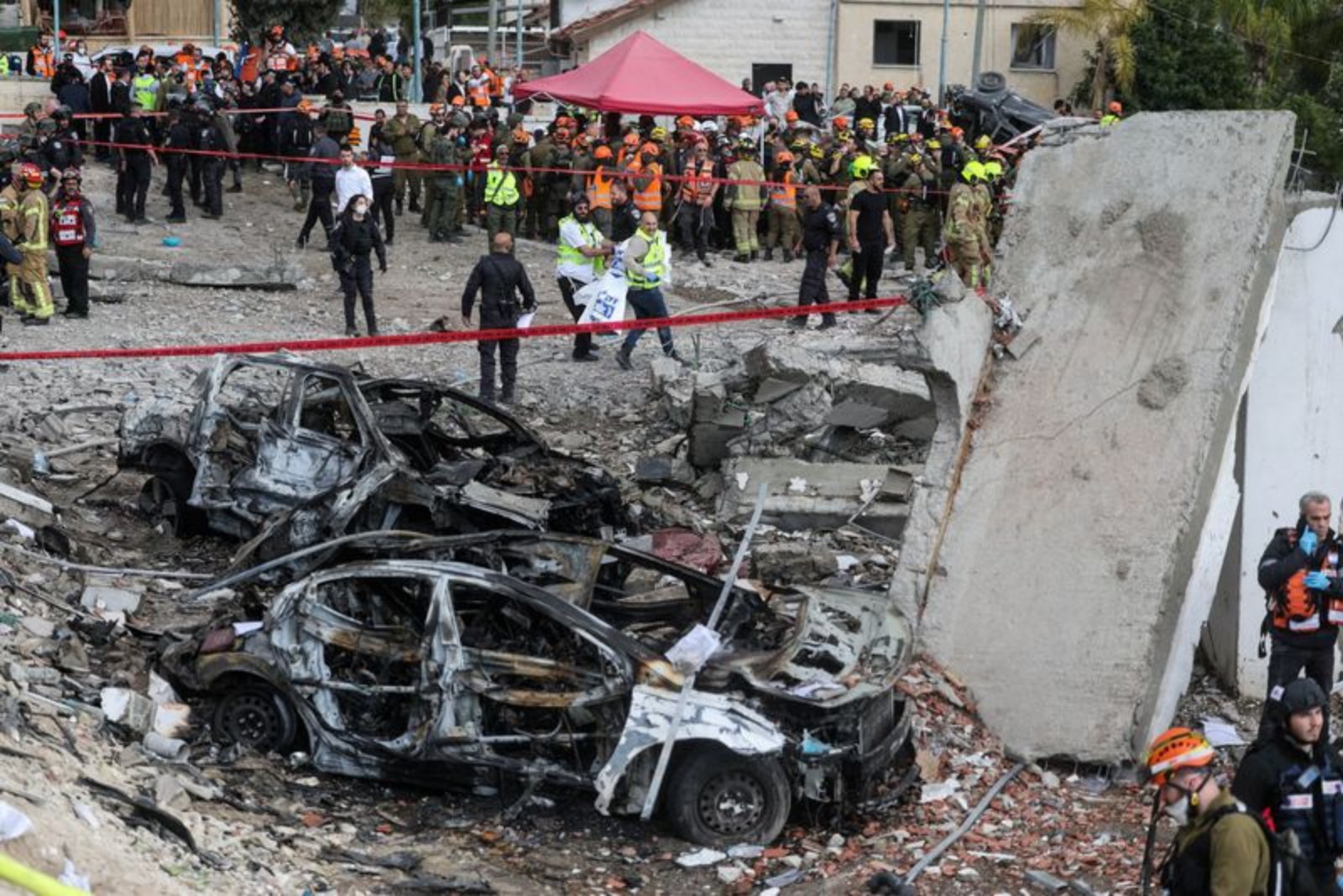
Iran’s recent missile and drone strikes on ports, cities and oil facilities in the Gulf have the potential to draw Gulf states into a broader coalition aligned with the United States and to widen the conflict involving Tehran, Middle East analysts and regional officials say.
By targeting the economic lifelines of Gulf countries in apparent retaliation for U.S. and Israeli airstrikes on Iranian territory, analysts argue Tehran may have underestimated how such attacks would push previously cautious Gulf governments closer to Washington and toward coordinated responses against the Islamic Republic.
According to analysts, the strikes - directed at six Gulf states, all of which host American military bases and are U.S. partners - seem intended to generate pressure on U.S. President Donald Trump to stop the fighting. Instead, the attacks may have delivered the opposite result.
Abdulaziz Sager, chairman of the Gulf Research Center think tank in Saudi Arabia, told Reuters that Gulf capitals now confront stark choices. He said they must decide whether to more openly side with the United States in its campaign - permitting U.S. use of their airspace and territory and potentially joining military operations - or to face the prospect of continued escalation on their own soil.
"The option of neutrality receded when Iranian missiles started landing and forced us to be their enemies," Sager said, arguing that states which had previously hedged their positions are being pushed into explicit alignment with Washington and a readiness to defend their territory and interests.
Context and immediate triggers
The wave of strikes followed the killing of Iran’s Supreme Leader Ali Khamenei on Saturday, which coincided with the first day of U.S. and Israeli military actions that President Trump described as aimed at preventing a security threat to the United States and stopping Iran from developing nuclear arms.
Iran launched missile barrages and drone attacks across the Gulf in the wake of those events. Gulf officials and analysts interpret the moves as an attempt to ratchet up pressure on the U.S., though critics say Iran miscalculated the diplomatic and strategic consequences.
Gulf response and collective measures
The Gulf Cooperation Council - comprising Saudi Arabia, the United Arab Emirates, Qatar, Bahrain, Kuwait and Oman - convened an emergency ministerial meeting and invoked Article 51 of the U.N. Charter. The council set out "red lines" and signalled readiness for collective self-defence as disruptions to energy production and rising security risks mounted.
GCC leaders stated that Iran’s attacks had strengthened unity among member states. Riyadh and other capitals warned that continued strikes risked converting the Gulf from a defensive arena into an active theatre of response. In response, the Gulf states have activated joint air-defence systems and increased reconnaissance flights across regional airspace.
Officials said messages have been sent to Tehran, through direct and indirect channels, warning that further attacks would lead to far greater consequences for the Islamic Republic. One Gulf insider told Reuters that, practically, Gulf states would try to avoid escalation while the Americans and Israelis conduct strikes, but uncertainty remains about command and control within Iran. It was unclear, the source said, whether attacks on oil facilities were centrally ordered or carried out by autonomous units. Two scenarios appeared possible: either a fractured command with rogue elements acting independently, or continued coordination from Tehran’s leadership.
Damage pattern and operational toll
Officials estimate that in the first 48 hours of the campaign, Iran launched approximately 165 ballistic and cruise missiles and about 600 drones. The United Arab Emirates bore the greatest share of the strikes, with roughly 63% aimed at its airports, ports and oil infrastructure.
Missiles and drones struck Doha, Dubai and Manama, among other targets, hitting facilities tied to the Gulf states’ roles as financial, investment and tourism centres. Analysts say assaults on these hubs damage reputations for stability and safety that underpin the region’s global economic positioning.
Energy and trade implications
The stakes extend well beyond immediate battlefield calculations. The Gulf is a critical corridor for energy exports, shipping lanes and energy infrastructure; any prolonged conflict threatens to disrupt global trade and financial markets.
Some Gulf energy assets have temporarily shut down as missile threats mounted. Qatar’s liquefied natural gas facilities, which account for around 20% of global LNG supply, were among the assets affected. Analysts warned that if strikes continue and the Gulf cannot withstand a sustained conflict - potentially causing disruptions to oil shipping lanes or a closure of the Strait of Hormuz - it would be natural for other countries to step in because global interests would be directly affected, Ebtesam Al-Ketbi, president of the Emirates Policy Center, said.
Mohammed Baharoon, director-general of the Dubai Public Policy Research Center, said the UAE’s designation of the strikes as acts of terrorism had strengthened the case for a broader coalition against Iran. "Iran is pushing the Gulf into an expanding coalition against it," he said. "By attacking Gulf states, Iran is turning them into enemies and risking a wider war no one wants."
Attacks on sites linked to Western forces - including a British base in Cyprus and facilities hosting French forces in Abu Dhabi - raised the prospect that NATO could eventually be drawn into the conflict, analysts noted.
Diplomatic shifts and longer-term concerns
The UAE, which experienced the largest share of strikes, has moved swiftly through diplomatic channels. Officials said Abu Dhabi summoned Iran’s ambassador, withdrew its own envoy, closed its embassy in Tehran and brought the matter before the U.N. Security Council. Gulf officials argue Tehran’s unprecedented use of ballistic missiles and drones on this scale has fundamentally altered the diplomatic environment.
Gulf governments and Western partners, officials said, are now less likely to treat Iran’s missile programme as separate from its nuclear activities. That apparent convergence is being voiced by Sunni Gulf Arab neighbours and Western governments alike, according to regional officials.
The choices facing Gulf states remain stark, analysts said: respond and risk a broader war, or refrain and tolerate further erosion of security, economic stability and international credibility under repeated attacks. For now, the trajectory appears to favour closer alignment among Gulf states and deeper coordination with Western partners, even as uncertainties persist about command structures and the full scope of damage to energy and transport infrastructure.
What remains uncertain
Analysts and officials emphasize that key unknowns remain. The command and control picture inside Iran is not yet clear, making it difficult to determine whether all strikes were part of centrally directed policy or the result of decentralized action. The scale of damage to energy infrastructure and the potential for prolonged disruptions to shipping lanes and markets also remain uncertain.
Until these questions are resolved, Gulf states will continue to weigh the immediate imperative to protect territory and citizens against the risk of drawing the region into a more extensive conflict.