
Lead
Gulf Arab states are demanding more than limited strikes against Iran; they want Tehran’s capacity to menace the Gulf’s oil lifeline removed, according to Gulf sources. While these states did not call on the United States to initiate full-scale war with Iran, the prevailing view among many Gulf leaders is that any U.S. response must go further than actions that would leave Iran still capable of projecting military force across the region.
U.S. pressure and regional responses
At the same time, several Gulf and Western diplomats say Washington is pushing Gulf countries to align with a U.S.-Israeli campaign. Three diplomats familiar with the issue told contacts that President Donald Trump seeks visible regional support for the campaign to strengthen its legitimacy internationally and bolster domestic backing.
Abdulaziz Sager, chairman of the Saudi-based Gulf Research Center and someone familiar with government thinking, summed up the shift in sentiment: "There is a wide feeling across the Gulf that Iran has crossed every red line with every Gulf country," he said. "At first we defended them and opposed the war. But once they began directing strikes at us, they became an enemy. There is no other way to classify them."
Iran’s attacks and the strategic threat
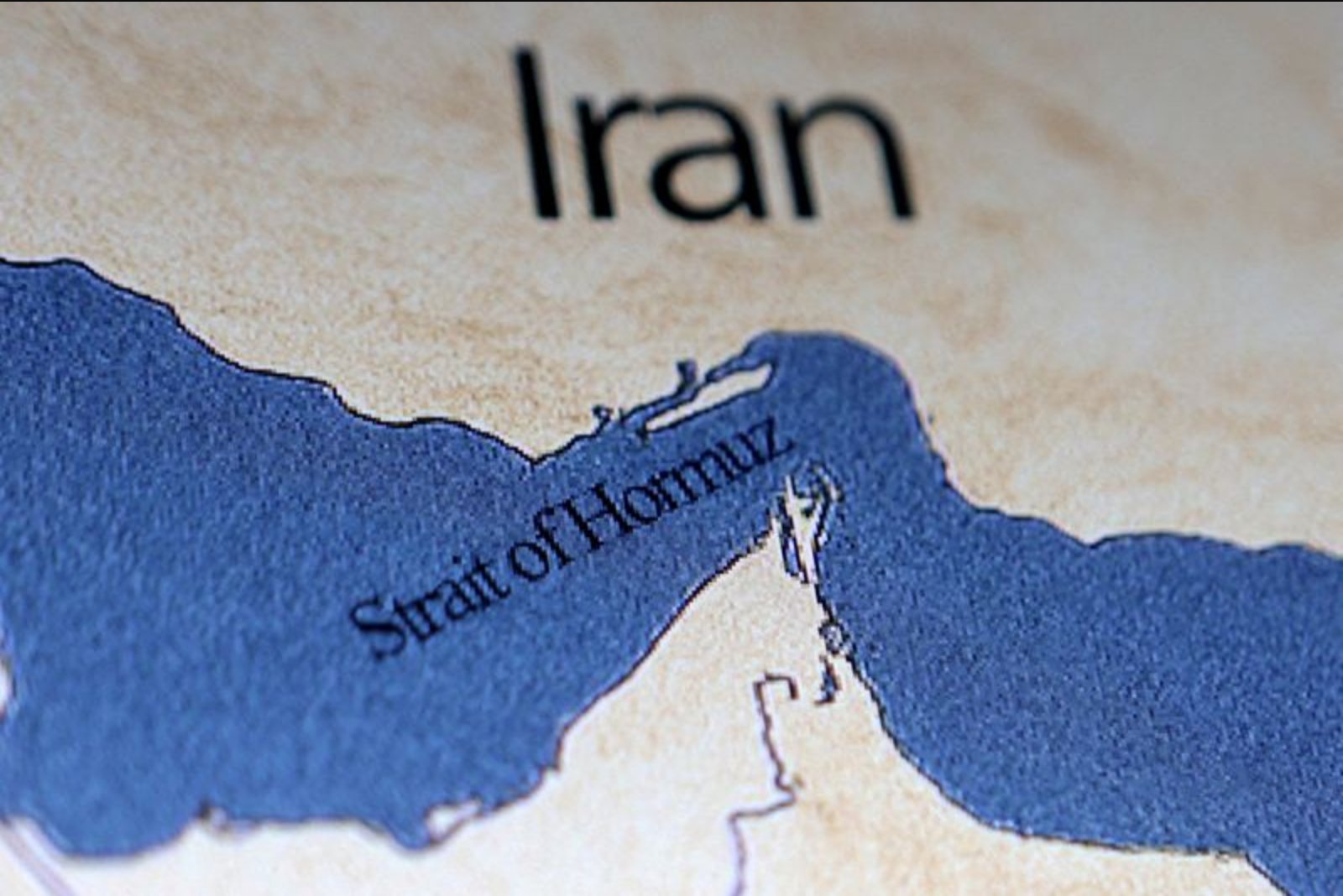
Iran has demonstrated a broad strike capability across the six Gulf states, using missiles and drones to hit airports, ports, oil facilities and commercial hubs. Its actions have also disrupted shipping through the Strait of Hormuz - a critical choke point that carries roughly one-fifth of global oil shipments and supports Gulf economies.
The attacks have reinforced Gulf fears that leaving Iran with significant offensive weaponry or with an intact arms-manufacturing base would enable it to threaten the region’s energy infrastructure repeatedly whenever tensions rise. As the conflict entered its third week, with U.S. and Israeli airstrikes intensifying and Iran reciprocating by targeting U.S. bases and civilian sites across the Gulf, a Gulf source described leader sentiment succinctly: President Trump should comprehensively degrade Iran’s military capacity. Otherwise, officials said, the region risks living under a persistent threat.
Those officials argue that unless Iran is significantly weakened, it will continue to use its capabilities to hold the region to ransom by selectively disrupting oil flows and maritime traffic.
Historical suspicion and recent precedent
Predominantly Shi’ite Iran and its Sunni Arab Gulf neighbours have long viewed each other with distrust, a dynamic that has been less tense at times with countries such as Qatar and Oman. Over recent years, Iranian actors and allied groups have been blamed for strikes on Gulf energy infrastructure, most notably a 2019 assault on Saudi Arabia’s Abqaiq and Khurais oil processing facilities - an attack Iran denied responsibility for - that halved Saudi output and rattled energy markets.
For Gulf leaders, the present pattern of assaults poses a risk that extends well beyond the physical damage to individual facilities. It undermines a carefully cultivated image of stability and security that Gulf states have relied upon to diversify their economies, expand trade and grow tourism as part of a longer-term move away from exclusive dependence on fossil fuel exports.
"If the Americans pull out before the task is complete, we’ll be left to confront Iran on our own," Sager warned, reflecting a concern that incomplete action could leave Gulf states exposed.
Gulf reluctance to act unilaterally
There is broad agreement among regional sources that unilateral military action by any single Gulf state is not a viable option because it would leave that country vulnerable to retaliation. Only a collective intervention, leaders say, would lessen the risk of exposing an individual member to direct reprisals.
Despite this logic, a unified regional response remains elusive. The six members of the Gulf Cooperation Council - Bahrain, Kuwait, Qatar, Saudi Arabia, Oman and the United Arab Emirates - have convened only a single Zoom call on the crisis, and no Arab summit has yet been called to coordinate a collective stance or action.
Gulf leaders are also acutely aware of the risk that joining a U.S.-Israeli-led campaign would trigger a wider, uncontrollable war. That fear is tempering decisions and giving rise to a posture of calculated restraint: protecting sovereignty and signaling clear red lines without becoming a direct participant in a conflict the Gulf countries did not initiate and do not control.
U.S. statements and limited Gulf public response
In the face of these concerns, the White House said the U.S. was "crushing (Iran’s) ability to shoot these weapons or produce more" and that President Trump remained "in close contact with our partners in the Middle East." Of Gulf states, only the United Arab Emirates issued a public response, saying it "does not seek to be drawn into conflicts or escalation" while reserving the right to "take all necessary measures" to protect its sovereignty, security and residents.
U.S. Defense Secretary Pete Hegseth recently stated that Gulf partners were "stepping up even more" and were prepared to "go on the offense," and that they are working with Washington on collective and integrated air defenses. He did not detail further actions Gulf states might take.
A senior UAE official said the country had opted for restraint after Iran accused the U.S. military of using Emirati territory to strike Kharg Island, Iran’s main oil export terminal.
Possibility of calibrated retaliation
Sager indicated that Saudi Arabia - Iran’s main regional rival - could be forced to retaliate if Iran crossed certain red lines, particularly strikes on major oil facilities or desalination plants or actions causing large numbers of casualties. In such scenarios, he said, Riyadh would feel compelled to intervene but would seek to calibrate its response to avoid further escalation.
The Gulf’s strategic dilemma
Fawaz Gerges of the London School of Economics framed the Gulf’s predicament as a choice between immediate self-defense and the broader risk of being drawn into a U.S.- and Israeli-led war. He suggested that Gulf participation would add little to Washington’s military advantage while markedly increasing exposure to Iranian reprisals.
That calculus has driven a policy of restraint: defending territorial integrity, signaling red lines, and avoiding direct entry into a conflict beyond their control.
For now, Iran’s leverage is visible. It has been effectively deciding which vessels may transit the Strait of Hormuz - a situation that governments in the region find unacceptable. Bernard Haykel, professor of Near Eastern studies at Princeton University, warned: "Now that Iran has shown it can shut down Hormuz, the Gulf faces a fundamentally different threat. If it’s not addressed, this danger will be long-term."
President Trump called for a coalition of nations to help reopen the waterway, an appeal that reportedly met with limited early success.
Haykel also noted that while much of Gulf oil and gas serves the global economy, the majority of exports flow eastward to China, Japan and other Asian markets. He argued that those countries share responsibility for maritime security, noting analogies such as their roles in securing routes off Somalia, and suggested they may be asked to contribute to efforts to keep the Strait of Hormuz open.
Implications for markets and regional stability
The recent attacks and ensuing standoff have consequences for oil flows, shipping, and investor confidence in the Gulf. Disruption of energy exports and transport routes threatens not only immediate deliveries but also the security-based reputation Gulf states have sought to build as they diversify away from hydrocarbon dependence. These developments present challenges for trade, tourism and the broader economic strategies of the Gulf monarchies.
Conclusion
Gulf governments are urging the United States not to stop at limited strikes, pressing instead for actions that would remove Iran’s ability to threaten the region’s energy artery and critical infrastructure. Washington is seeking regional backing for its campaign, but Gulf leaders remain cautious about joining a wider war that they fear would increase their exposure to retaliation. For the moment, the region balances on a tense equilibrium of deterrence, restraint and diplomatic pressure, with the security of the Strait of Hormuz at the center of strategic calculations.
Note: This article presents reporting based on statements from Gulf sources, diplomats and officials cited within the text.