
The battle between the United States and Iran has unleashed a wave of damage across the Gulf, and local leaders and analysts say the region - not Washington - is the one paying the economic and security price.
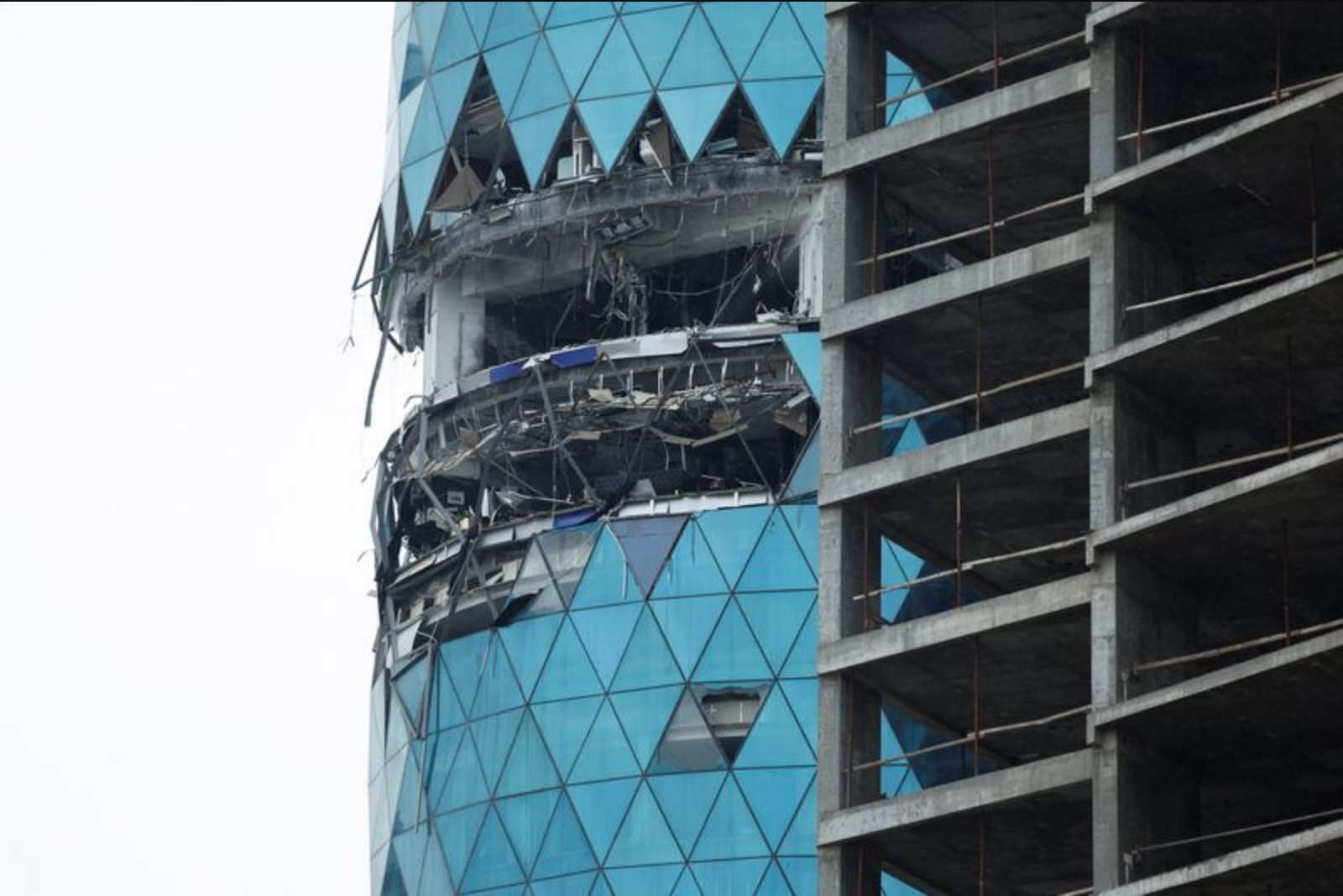
Gulf sources and regional analysts, speaking on condition of anonymity because they were not authorised to comment, described mounting resentment in Arab capitals at being drawn into a conflict they did not start and reportedly did not endorse. Those sources said airports, hotels, ports, military installations and oil facilities have been struck by Iranian drones and missiles, undercutting the region's stability and commercial activity.
"It is not our war. We did not want this conflict, yet we are paying the price in our security and our economy," said Ebtesam Al-Ketbi, President of the Emirates Policy Center. Al-Ketbi added that this view does not imply that Iran is "innocent."
According to these Gulf sources, governments in the region had assured Tehran that they would not permit their territories or airspace to be used by Washington in the conflict. Despite that, Iran has launched successive missile and drone attacks across the Gulf, hitting civilian and commercial targets and producing a sharp decline in business confidence, the sources said.
Security concerns and the prospect of a post-war vacuum
Some Gulf figures express a broader unease beyond immediate damage: they worry about the consequences of a war that is perceived to have been initiated by the United States without deep consultation with regional partners. A number of those interviewed argued that, having started the war, Washington should pursue it through to eliminate what they view as a persistent Iranian threat at the region's doorstep.
"If America leaves the war now without achieving victory, it will be like abandoning an injured lion," Al-Ketbi said. "Iran will remain a threat to the region, capable of striking again. And if the regime collapses, leaving a power vacuum, neighbouring states will suffer the consequences."
The White House responds that U.S. and allied strikes have sharply reduced Iran's ability to retaliate. A White House spokeswoman, Anna Kelly, said strikes had cut Iran's retaliatory missile attacks by 90 percent, "crushing their ability to shoot these weapons or produce more." Kelly also said the U.S. president was in close contact with Middle East partners and argued that Iran's attacks on its neighbours underlined why the threat had to be eliminated. There was no immediate comment from Gulf governments to Reuters on that point.
Strategic chokepoints and economic fallout
A critical economic consequence of the exchanges has been the disruption to energy shipments through the Strait of Hormuz - a waterway that the sources describe as central to global oil and liquefied natural gas flows. Iran's Revolutionary Guards reportedly warned they would not allow "one litre of oil" to leave the Middle East if U.S. and Israeli attacks continued. Those threats were followed by actions that effectively halted shipments through the strait, temporarily interrupting a conduit that accounts for roughly one-fifth of the world's petroleum and LNG, according to the regional sources.
Saudi Aramco's chief executive, Amin Nasser, warned that further disruptions to Hormuz shipping would have "catastrophic consequences" for oil markets. In response, U.S. messaging has included warnings that Washington would strike Iran harder if it attempted to block oil exports.
The war also triggered the killing of Iran's Supreme Leader, Ayatollah Ali Khamenei, on the first day of the conflict, according to the reporting, prompting Tehran to strike Israel and Gulf states that host U.S. military facilities.
Large-scale disruption to aviation and tourism
Across the region, authorities closed airspace in the wake of attacks, forcing airlines to cancel an estimated 40,000 flights - a scale of disruption described by sources as the largest setback to global air travel since the COVID-19 pandemic. The flight cancellations, along with direct hits to hotels and tourist infrastructure, have dented the Gulf's carefully cultivated reputation as a secure and high-end leisure destination, putting tourism revenues at risk.
Gulf states have publicly sought to project calm. The president of the United Arab Emirates, Sheikh Mohammed bin Zayed Al Nahyan, said his country was at war but remained resilient, warning adversaries that the UAE was not easy prey. That statement was his first public comment after Iran launched missiles at the UAE.
Reassessing alliances and defence strategies
Beyond immediate damage, analysts quoted in the reporting say the conflict is prompting Gulf states to re-evaluate their long-standing security dependence on Washington. For decades, the relationship with the United States rested on an implicit trade-off in which Gulf energy and capital, and large purchases of U.S. arms and technologies, were exchanged for U.S. protective commitments. The war, analysts say, has shaken that assumption.
Fawaz Gerges of the London School of Economics argued that Gulf states will accelerate efforts to diversify their external partnerships for security and diplomacy, recognising that they may not be able to rely entirely on U.S. protection for their energy supplies, populations and sovereignty. The war, he said, has undercut the old bargain and forced regional capitals to consider alternative alignments and increased self-reliance.
These concerns are not new in nature but have been sharpened by recent events. Gulf anguish over perceived lapses in U.S. protection dates back to earlier attacks on the kingdom's oil infrastructure. That history, two regional analysts suggested, feeds contemporary disquiet about being drawn into a conflict orchestrated largely by Washington and Israel.
Voices from business and the research community
Abdulaziz Sager, chairman of the Saudi-based Gulf Research Center, criticised Washington for not preparing adequate safeguards for its regional allies or guaranteeing the continuity of oil and gas flows during wartime, calling the economic toll on Gulf countries "horrendous." Sager said the conflict highlighted the limits of depending solely on external guarantees and urged strengthened local defence capabilities and crisis preparations.
Prominent Emirati businessman Khalaf Al Habtoor publicly questioned the objectives of the U.S.-Israeli campaign against Iran, asking whether planners had fully considered the regional consequences or had simply accepted the cost of "dragging the Gulf into a conflict it was not party to."
Some Gulf sources argue that, given the nature of recent U.S. decision-making, a lack of traditional policy channels has exacerbated regional exposure. A Gulf source familiar with U.S. policymaking said key decisions were being crafted by a compact circle around the U.S. president that operates largely outside conventional channels. "They are businessmen and dealmakers, not career policymakers," the source said, adding that this approach has left Gulf partners vulnerable to the consequences of that circle's choices.
Economic and market implications
Market-sensitive sectors are already feeling the strain. Energy markets face the risk of supply interruptions if shipping through Hormuz remains contested; aviation firms are dealing with canceled flights and the logistics fallout of rerouted routes; and tourism-dependent businesses face immediate revenue losses and longer-term reputational damage. The damage to ports and oil facilities also carries implications for logistics networks and freight flows across the region.
Gulf governments, while projecting resilience and intent to protect sovereignty, are simultaneously reassessing both their security arrangements and economic strategies in light of sustained strikes and growing uncertainty over the future trajectory of the conflict.
Outlook and unresolved questions
Regional sources and analysts highlight two broad uncertainties. One is whether Washington will pursue a conclusive military outcome or withdraw without neutralising what many Gulf officials view as a persistent Iranian threat. The other is whether a post-conflict scenario might produce instability or a power vacuum that could further imperil Gulf states' security and economies. Those questions, according to the sources, are central to how Gulf governments will calibrate their defence postures, diplomatic engagements and economic contingency planning in the months ahead.
For now, the immediate reality is tangible: infrastructure damaged by strikes, disrupted shipping through a vital energy corridor, tens of thousands of flights canceled and an erosion of business confidence across a region that has long balanced energy exports, foreign investment and strategic ties with external powers.