
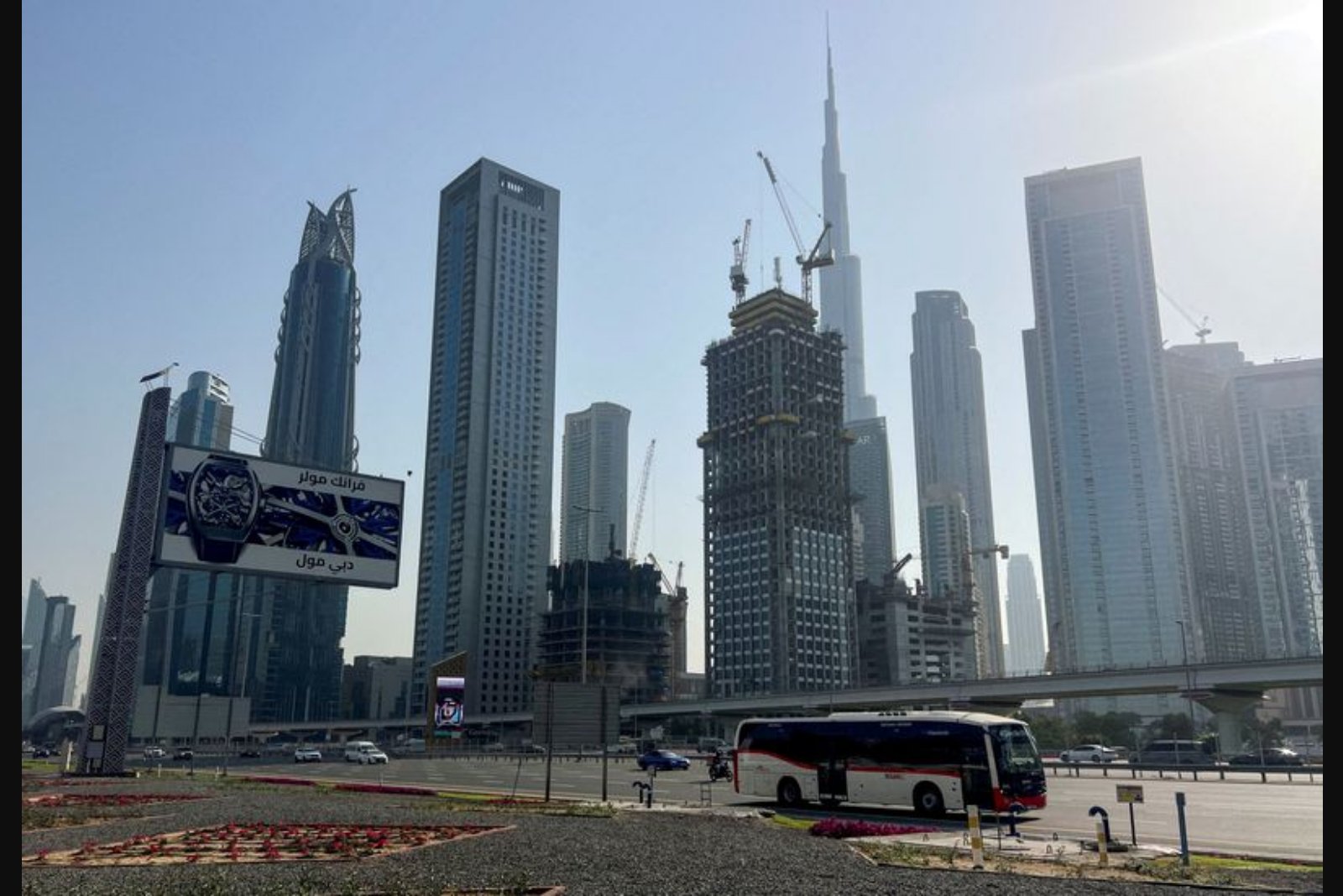
The Gulf’s sovereign wealth vehicles were established to smooth the region through volatile times. Today, analysts warn, those rainy-day reserves are being tested as attacks tied to the Iran-Israel-U.S. confrontation have disrupted crude and gas flows across the region and sent energy prices sharply higher.
Over decades, the Gulf states channelled profits from oil and gas into global assets and markets, accumulating what is now estimated as a roughly $5 trillion pool of sovereign capital. That reserve - deployed through funds with differing mandates and investment styles - was intended to provide balance when markets, security or public finances were under strain. Recent events have revived that contingency scenario.
Iran-linked strikes across the Gulf have reduced critical hydrocarbon exports transiting the Strait of Hormuz and stopped production at several facilities, including Saudi Aramco’s largest domestic oil refinery and Qatar’s liquefied natural gas plants. The attacks coincided with an almost 20% jump in oil prices since last Friday, intensifying pressure on governments that still rely heavily on hydrocarbons to support public finances.
How sovereign funds fit into a potential fiscal response
Analysts note that sovereign wealth funds offer sizeable buffers. "SWFs (sovereign wealth funds) give countries like the UAE strong financial buffers, and regional governments will rely on their deep pools of sovereign wealth if and as needed," said Robert Mogielnicki, a Paris-based investment and geopolitical adviser and non-resident scholar at the Arab Gulf States Institute.
Those buffers may be needed if the crisis endures. Sustained disruption to the Strait of Hormuz - which handles about a fifth of the world’s oil consumption - will affect major producers such as Saudi Aramco and Abu Dhabi National Oil Company (ADNOC). Both firms have alternative export routes, but current capacity on those routes falls short of the volumes typically shipped through the strait.
"The impact of the current Iran-related crisis depends on how energy flows and prices evolve," Global SWF, a research group, said in a recent report.
Fiscal positions vary across the Gulf
Although Gulf governments have been trying to diversify their economies away from hydrocarbons, public finances remain uneven. The United Arab Emirates is projected to record a fiscal surplus close to 5% of GDP in both 2025 and 2026. By contrast, Saudi Arabia ran a 276 billion riyal budget deficit last year - equivalent to $73.54 billion - and is expected to face deficits for several years as large-scale spending continues.
That divergence matters because sustained conflict could escalate defence outlays and disrupt supplies of goods ranging from food to medicines, while also slowing economic activity. JPMorgan analysts have already trimmed their growth expectations for non-hydrocarbon sectors across the Gulf Cooperation Council (GCC) - Saudi Arabia, the UAE, Oman, Bahrain, Kuwait and Qatar - estimating a 1.2 percentage-point reduction in growth relative to prior forecasts. The UAE, they said, faces the steepest single-country revision at 2.3 percentage points.
JPMorgan added that hydrocarbon output could recover later in the year depending on the duration of the conflict. However, for non-hydrocarbon sectors, the bank warned that some damage would linger and that risks to diversification efforts - including domestic investment, foreign direct investment and the ability to attract talent - have risen.
Fundraising and financing pressures
Higher geopolitical risk can make borrowing abroad costlier. Saudi Arabia approved a 217 billion riyal borrowing plan for the year in January, and the kingdom’s sovereign fund, the Public Investment Fund (PIF), together with Aramco, banks and other companies, had raised about $27 billion since the start of the year, one of their most active beginnings to a year on record, JPMorgan reported on February 2.
Even so, analysts warn that some funds will face particular constraints. "PIF may face more (financial and operational) constraints (than purely portfolio-oriented peers) since it is not only a global investor but is also the main funding force for Vision 2030," said Ana Nacvalovaite, an Oxford academic who specialises in sovereign wealth funds. The PIF has been redeploying capital inward as Saudi Arabia works to attract investment while managing mounting fiscal pressures and financing its Vision 2030 programme, which calls for hundreds of billions of dollars in government investment across sectors such as tourism to reduce hydrocarbon dependence.
How the funds have evolved
After the global financial crisis, Gulf funds became a prominent source of capital that helped stabilise financial firms worldwide. In subsequent years they shifted toward a more strategic posture. Large commitments into technology and artificial intelligence, for instance, are now central to many funds’ plans to underpin economic diversification.
PIF has pledged tens of billions of dollars to both domestic and international technology investments, including a stake in SoftBank’s Vision Fund. Mubadala has invested in robotics and AI infrastructure, and Abu Dhabi’s MGX - launched last year with Mubadala as a founding partner - has teamed with BlackRock on a $30 billion AI infrastructure fund.
These funds have also pursued consumer-facing sectors to boost soft power and capture new growth. PIF acquired a majority stake in Electronic Arts and put billions into professional golf through LIV Golf, as well as into boxing and e-sports. In December, the Saudi fund, Abu Dhabi’s L’imad and Qatar Investment Authority jointly backed Paramount Skydance’s $108 billion offer for Warner Bros Discovery - a rare three-way alliance that underlined Gulf states’ appetite for production and content assets and their growing influence in global dealmaking.
Liquidity, mandates and likely responses
Not all sovereign capital is equally usable in a crisis. Some funds specialise in private equity, infrastructure and other illiquid assets that are harder to divest quickly. In contrast, public equities and U.S. Treasuries tend to be the most liquid holdings and therefore the most likely initial sources of cash.
"Public markets are the easiest source of liquidity, but they’re also the most visible and can be costly to exit during volatility," said Sam Bourgi, a finance analyst at InvestorsObserver. "The base case is that Gulf SWFs are not forced sellers." Visible sales in public markets can carry price impacts and could be politically sensitive, so analysts expect slower outbound investment and quiet portfolio rebalancing to be more probable than large-scale emergency disposals.
That pattern is visible in recent activity. Abu Dhabi’s ADIA was among investors that sold a large block of shares in a U.S. company, Medline, this week. At the same time, some investors continued to commit capital: Mubadala joined other backers in a roughly $4 billion investment into life insurance group Athora Holding, while ADIA and a QIA unit appeared among cornerstone investors for Japanese payments firm PayPay’s U.S. initial public offering.
Precedents and crisis responses
Kuwait’s fund offers a historical example of sovereign capital deployed in a crisis. The $1 trillion Kuwait Investment Authority (KIA), created in 1953 and recognised as the world’s first sovereign wealth fund, played a central financial role when Iraqi forces invaded Kuwait in 1990: its London-based arm effectively acted as the country’s ministry of finance, arranging transfers to the government operating in exile. Since then, the logic of accumulating surpluses to deploy in emergencies has shaped the behaviour of major Gulf funds, even as mandates differ - for instance, PIF acts as a domestic engine for Saudi Vision 2030 while KIA and the Abu Dhabi Investment Authority invest internationally.
Qatar’s QIA provides another example of domestic deployment in a crisis. In response to the 2008 financial crisis, QIA bought assets from local bank balance sheets to stabilise the banking sector and restore confidence.
What fund managers and advisers say about likely outcomes
Some experts expect only a short-term portfolio reset. Peter Jädersten, CEO of fundraising advisory firm Jade Advisors, said attention will be on moves that restore confidence quickly, though he cautioned that the process could take time. "I think the SWFs’ portfolios will have a short-term reset, but so will other long term investors across the globe like endowments and pension funds. I don’t think it will make a dent in the long-term portfolios of the region’s SWFs," he said.
Others point out the trade-offs funds face. Ana Nacvalovaite noted that if military escalations continue and domestic needs rise, some investments could be paused because priorities would shift to citizen security and securing supply chains such as food and drinking water.
Conclusion
The Gulf’s sovereign wealth funds were built to provide a backstop in turbulent times. The recent surge in oil prices and disruptions to exports across the Strait of Hormuz have amplified the likelihood that those pools of capital will be called upon. How they respond will depend on liquidity profiles, legal mandates, domestic fiscal needs and how long trade and energy flows remain impaired. For now, visible selling in public markets and selective domestic deployments have been observed, but analysts largely expect measured portfolio adjustments and targeted uses of capital rather than wholesale emergency divestments.
($1 = 3.7530 riyals) ($1 = 0.8653 euros)