
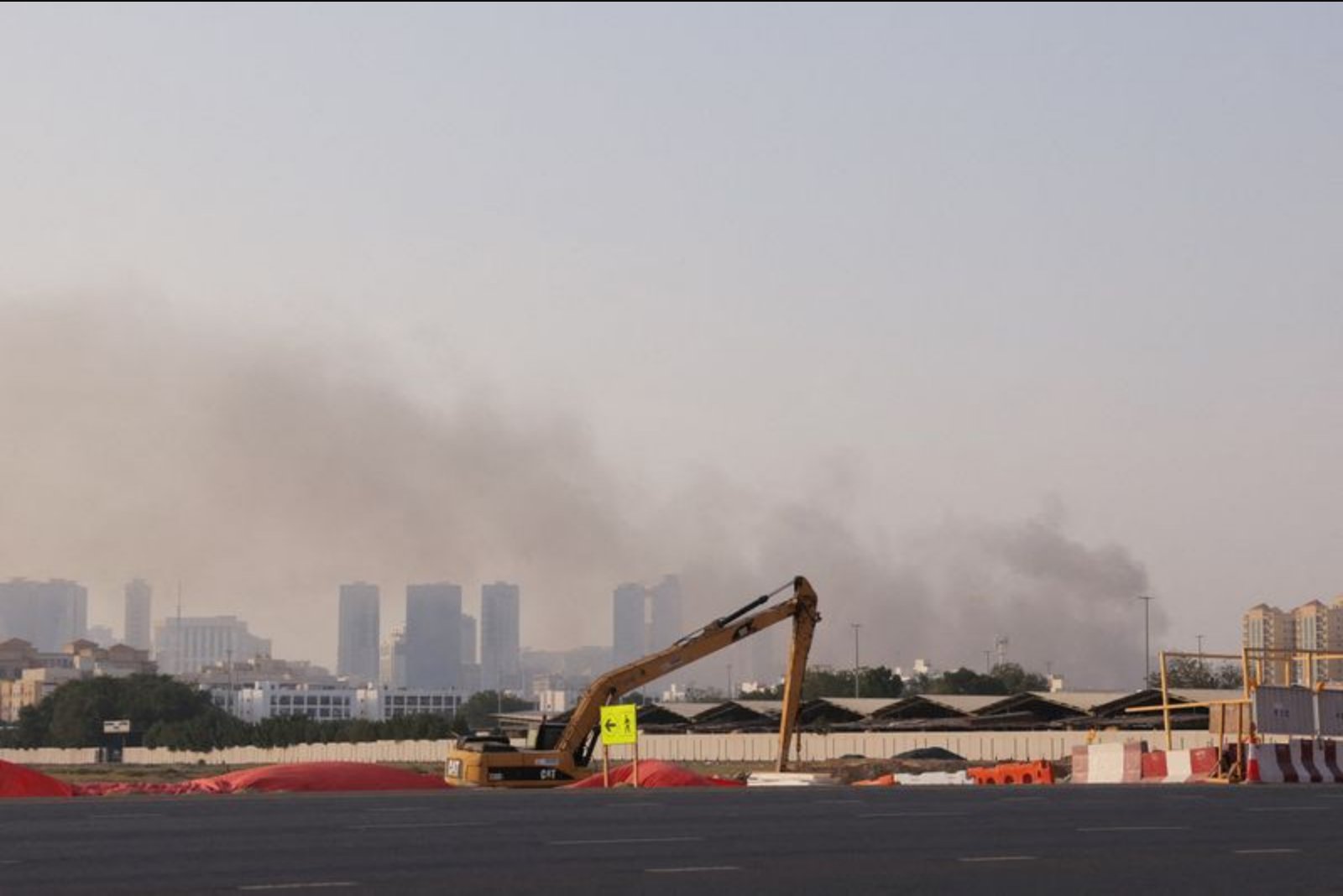
Overview
Iran’s retaliatory strikes across the Gulf have provoked sweeping business disruption, affecting airports, ports, hotels and financial markets in what regional observers describe as the most extensive interruption since the pandemic. The attacks, launched in response to a joint U.S.-Israeli assault on Iran, struck targets across every major state in the Gulf and landed in urban and commercial zones, prompting both immediate human casualties and broader operational shutdowns.
Human toll and infrastructure damage
Officials reported that three people were killed by the strikes in the United Arab Emirates. Loud explosions were heard for a second consecutive day in Dubai and Abu Dhabi. At key aviation hubs, Dubai International Airport and Abu Dhabi’s Zayed International Airport sustained damage; authorities reported one civilian killed and 11 people injured across the two airport sites. A berth at Dubai’s Jebel Ali Port also caught fire following an aerial interception, and residential areas near Dubai Marina and Palm Jumeirah suffered strikes that set the Fairmont The Palm hotel ablaze and damaged the Burj Al Arab.
Economic and market impacts
Markets reacted quickly when trading resumed in the region. Gulf equities fell sharply on Sunday: Saudi Arabia’s benchmark index opened more than 4% lower and closed down 2.2%. Oman pared losses to close 1.4% down, and Egypt finished the session 2.5% lower after recovering from earlier declines. Kuwait’s exchange took the unusual measure of suspending trading until further notice. UAE markets, which were closed on Sunday, were set to open on Monday amid heightened uncertainty.
Market participants voiced expectations of continued volatility while military actions remain active. "Markets will continue to be fragile and volatile as long as the military actions are active," said Mohammed Ali Yasin, chief executive of Ghaf Benefits, a Lunate company in Abu Dhabi. He noted that international institutional investors typically trigger initial selling pressures in such events, while local investors often attempt to cushion declines by buying leading stocks.
Sectoral consequences - logistics, trade and tourism
Air transport was immediately affected, with key transit airports including Dubai, Abu Dhabi and Doha in Qatar shut or operating with severe restrictions as much regional airspace remained closed. The flight disruptions and airport damage come at a moment when the Gulf functions as a critical global transit zone, amplifying the logistical consequences of the strikes.
Shipping and port operations were also hit. A fire at a berth in Jebel Ali - the port crucial to Dubai’s position as a trade hub - underlines the risks to container handling and transshipment activity. The strikes' impact on ports introduces the potential for chokepoints in regional freight flow if shipping risks increase, a concern echoed by market analysts.
The tourism sector sustained visible blows as well. The Fairmont The Palm was set alight, and the Burj Al Arab sustained damage. The Fairmont had recently been sold for $325 million to Kuwait’s Arzan Investment Management - a deal that had been cited as evidence of rising demand for Gulf hospitality assets. The destruction of prominent hotels and damage to leisure districts are clear blows to the region’s tourism economy.
Business calendar disruption - Ramadan networking
The strikes occurred during the Islamic holy month of Ramadan, a period when corporate iftars and suhoors serve as important networking opportunities. Emails reviewed by regional business contacts show that gatherings hosted by major organisations - including Dubai carrier Emirates, Abu Dhabi energy company Masdar, sovereign investor Mubadala, education firm GEMS and the Department of Government Enablement - were cancelled or postponed. The loss of Ramadan’s networking season imposes an intangible but meaningful cost on dealmaking and relationship-building that underpin commerce in the Gulf.
Government and corporate response
Travel advisories were updated by the United States, the United Kingdom and the European Union, each urging citizens to exercise extreme caution and to avoid non-essential travel to the Gulf. In response to the security situation, national authorities and employers moved rapidly to reduce exposure. The UAE federal labour authority advised companies to implement remote working arrangements through March 3, urging staff to avoid open areas except where roles require physical presence. Global companies with staff in the region were expected to follow local guidance on working from home in the immediate days ahead.
Regional fiscal context and market commentary
Analysts noted the uneven regional economic impacts. "Regionally, the impact across (Gulf) economies is mixed," said Vijay Valecha, chief investment officer at Century Financial. He observed that elevated oil prices provide a fiscal cushion for producers such as Saudi Arabia and Qatar, bolstering revenues and liquidity. At the same time, he warned that trade, logistics and tourism - particularly in the UAE - would face pressure if shipping risks rise or regional sentiment weakens.
Corporate exposure and financial services
Dubai and the UAE have become hubs for developers, retailers and global financial firms, hosting major companies such as Emaar Properties and Majid Al Futtaim as well as numerous hedge funds and international banks drawn to large sovereign wealth pools managed by entities including ADIA and Mubadala. The strikes’ direct hits on transport and hotel infrastructure, combined with travel curbs and a pause in key networking events, create a multi-front disruption to the commercial ecosystem that supports investment and capital flows.
Looking ahead
Observers expect continued fragility in markets and interruptions to commerce while the military actions persist. The combination of airport and port damage, tightened airspace and elevated travel advisories means that firms operating in logistics, trade, tourism and financial services will need to manage heightened operational risk in the near term. For a region where in-person relationships are central to business, the cancellation of Ramadan networking adds a soft-cost layer to the measurable damage to infrastructure and market values.
Reporting on economic and logistical effects. Analysis of market and corporate responses based on official statements and company cancellations.