
Overview
Goldman Sachs has revised upward its near-term outlook for European natural gas prices following disruptions tied to strikes that prompted QatarEnergy to stop liquefied natural gas production. The bank's strategists, including Samantha Dart and Frederik Witzemann, raised their April projection for the Dutch Title Transfer Facility - the regional benchmark for European gas - to 55 euros per megawatt-hour, up from a previous forecast of 36 euros/MWh. They also boosted their average forecast for the second quarter to 45 euros/MWh from an earlier 36 euros/MWh.
Recent market moves
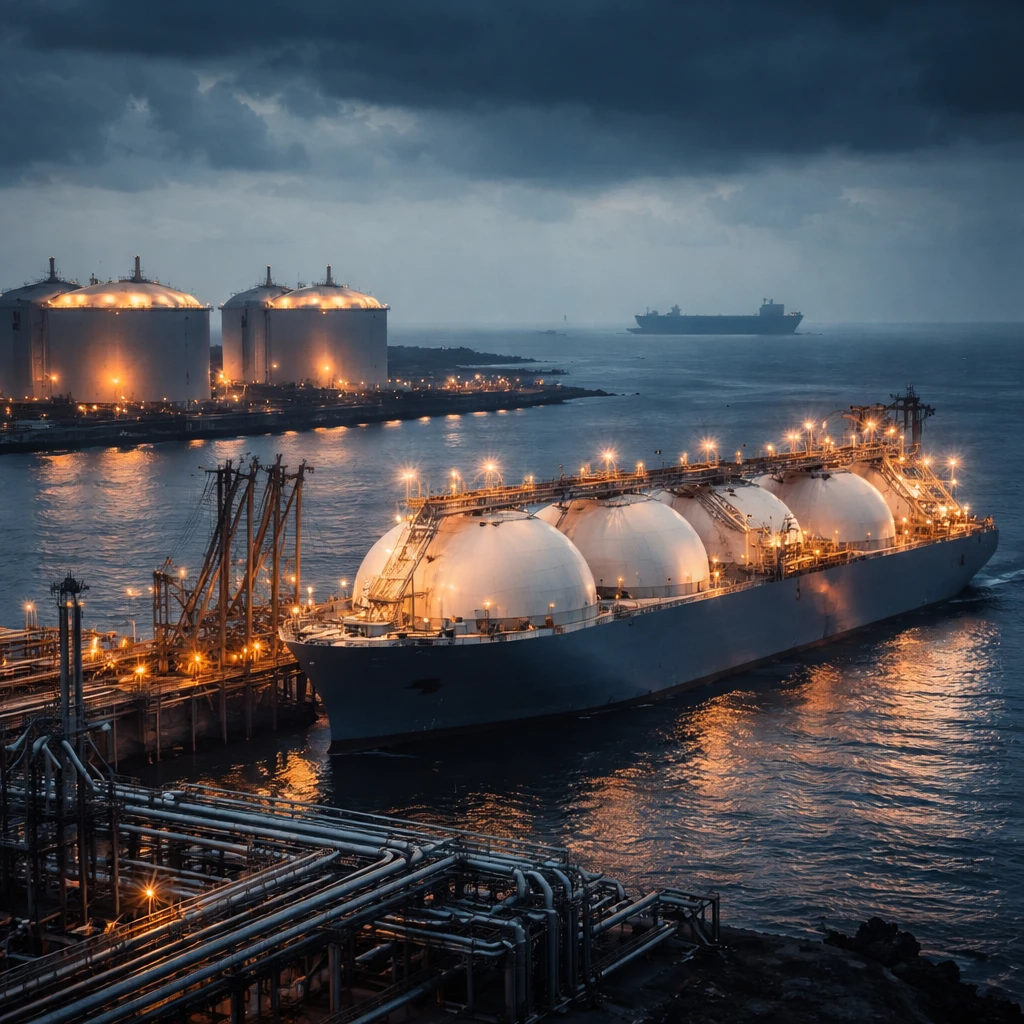
Traders pushed the TTF sharply higher in response to the developments. On Tuesday the benchmark climbed more than 25% to 55.85 euros/MWh, placing it near levels not seen since 2023. The immediate supply shock followed QatarEnergy's announcement that it would suspend LNG output and associated products after strikes on two of its gas facilities. The company said it would halt operations in response to those incidents, a move that removed a significant source of global liquefied natural gas from the market.
Regional vulnerabilities and geopolitical risks
Market attention has also focused on the Strait of Hormuz, a key maritime chokepoint for oil and gas shipments. Iranian officials have said they would attack any vessel attempting to transit the strait, a statement that has amplified concerns about the reliability of flows through that corridor. Goldman analysts noted that such threats, combined with the cessation of Qatari output, increase the potential for meaningful price upside in Europe, which imports roughly 5% of its gas from the Middle East.
"Uncertainty around the duration of the Qatari outage and the reliability of Strait of Hormuz flows, combined with higher-than-expected usage of gas for electricity in Europe last winter, will drive TTF prices temporarily higher still," the Goldman analysts wrote.
Potential magnitude of price moves
Goldman strategists estimated that the TTF could rise as much as 130% from where it was trading last week, potentially returning natural gas prices to ranges seen after the outbreak of the war in Ukraine in 2022. The firm highlighted two sources of uncertainty: how long QatarEnergy's output will remain curtailed and whether shipments through the Strait of Hormuz can be maintained without further incidents.
Broader market implications
A report in the New York Times, citing the Center for Strategic and International Studies, noted that constraints on gas supplies to Asia could increase demand for alternative supplies produced in the United States and other producing regions. The same report suggested that European gas prices, where storage levels are already muted, could continue to climb even after QatarEnergy restores production, as competing demand and constrained inventories would sustain upward pressure.
Conclusion
Goldman Sachs' upward revision of its first-half 2026 TTF forecasts reflects a reassessment of near-term supply risks following the Qatari production halt and heightened tensions around the Strait of Hormuz. The combination of immediate supply reductions and geopolitical uncertainty has driven rapid price appreciation and prompted strategists to factor in a materially higher baseline for regional gas prices.