
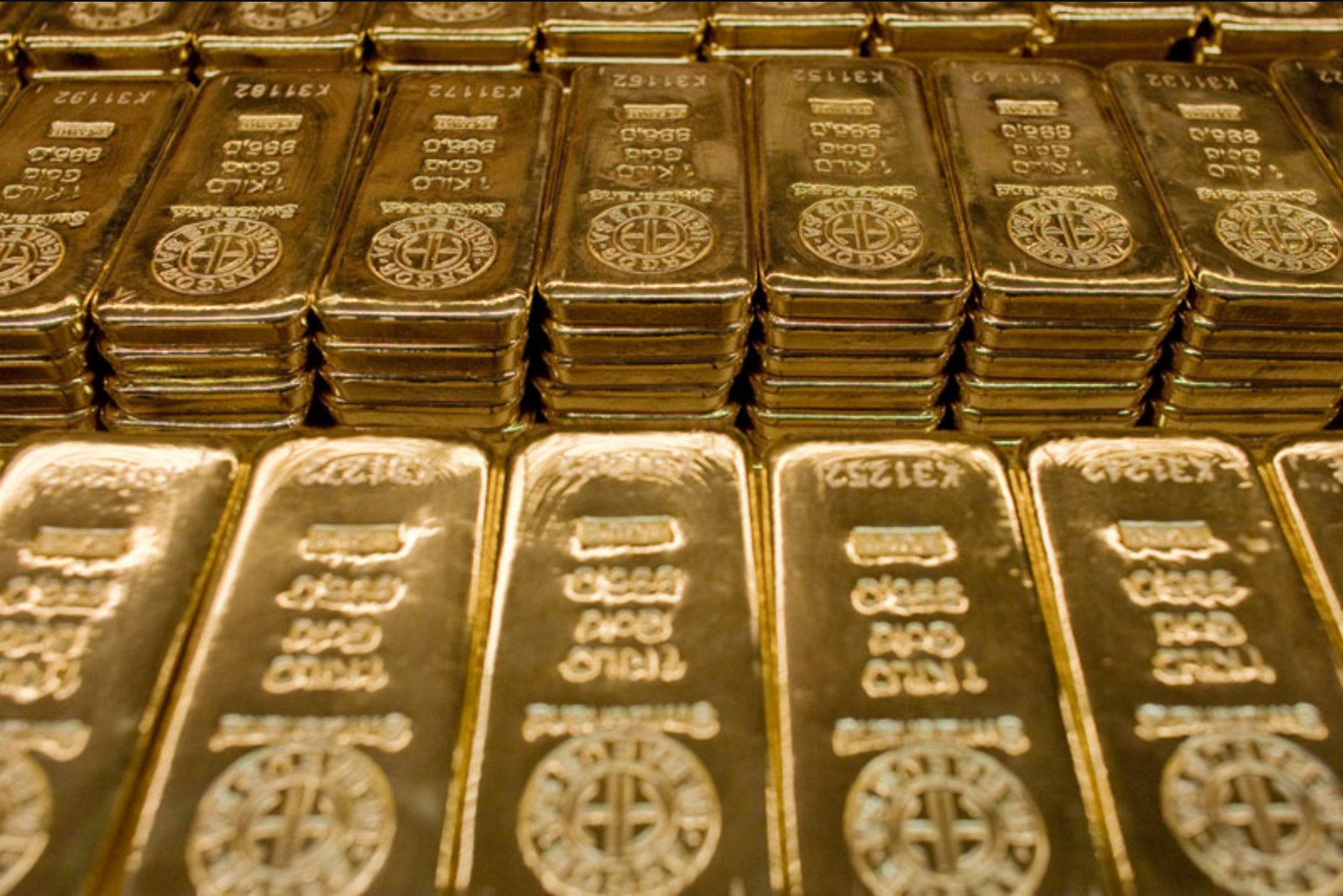
Gold was largely unchanged in Asian trading on Friday after retreating in the previous session, as support from safe-haven flows tied to widening conflict in the Middle East was offset by a firmer U.S. dollar and higher U.S. Treasury yields. The tussle between risk-off geopolitics and tighter financial conditions left bullion struggling to regain momentum.
Spot gold traded largely flat at $5,080.37 an ounce by 20:25 ET (01:25 GMT). U.S. gold futures gained 0.3% to $5,091.040. The yellow metal had fallen about 1% in the prior session and was positioned to lose nearly 4% on the week.
The fighting in the Middle East entered its seventh day on Friday with no obvious sign of de-escalation, keeping markets on edge. Over the past week, clashes between the U.S, Israel and Iran intensified, with missile strikes and retaliatory attacks spreading across the region. Market participants cited concerns that the widening conflict could threaten energy infrastructure and shipping routes.
U.S. President Donald Trump said he wanted a role in deciding Iran's next leader once the war ends, comments that underscored the political uncertainty clouding the region's outlook. Oil prices extended strong gains overnight as the conflict raised the prospect of supply disruptions. The resulting jump in crude fed worries about a renewed wave of global inflation, an outcome that complicates the calculus for central banks, including the U.S. Federal Reserve.
Higher oil prices typically feed into consumer-price measures, which can make policymakers more cautious about easing monetary policy. In this context, investors were awaiting the U.S. February nonfarm payrolls report due later on Friday as a potential gauge of labor-market strength and an indicator for the likely path of interest rates. A stronger-than-expected payrolls print could reinforce the view that the Fed has room to delay rate cuts, reducing gold's appeal because higher yields increase the opportunity cost of holding non-yielding bullion.
Gold generally benefits from geopolitical uncertainty and lower real interest rates, but this week the metal struggled to gain traction as a stronger dollar and rising bond yields diminished its safe-haven attraction. Those factors pushed investors toward cash and short-term instruments, weighing on bullion even as regional hostilities persisted.
Other precious metals showed modest moves. Silver edged up 0.5% to $82.68 per ounce, while platinum rose 0.7% to $2,134.76 an ounce. These gains were limited and came amid the same macro backdrop that pressured gold.
In sum, the gold market remained caught between opposing forces: escalating geopolitical risks that typically support bullion, and a financial environment characterized by a stronger dollar and rising yields that undercut its demand. Market attention was focused on incoming economic data and developments in the Middle East for signals that could break the current stalemate.
Summary
Gold steadied in Asian trade after a recent decline, pressured by a firm U.S. dollar and rising Treasury yields despite renewed Middle East hostilities. Spot gold was near $5,080.37 an ounce and U.S. futures were at $5,091.040. The metal slipped 1% in the previous session and was set for nearly a 4% weekly drop.
Key points
- Gold remains under pressure from a stronger U.S. dollar and higher Treasury yields, which reduce the metal's relative appeal - impacting commodities and fixed income markets.
- Escalating conflict in the Middle East continues to support safe-haven demand but has also driven oil higher, feeding inflation concerns and challenging central bank policy decisions - affecting energy and inflation-sensitive sectors.
- Investors awaited the U.S. February nonfarm payrolls report for clues on labor-market strength and the timing of potential Fed rate cuts - relevant to equities, bonds and currencies.
Risks and uncertainties
- Further escalation in the Middle East could widen safe-haven flows, but the current strength of the dollar and yields may blunt bullion gains - risk for commodities and energy markets.
- Rising oil prices could fuel inflation, complicating central bank decisions and potentially delaying interest-rate cuts - risk for the broader economy and financial markets.
- A stronger-than-expected U.S. payrolls print could reinforce expectations of delayed Fed easing, pressuring gold and influencing bond and currency markets.