
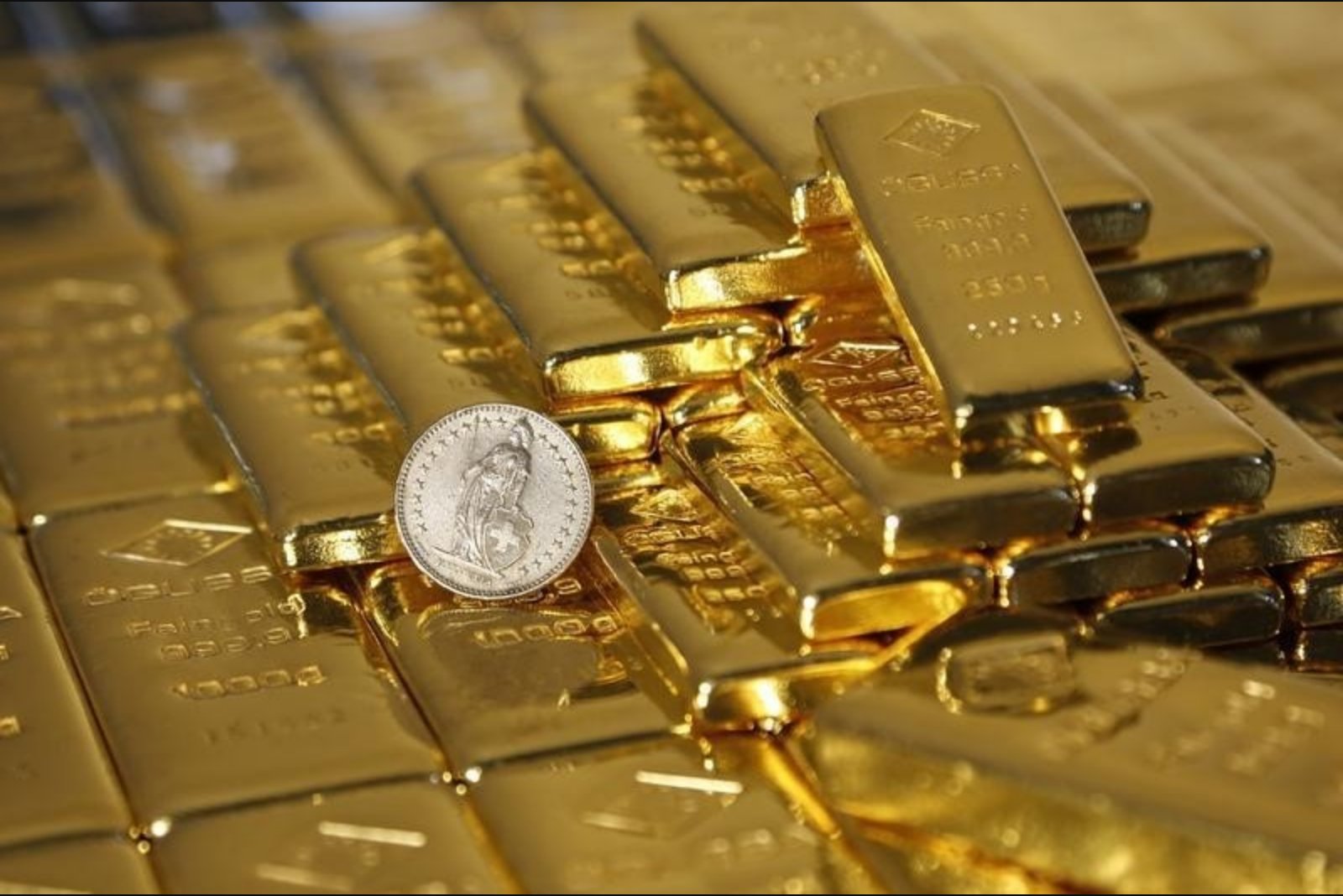
Gold slipped in Asian trade on Wednesday, as market participants weighed heightened tensions in the Middle East against fresh U.S. labour-market data that could affect the Federal Reserve's policy trajectory.
By 21:28 ET (01:28 GMT), spot gold had declined 0.5% to $4,462.93 an ounce. U.S. gold futures were also down roughly 0.5%, trading at $4,495.84 per ounce.
In recent sessions the metal has largely traded within a narrow band as investors balanced conflicting headlines tied to the Iran-related conflict.
Geopolitical developments continued to command attention. Israel sustained military operations in southern Lebanon while Iran launched ballistic missiles at Kuwait and Bahrain. Separately, U.S. forces carried out strikes on Iran's Qeshm Island, the U.S. Central Command said in a post on X. Qeshm Island is located near the Strait of Hormuz, a strategic waterway through which about one-fifth of global oil consumption passes.
An additional round of talks between Israel and Lebanon was scheduled for Wednesday, and questions remain over the status of discussions between Washington and Tehran. Officials from Iran and the United States said last week they had agreed on a tentative framework to halt the conflict, though that framework has not yet received formal approval.
State media in Iran reported that Tehran had not communicated with Washington for several days, a development that fed speculation the negotiations had stalled. U.S. President Donald Trump, however, said talks were continuing and expressed confidence that an agreement could still be reached.
Typically, bouts of geopolitical risk bolster demand for safe-haven assets such as gold. In this instance, higher oil prices tied to Middle East tensions have also raised inflation concerns and reinforced market wagers that the Fed could raise interest rates, a factor that can counterbalance safe-haven buying.
On the data front, Tuesday's report showed U.S. job openings unexpectedly rose in April, a signal that has strengthened expectations the Federal Reserve may keep policy tighter for a longer period. Investors were looking ahead to a slate of U.S. indicators due later on Wednesday, including the ADP employment report, the ISM services survey, and factory orders. Those releases precede Friday's more closely watched nonfarm payrolls report.
Current market pricing suggests the Fed will hold rates at its June meeting, but traders continue to assign a non-zero probability to a rate increase before year-end. Higher interest rates raise the opportunity cost of holding non-yielding assets like gold, placing downward pressure on bullion when rate-hike odds rise.
The U.S. Dollar Index was little changed against major currencies.
Other precious metals moved lower on the day. Silver fell 1.1% to $74.31 per ounce, while platinum eased 0.6% to $1,923.60 per ounce.
Market context: Spot and futures gold prices each retreated by about 0.5% amid a mix of geopolitical developments and U.S. labour-market data. Investors awaited additional U.S. economic reports later in the week ahead of nonfarm payrolls.