
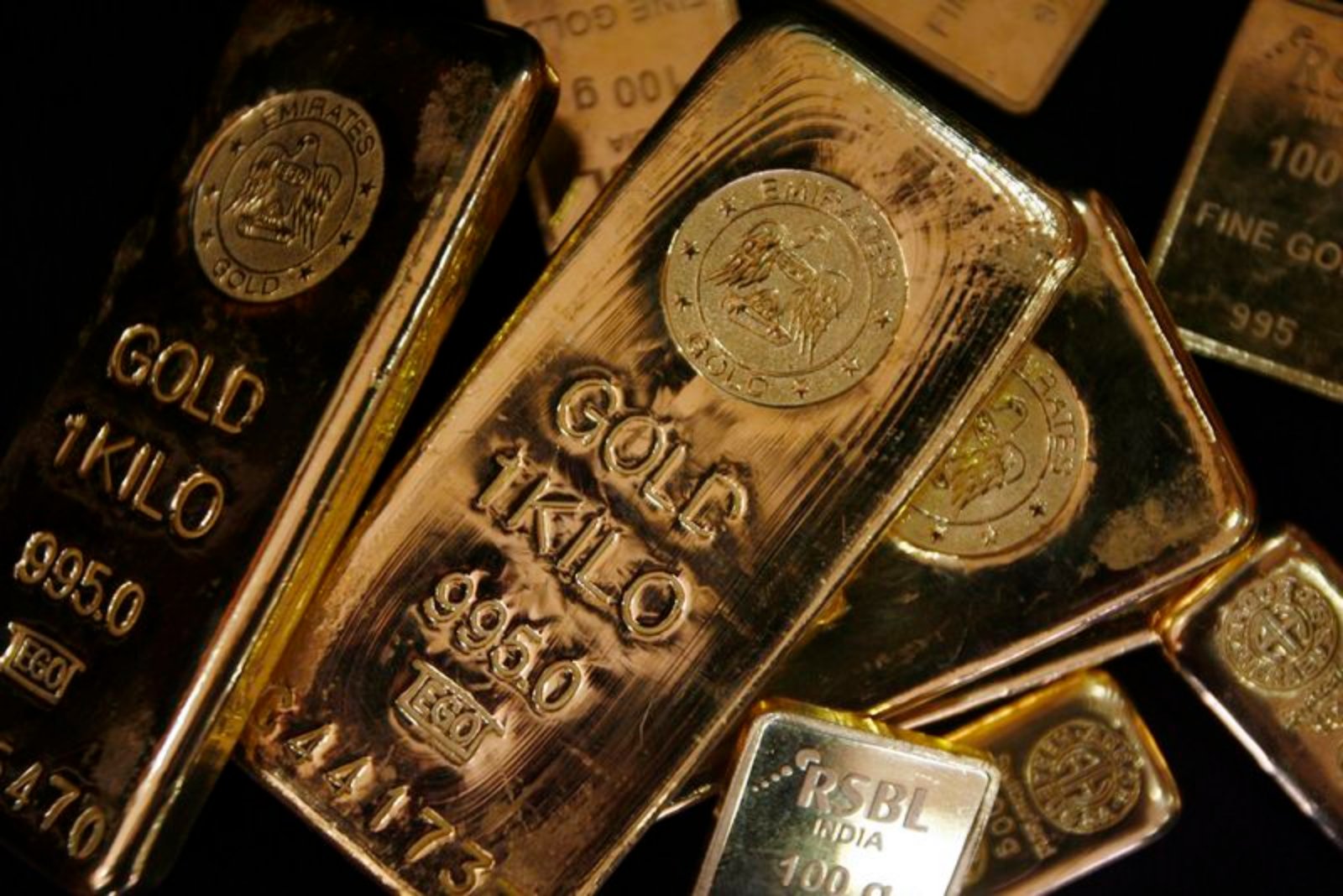
Summary: The U.S. and Israeli strikes on Iran have amplified uncertainty across global markets, prompting investors and traders to seek shelter in gold. Market participants describe an immediate knee-jerk reaction across commodities, particularly bullion and oil, while digital gold proxies showed weekend premiums ahead of traditional exchanges reopening. Analysts emphasised that the scale and duration of the conflict and any impact on oil flows will largely determine how sustained price moves become.
The recent strikes on Iran by U.S. and Israeli forces have triggered a marked increase in risk aversion among investors, with gold emerging as a primary safe-haven beneficiary. Traders and analysts offered a range of reactions over the weekend, highlighting both an expected initial price jump in precious metals and the factors that could constrain gains.
Market reactions and trader perspectives
Edward Meir, an analyst at Marex, described the immediate market response as a broad, reflexive increase across commodity markets. He said:
"I think you’re going to see a knee jerk spike up in most commodity markets, including gold and oil. This will be a natural response to the outbreak of hostilities, which was rather unexpected in terms of scale and scope."
Meir noted the potential for a sharp opening move in gold but warned of a likely retracement within the day. He added:
"I think we could open up by about $200/ounce on gold, but then drift lower over the course of the day. The markets are rather dispassionate when it comes to military conflicts; the only thing investors are ultimately focused on is whether the oil flows will be interrupted so once the initial spike is over, the initial rally tends to fade."
Tokenised gold and weekend pricing
With traditional exchanges closed over the weekend, traders watching tokenised gold instruments reported premiums, reflecting a bullish bid in digital proxies before markets reopen. Hugo Pascal, a precious metals trader at Inproved, said these instruments signalled a "flight to safety" ahead of the week’s open. He provided price levels for two popular tokenised gold products:
"PAX Gold (PAXG) is currently leading the charge at $5,344/oz (+2.2% since Friday), while Tether Gold (XAUt) has climbed to $5,292/oz (+1.2%)."
Pascal cautioned that weekend proxy premiums can overstate the initial gap seen when traditional markets reopen, though he said they accurately reflect directional intent:
"That weekend proxy premiums often overstate the initial gap but accurately reflect the direction".
Safe-haven demand likely to increase
Tim Waterer, chief market analyst at KCM Trade, highlighted that gold could see stronger-than-normal demand when markets return. He cited uncertainty over how long the conflict may persist and whether it could draw in other nations, as well as inflation-related concerns, as reasons for gold’s role as the preferred safe haven:
"Gold is likely to be in higher demand than usual when markets open on Monday. Given the risks regarding how long the conflict may last, which other nations could be dragged in, and inflation fears, gold is expected to assume its mantle as the safe haven asset of choice."
Waterer also noted that stock markets and other risk assets could face selling pressure, driving investors to seek shelter in assets perceived as safer, with gold likely near the top of that list.
Price targets and offsetting forces
Fawad Razaqzada, market analyst at City Index and Forex.com, said extra haven demand might push gold back toward previous highs:
"There will be extra haven demand for gold which could see prices rise to around $5,500 again, and possibly a new record high above January’s peak of around $5,600."
Razaqzada added that potential gains could be limited by a strengthening U.S. dollar, especially if crude oil remains sharply higher, which could act as a cap on gold’s advance.
Trading dynamics and market pricing
Independent metals trader Tai Wong suggested that the opening session might see a sell-off followed by buying interest if the geopolitical picture remains unclear for an extended period:
"I think gold and silver could sell off ’on the fact’ on the open but any significant sell off will find buyers as the picture in Iran will unlikely be clear for weeks to months."
Wong added that while a U.S. attack had been priced in to some extent, timing was uncertain and that the impact was evident in oil markets. He also observed that gains in cryptocurrencies could be an early signal of risk flows:
"I think a U.S. attack has been priced in but the timing was a bit uncertain. It’s certainly in the oil market. And the fact that crypto is higher might be a harbinger."
Strategic views from institutional analysts
Anz analyst Soni Kumari forecast an initially positive price reaction on the next trading day, with potential retracement later depending on developments:
"Tomorrow, the price reaction will be positive initially, though there could be some retracement later in the session depending on how events unfold."
Kumari said her team’s overall outlook remained constructive on gold, noting that geopolitics this year have been different with elevated tensions, and that the attack could have broader macro implications if oil prices rise sharply:
"Our overall view has not changed, we remain positive on gold ... Geopolitics has been very different this year, with tensions more intense, and after this attack there could also be macro implications, especially if oil prices rise sharply."
Joshua Rotbart, founder and managing partner at J. Rotbart & Co, expected heightened volatility and upward pressure in precious metals while stressing that the magnitude of moves will hinge on energy market impacts and whether deeper political change in Iran becomes possible:
"It is safe to assume that precious metals will experience enhanced volatility with upward movement."
"As the risk of a war with Iran was somewhat priced in the rally gold price had already, the extent of the movement will depend on the effect the conflict will have on the energy market, and on whether regime change in Iran is within reach."
Ole Hansen, head of commodity strategy at Saxo Bank, described the strikes as a worrying escalation likely to drive flows into precious metals and the energy sector. He said the size of the impact was uncertain but did not rule out the possibility of a fresh record for gold, given the momentum from the previous week:
"There is no doubt this is a worrying escalation and one that will drive investors into precious metals and the energy sector. How big the impact will be is anyone’s guess but given last week’s momentum I would not be surprised if gold prints a fresh record high."
As markets reopen, participants will monitor developments in the Middle East closely, particularly any signs that oil flows are threatened, which market participants identify as the key determinant for how sustained commodity price moves become.