
Overview
The ongoing conflict in the Middle East has created what international authorities and industry participants describe as a historic shock to global energy flows. Since airstrikes by the U.S. and Israel on Iran began on February 28, passage through the Strait of Hormuz - the narrow shipping channel along Iran’s coast - has effectively ceased for roughly 20% of the world's oil and liquefied natural gas (LNG). At the same time, repeated strikes by Iran and Israel on regional infrastructure have damaged gas fields, refineries and export terminals, producing outages that industry representatives say could take years to repair.
Supply losses and price response
Industry estimates indicate the crisis has taken about 400 million barrels of crude out of the market - roughly equivalent to four days of global supply. That immediate loss of supply has contributed to price spikes of about 50% in benchmark oil markets since the outbreak of hostilities. Global crude benchmarks have climbed above $110 a barrel, while some Middle East grades - crucial to Asian economies - have approached record highs near $164 a barrel.
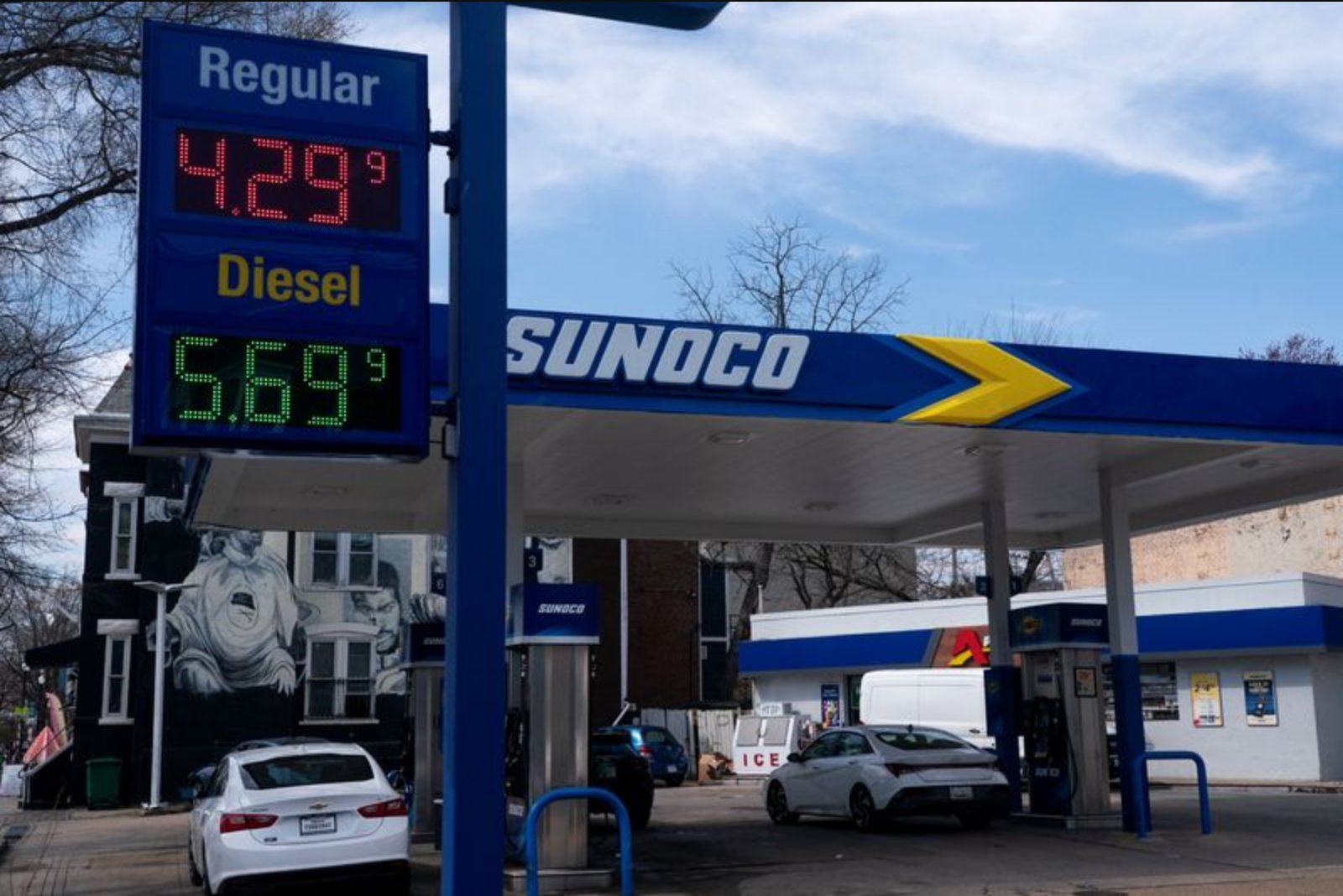
Those base crude increases have cascaded through refined fuels and feedstocks. Jet fuel in Europe set new records near $220 per barrel, a rise that is likely to be passed on to airline customers through higher ticket prices. Retail gasoline prices in the United States, where imports from the Middle East are limited, have risen by more than $1 per gallon since February 28 to about $4 a gallon.
Why this episode is different
Consultants and energy specialists highlight the unusually broad range of products at risk, noting that the disruption affects not only fuels but also chemicals, LNG and fertilizer inputs. Aditya Saraswat, senior vice president at Rystad Energy, said the scale and breadth of exposed supply chains make this crisis qualitatively different from prior periods of Gulf tension.
Dan Pickering, chief investment officer at Pickering Energy Partners, framed the immediate policy trade-offs plainly: consumers cannot conserve enough to avoid the market response. "You’re not going to conserve your way around this. What it’s going to translate to is price rises high enough that people stop consuming," he said.
Physical damage and medium-term outages
Recent strikes have struck hard at gas infrastructure. Israel’s attack on Iran’s South Pars gas field and Iran’s subsequent strike on Qatar’s Ras Laffan LNG complex have led to direct production losses. QatarEnergy’s chief executive Saad al-Kaabi told Reuters that Iranian attacks will put out of commission 12.8 million tonnes per year of LNG - roughly 3% of global supply - for a period of three to five years.
Industry officials warn these are not short interruptions. Damage to gas fields, refineries and terminals will require extended repair work, and some facilities could be offline for years. That long-tailed recovery timeline helps explain why prices have reacted so sharply and why policy steps to conserve supply are being taken on multiple continents.
Government and industry responses
The International Energy Agency (IEA) has characterized the situation as the worst global energy disruption in history, overtaking past shocks such as the 1973 Arab oil embargo. In response, the IEA agreed earlier this month to release a record 400 million barrels from emergency stockpiles. Even so, analysts caution that this release covers a limited portion of the disruption - roughly 20 days of the impact - and therefore will not fully offset the shortfall.
Governments and institutions are moving to conserve fuel and reduce demand. Examples include Thailand ordering civil servants to curtail overseas travel and use stairs instead of elevators; Bangladesh temporarily suspending university operations; Sri Lanka instituting fuel rationing; China banning exports of refined fuels; and the United Kingdom including a speed limit reduction in its energy contingency planning. The IEA has also proposed demand-reduction measures such as teleworking and avoiding air travel, steps that are intended to blunt immediate consumption while longer-term repairs and supply adjustments are pursued.
Markets and economic implications
Energy price shocks typically flow through to broader inflation, weighing on consumers and corporations. That dynamic has political implications in countries where leaders must justify military actions that contribute to energy insecurity. Elevated energy costs add pressure to household budgets and input costs for businesses, heightening the economic stakes of sustained disruption.
Analysts at major banks highlight that when supplies are physically unavailable, lowering consumption may be the only viable remedy. Natasha Kaneva, an analyst at JP Morgan, noted that the market is confronting an acute shortage of refined products that cannot be resolved simply through behavioral changes because the products themselves are not available to buy.
Downstream effects on manufacturing, chemicals and agriculture
The reach of this disruption extends beyond transportation fuels. Oil and gas derivatives serve as feedstocks for petrochemicals, plastics and fertilizers, so shortages and price spikes risk disrupting manufacturing and agricultural cycles. Menelaos Ydreos, secretary general of the International Gas Union, emphasized the essential nature of fuel and chemical supplies to sectors ranging from pharmaceuticals to grain production, and called for an immediate halt to attacks on energy facilities and for the reopening of traffic through the Strait of Hormuz.
Fertilizer markets are already seeing significant stress. Around one third of global fertilizer trade typically transits the Strait of Hormuz and much of that flow is now stuck. Prices for nitrogen-based fertilizers, including urea - the single most important fertilizer product - have climbed between 30% and 40% since the conflict began. That has left some farmers, particularly in the United States, reporting shortages at retail outlets ahead of spring planting seasons.
Fertilizer manufacturers in countries including India, Bangladesh and Malaysia are responding by pausing orders, cutting output or closing plants altogether because they lack the necessary feedstocks. Maximo Torero, chief economist at the United Nations Food and Agriculture Organization, warned that if the conflict persists for even a few more weeks, global food supplies will face significant disruption. "This will affect planting. ... There will be a lower supply of commodities in the world - of staple cereals, of feed, and therefore of dairy and meat," he said.
About half of the world’s agricultural output relies on fertilizers, and in some countries fertilizer costs can represent up to half of the cost of grain production. That concentration of input dependence amplifies the potential for price-driven supply shocks to reverberate through food markets.
Outlook and constraints on mitigation
Measures such as emergency releases from strategic stockpiles and government-led conservation efforts can attenuate the immediate pain but are unlikely to fully replace lost production, particularly when physical damage to production facilities and export infrastructure is significant and may require years to repair. The IEA’s record stock release is substantial by historical standards but, on its own, buys only a limited window in which demand-reduction measures must operate.
In the near term, consumers and businesses are likely to face higher costs for transportation fuels, power and petrochemical feedstocks. If disruptions to fertilizer supply persist, planting decisions and agricultural output could be affected, with potential knock-on effects for food prices and availability. The scale and duration of these impacts will depend on how long shipping through the Strait remains constrained and how quickly damaged facilities can be brought back online.
Key points
- Closure of the Strait of Hormuz and strikes on Gulf energy facilities have removed roughly 400 million barrels of oil from the market and cut about 12.8 million tonnes per year of LNG capacity for years, triggering price increases of around 50% for oil and record highs for some Middle East crudes.
- Higher energy and fuel costs are pressuring consumers and businesses globally and prompting government actions to conserve energy, including fuel rationing, travel restrictions and strategic stock releases.
- Critical downstream sectors - including petrochemicals, plastics, fertilizers, and agriculture - are at risk, with fertilizer prices up 30-40% and reported supply disruptions that could impact planting and food supplies if the conflict continues.
Risks and uncertainties
- Duration of infrastructure outages - Damage to gas fields, refineries and export terminals could take years to repair, prolonging shortages for oil, gas and LNG and limiting the effectiveness of short-term mitigation measures. This affects energy, shipping and industrial sectors.
- Insufficient stockpile response - The IEA’s release of 400 million barrels covers only a limited portion of the disruption (roughly 20 days of the impact), meaning price and supply pressures may persist despite emergency measures. This uncertainty impacts fuel markets and inflation outcomes.
- Fertilizer supply disruptions - With about one third of fertilizer trade transiting the Strait of Hormuz and nitrogen-based fertilizer prices already up markedly, agricultural production and food supplies face significant near-term risk if the conflict continues. This influences commodity markets and food security.
Disclosure