
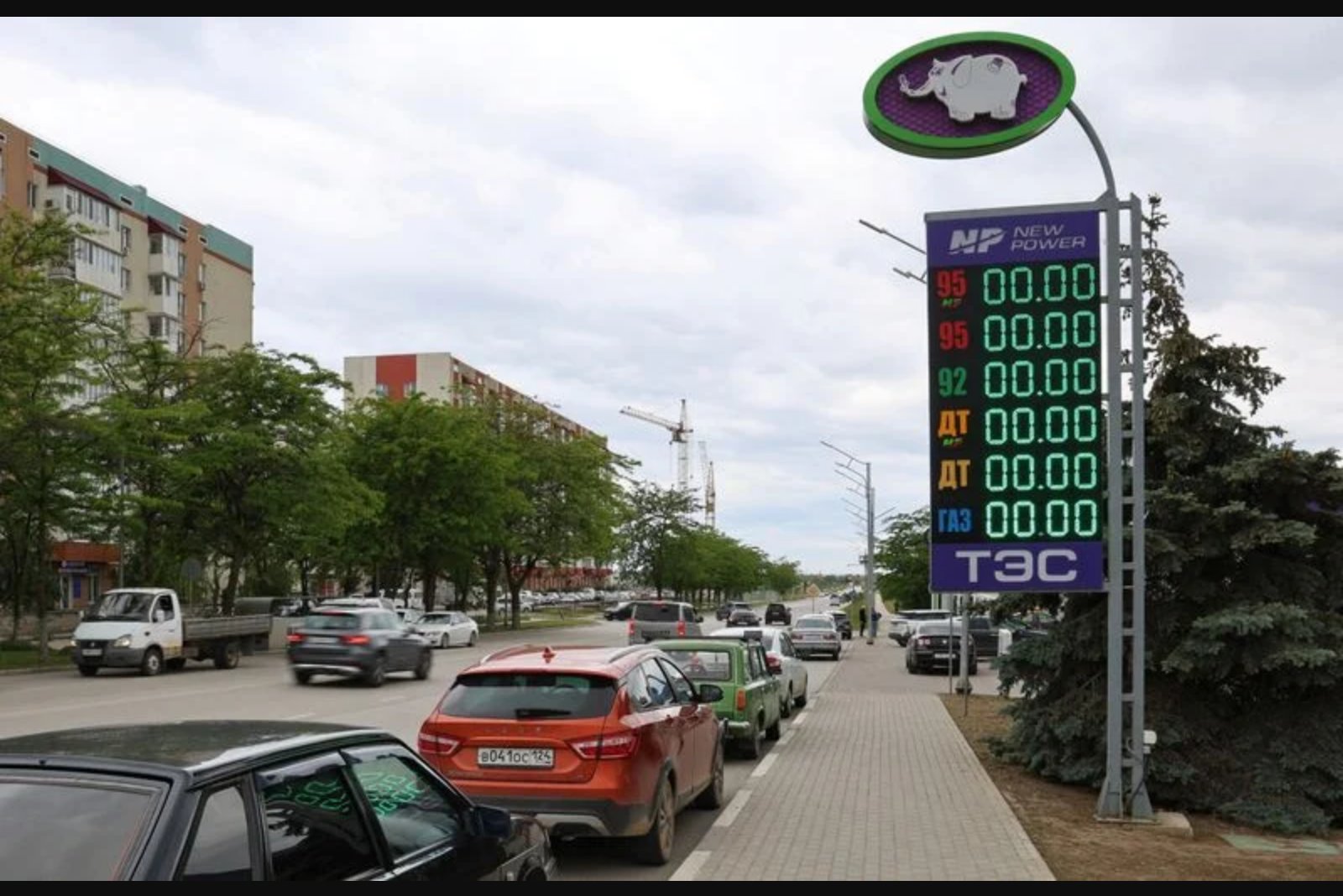
SEVASTOPOL, Crimea, June 1 - Motorists across Russian-controlled Crimea faced restricted access to gasoline on Monday as fuel deliveries along south-eastern Ukrainian roads were disrupted by Ukrainian drone strikes, witnesses and local officials said.
Officials reported limits on sales of Ai-95, the most commonly used gasoline, and said residents would need fuel coupons to make purchases. In Sevastopol, the peninsula's largest city and the longstanding home port of Russia's Black Sea Fleet, witnesses observed long lines at service stations as supplies tightened.
"I haven’t been able to fill up for two days now," resident Oksana Senchenko said. "Yesterday there was no gasoline, and today I’m driving around town and there’s no gasoline, neither 92 nor 95," she added, describing repeated trips to stations without success.
More than four years after the 2022 invasion of Ukraine, Russia continues to face frequent Ukrainian attacks on its oil infrastructure while Western sanctions have raised the costs of crude exports. Against that backdrop, local authorities in Crimea moved to ration commonly used fuel and introduce coupon mechanisms to manage limited supply.
In addition to the restrictions in Crimea, fuel stations in parts of Russia nearer the Ukrainian border, including the Belgorod region, have also limited sales, Reuters witnesses reported.
Former Ukrainian lawmaker Oleg Tsaryov, a pro-Russian figure, pointed to attacks on the overland corridor linking Crimea to mainland Russia. He said the road in the north that connects the peninsula to the mainland had been targeted, adding: "Fuel in Crimea is being sold in limited quantities and via rationing coupons. The reason is Ukrainian drone attacks on fuel trucks on the ’Novorossiya’ highway - a land corridor linking mainland Russia and Crimea,"
Moscow-backed Crimea governor Sergei Aksyonov said that restrictions were in place on sales of Ai-95 and that people would have to use fuel coupons for purchases as deliveries and inventories were adjusted to the new security and logistical conditions.
Sevastopol's Russian-backed governor, Mikhail Razvozhayev, urged calm and cautioned against panic. "The current difficulties are linked to the need to strengthen security measures and optimise the logistics routes used to deliver fuel to our city. These are temporary but objective challenges that we will overcome," he said.
The Russian government said on Monday it had banned aviation fuel exports until November 30, a move that reflects broader constraints on fuel flows amid heightened security concerns and export complications.
Crimea's status remains a central point in the wider conflict. Russia took control of Crimea in 2014 after Ukraine's pro-Russian president, Viktor Yanukovych, was ousted during protests in February 2014. Following a disputed referendum, Crimea voted to become part of Russia, and Moscow formally annexed the peninsula.
The peninsula, which extends into the Black Sea off southern Ukraine, was incorporated into the Russian Empire along with most Ukrainian territory by Catherine the Great in the 18th century. It later belonged to Russia within the Soviet Union until 1954, when it was transferred to Ukraine, then a Soviet republic, by Nikita Khrushchev.
Ukrainian President Volodymyr Zelenskiy has ruled out ceding territory occupied by Russian forces and has said Ukrainian sovereignty of Crimea must be restored.
This episode of fuel rationing reflects immediate operational strains on transportation and logistics networks serving Crimea, and highlights how attacks on supply convoys can rapidly affect retail fuel availability in cities reliant on overland corridors. Local officials framed the limits as temporary, tied to enhanced security measures and the need to reroute and stabilise logistics chains.