
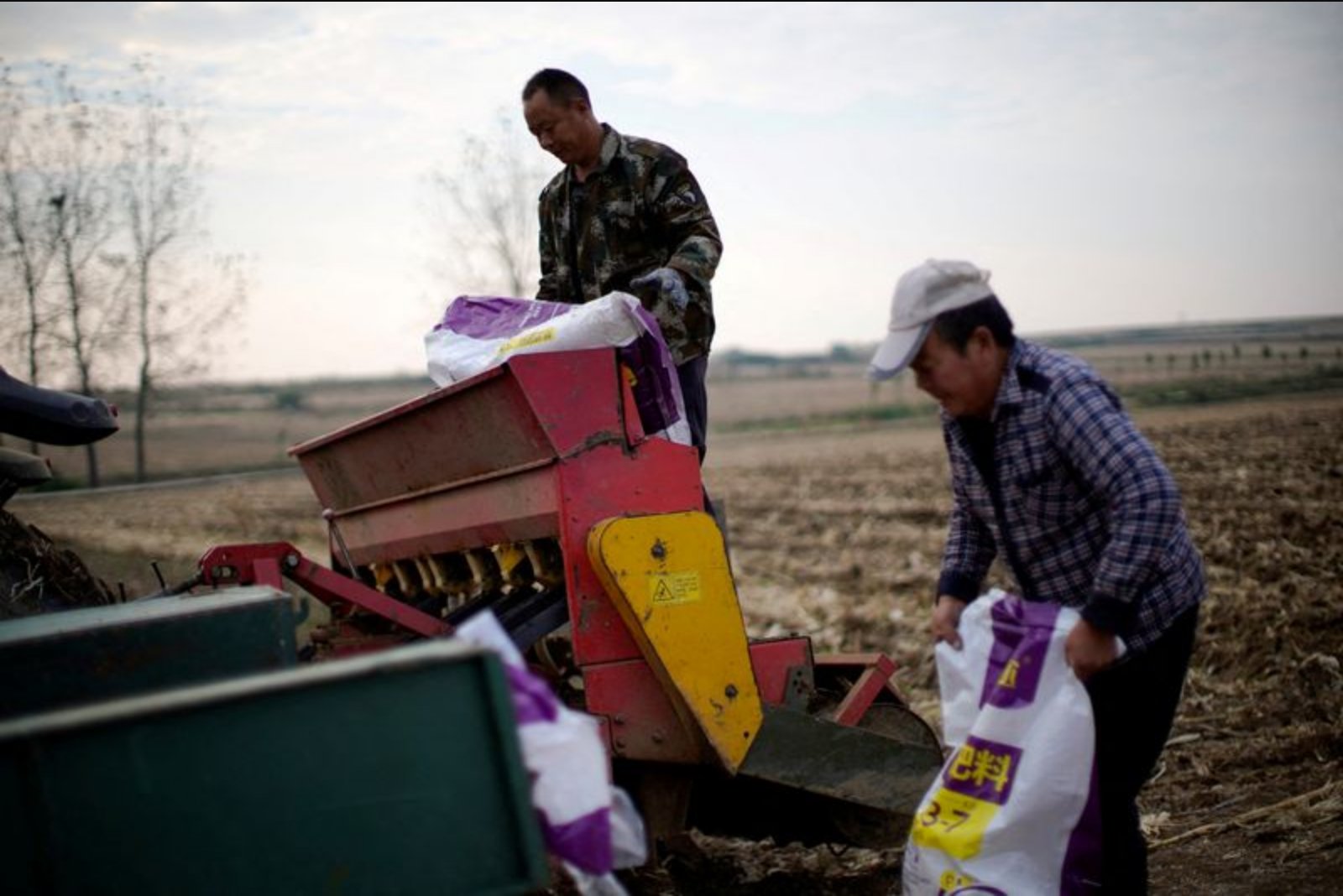
As the U.S.-Israel war with Iran enters its third week, analysts warn fertiliser markets are under severe pressure, with consequences for food security in developing countries in the near term. The escalation has disrupted trade routes and forced energy and fertiliser plants to pause output, adding to an already tight supply picture for nitrogen-based fertilisers.
Why the Strait of Hormuz matters
Fertiliser manufacturing is energy intensive, relying heavily on natural gas as a feedstock. Energy costs can account for as much as 70% of production expenses for some fertiliser processes. That heavy reliance helps explain why a significant share of global fertiliser output is located in the Middle East, and why interruptions in that region ripple through world markets.
About one-third of globally traded fertiliser moves through the Strait of Hormuz, a relatively narrow shipping corridor along Iran's coastline. Since the conflict began, that route has largely been shut, and with it the movement of roughly 20% of the world’s oil and liquefied natural gas that normally transit the strait. Missile and drone strikes across the Gulf have led operators to suspend regional energy production, which in turn has forced fertiliser plants in the Gulf and beyond to reduce or stop output just as farmers in the Northern Hemisphere prepare for spring planting.
Fertilisers and food security
Fertilisers are central to modern agriculture: roughly half of the world’s food is produced using fertiliser inputs. In some national contexts, fertiliser costs can represent up to 50% of the expense of producing grain. The United Nations’ food agency had signalled that many low-income countries were already facing food insecurity prior to the current hostilities, leaving little buffer to absorb supply or price shocks.
Nitrogen-based products such as urea are especially important in the near term because failing to apply them in a single season typically reduces crop yields. Phosphate- and potassium-based fertilisers are also important, but their absence is generally less immediately damaging to yields over a single season than missing nitrogen inputs. Even before the current conflict, the global urea market was tight: Europe had curtailed output after losing access to cheaper Russian gas, and China had imposed export restrictions on several fertiliser products, including urea, to preserve domestic supplies.
Which plants and countries have been affected
Regional stoppages have already been reported at major facilities. Qatar Energy has halted production at what is described as the world’s largest urea plant after shutting gas output in response to attacks on its liquefied natural gas facilities. In India, a major global urea consumer and producer market, three urea plants have cut output as LNG supplies from Qatar have plummeted. India buys more than 40% of its urea and phosphatic fertilisers from the Middle East, and authorities recently agreed to purchase 1.3 million tons of urea, some of which might not arrive on time.
Other national impacts include Bangladesh, which has closed four of its five fertiliser factories, and Australia, where Wesfarmers has warned of possible shipment delays including for urea. Egypt, which supplies 8% of globally traded urea, could find nitrogen fertiliser production challenged after Israel declared force majeure on gas exports to the country, according to Scotiabank and Rabobank analysts. Brazil is reported to be almost entirely reliant on urea imports, nearly half of which normally pass through the Strait of Hormuz.
In the United States, farmers are encountering empty shelves at agricultural suppliers, with the country around 25% short of the fertiliser supplies normally expected for this time of year. Scotiabank estimates global urea exports may fall to approximately 1.5 million metric tons in March, compared with 3.5 million metric tons without China’s restrictions, or between 4.5 and 5 million metric tons were China to be fully exporting.
Price impacts and market outlook
Market responses have been swift. Urea export prices in the Middle East rose by roughly 40% to just above $700 per metric ton last Friday, up from just under $500 per metric ton before the war, according to Argus. In the United States, fertiliser prices have surged by as much as 32% since the conflict began. Some analysts warn nitrogen fertiliser prices could roughly double if the war is prolonged.
Given the Middle East’s significant share of global supply, industry observers say no single producer can quickly make up for the lost volume. Chris Lawson, an analyst at CRU, noted that Russia, despite being the world’s largest fertiliser exporter, is also confronting supply disruptions related to drone strikes in Ukraine, while China is limiting outward shipments despite having production capacity. Those simultaneous constraints reduce the market’s ability to replace volumes lost from the Gulf.
Implications for planting and food availability
The timing of these disruptions is critical. Farmers across the Northern Hemisphere are preparing for spring planting, and nitrogen fertilisers like urea are among the most time-sensitive inputs. If supplies do not arrive on schedule, crop yields could suffer for the season. With many lower-income countries already vulnerable to food insecurity and with fertiliser representing a substantial portion of grain production costs in some markets, the current shocks raise the prospect of near-term strains on food availability.
Analyst perspectives and remaining uncertainties
Argus analyst Marina Simonova highlighted the direct link between fertiliser availability and food production, while Scotiabank and Rabobank analysts flagged potential production shortfalls in countries dependent on regional gas supplies. Uncertainties remain around the duration of the conflict, the pace at which shipping through the Strait of Hormuz can resume, and whether regional energy facilities will restore output quickly enough to prevent prolonged fertiliser plant closures.
The combination of constrained transport routes, suspended gas output feeding fertiliser plants, and pre-existing export restrictions in parts of the world has produced a tight and fragile market. How these factors evolve will determine whether current price spikes translate into longer-term shortages or a brief, acute disruption tied to immediate logistical and production stoppages.