
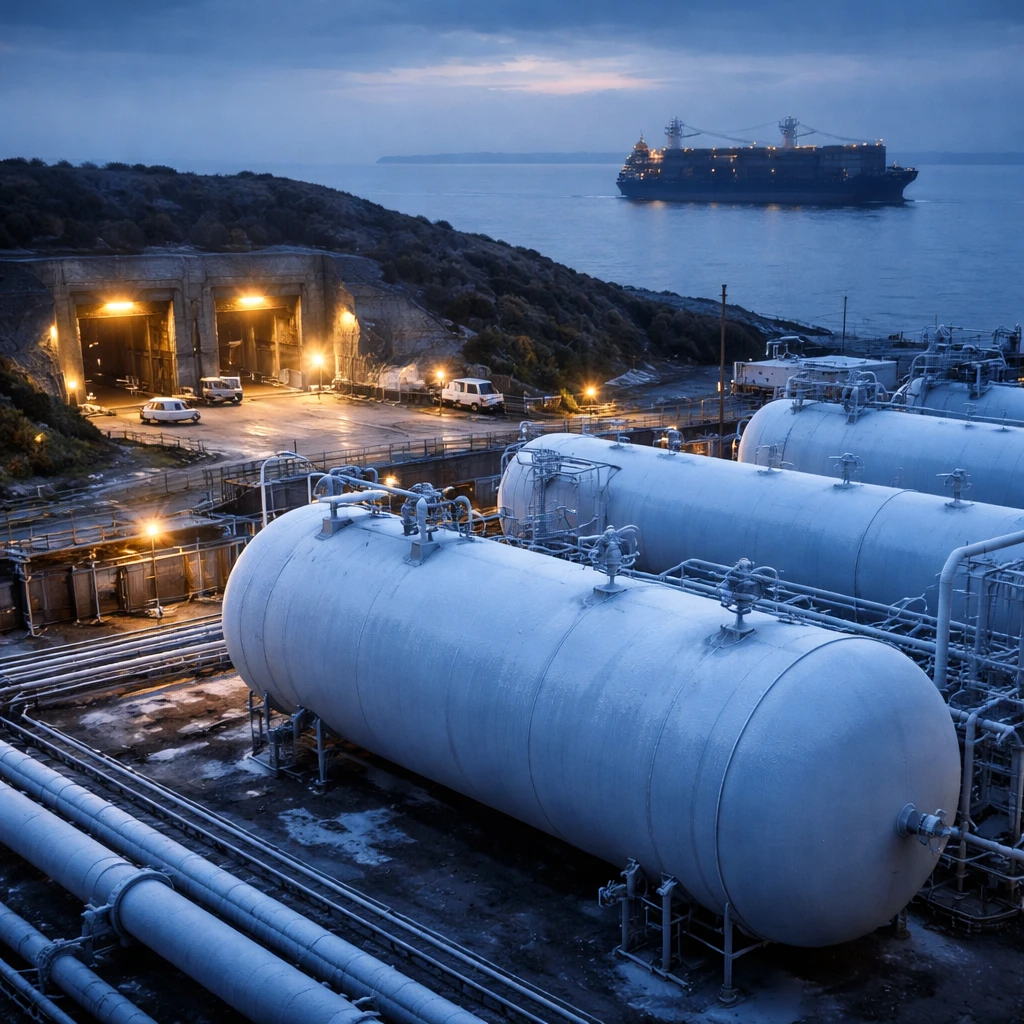
Helium markets could see a marked rise in prices if the conflict involving Iran continues for an extended period, according to analysts at Bernstein. The firm, led by James Hooper, said the immediate threat to semiconductor manufacturing appears limited, but warned that prolonged geopolitical disruption would still reverberate through helium pricing.
Qatar is a central focus of market concern because it accounted for roughly 34% of global helium production in 2024, making it the world's second-largest producer. That concentration has prompted questions about the potential for supply interruptions to affect industries that rely on helium, notably semiconductor fabrication.
Despite the prominence of Qatari output, Bernstein's team argued that chip manufacturing is unlikely to face significant short-term disruption. The analysts pointed to existing supply buffers, the presence of alternative producers, and industry stockpiles as factors that should mitigate the immediate impact of any disruption to Qatari supply. "We believe disruption to chipmaking is unlikely, and currently see little or no risk to our semiconductor coverage from potential helium shortages at this time," the analysts wrote.
Still, Bernstein emphasized that market dynamics could change if geopolitical tensions persist. "Albeit helium prices are very likely to rise significantly in an extended conflict," the report said, stressing the difference between near-term resilience and the potential for longer-term price pressure.
The analysts highlighted several structural elements that have helped soften the market recently. One factor is the acceleration of helium supply growth relative to demand in recent years, in part driven by increased production in Russia. That influx of supply had placed downward pressure on helium prices even before the current geopolitical situation.
Inventory practices in the semiconductor industry add another buffer. Bernstein cites SK Hynix as an example, noting that the memory chipmaker typically holds several months' worth of production materials. Reports also indicate that Korean semiconductor manufacturers may maintain around six months of helium inventory. In addition to inventories, chipmakers can recycle helium within their processes. Bernstein noted recycling efficiencies in the range of about 75-90%, while acknowledging that recycled gas will not eliminate the need for fresh supply over time: "Chipmakers can also recycle helium, which we understand has c.75-90% efficiency, but eventually they’ll need new supplies," the analysts added.
Storage infrastructure further supports market resilience. Helium is an inert gas that can be stored indefinitely in underground salt caverns and moved globally, enabling industrial gas producers to keep strategic inventories that can be deployed when disruptions occur.
Market prioritization in the event of scarcity would likely favor semiconductor customers. According to Bernstein, chipmakers constitute the largest single end-market for helium and are among the least price-sensitive users. That means other, more price-sensitive applications could be deprioritized if supplies tightened.
The analysts also considered scenarios involving major shipping chokepoints. Even if the Strait of Hormuz were to remain closed for an extended period, Bernstein wrote they were not certain semiconductor production would be interrupted. They noted the ongoing trend of supply growth outpacing demand in recent years and observed: "We’re not sure chip production would be interrupted, even if the blockage extends for the rest of 2026."
In summary, Bernstein's assessment draws a distinction between the low probability of immediate disruption to semiconductor output and the elevated risk that sustained geopolitical conflict would push helium prices higher. The combination of supply growth, stockpiles, recycling and underground storage provides a degree of short-term protection for chipmakers, but a prolonged disturbance to production in major supply centers would still carry meaningful pricing consequences.