
Natural gas benchmarks in Europe jumped sharply on Tuesday as market participants reacted to a halt in liquefied natural gas production in Qatar and renewed threats to key shipping routes. The immediate price movement reflected investor concern that the outage could tighten already strained global supplies.
The Dutch TTF front-month contract recorded strong gains, at one point advancing by more than 24% to 55.40 euros per megawatt-hour, a level described as around the highest since 2023. More broadly, European natural gas prices were reported to have surged by over 28% on the session.
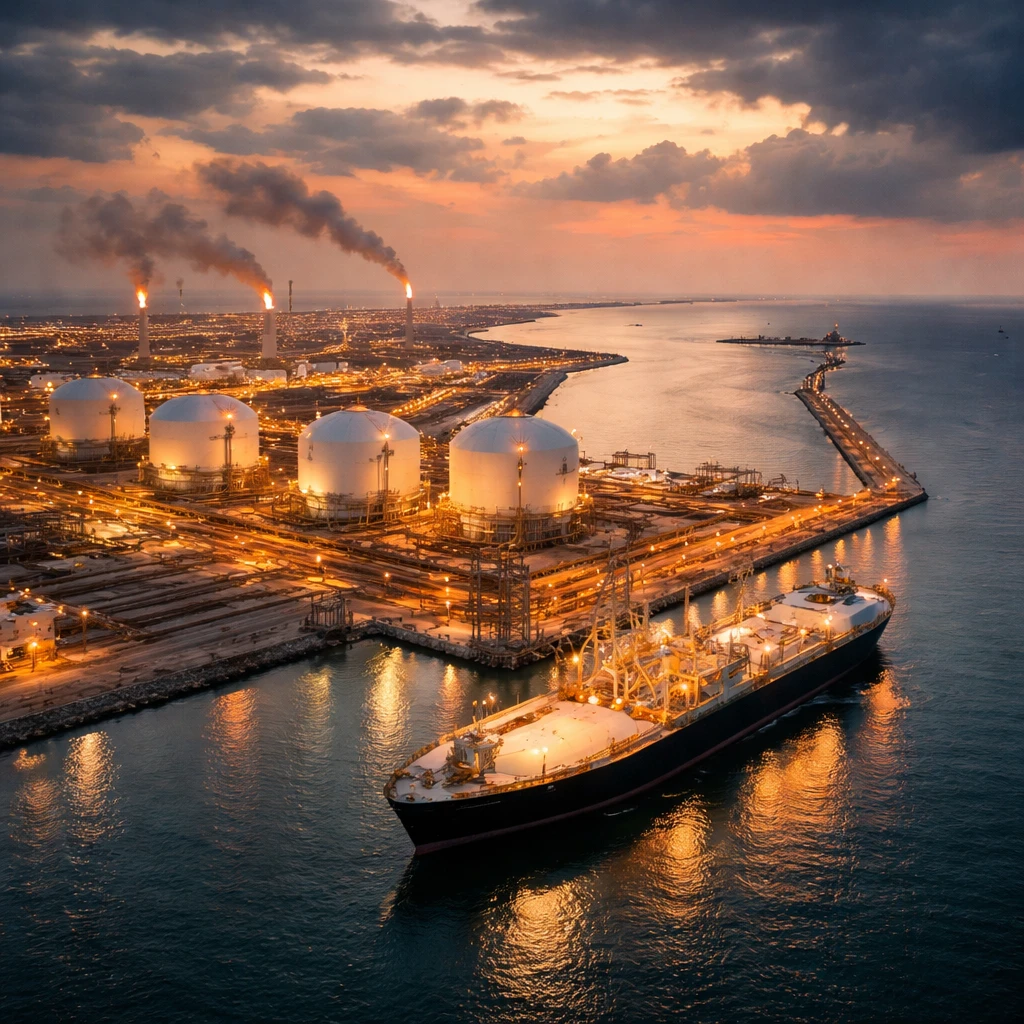
The price action followed an announcement from Qatar's state energy company that it would stop LNG output and related product flows after strikes affected two of its gas facilities. The company identified the disruption as the proximate cause for the production shutdown, and markets reacted by repricing near-term availability.
Added to concerns over the Qatari outage are threats to marine transit through the Strait of Hormuz. A senior official from the Iranian Revolutionary Guards publicly vowed to attack any vessel attempting to pass the strait, raising the specter of disruptions to routes used for oil and gas shipments.
Those two developments - the stoppage of Qatari LNG production and threats to Hormuz transits - have particular resonance for Europe despite its limited direct import dependence on the Middle East. Europe sources roughly 5% of its gas from Middle Eastern suppliers, and analysts warned that even that level of exposure can amplify price movements when supplies tighten.
Goldman Sachs analysts estimated the Dutch TTF could rise by as much as 130% from where it was trading the prior week, potentially returning natural gas prices to levels last observed after the outbreak of the Ukraine conflict in 2022. The analysts also noted that uncertainty about the duration of the Qatari outage and the reliability of flows through the Strait of Hormuz, combined with higher-than-expected gas consumption for electricity in Europe last winter, will "drive TTF prices temporarily higher still."
Beyond Europe, analysts and policy observers have signaled potential knock-on effects in Asia. A report cited analysts from the Center for Strategic and International Studies noting that if constraints on natural gas supplies to Asia emerge, buyers there would likely increase demand for alternatives produced in the United States and elsewhere. The same report warned that European gas prices - where storage levels were already muted - could remain elevated even after QatarEnergy restores output.
Market participants described a risk premium building into prices as traders digest the possibility of a prolonged conflict and restricted energy exports. Laurence Booth, Global Head of Markets at CMC Markets, summed up the market tone, saying: "Traders are grappling with the prospect of a prolonged conflict and constrained energy exports."
Price movements were less pronounced in the United States, where natural gas is both a major production and consumption market; the rise in U.S. gas prices on Tuesday was more muted compared with European benchmarks.
Across Asia, several countries indicated they would diversify LNG supply sources if the conflict endures, shifting toward purchases on the spot market. Benchmark Asian LNG prices also experienced a notable surge earlier in the week, reflecting the regional sensitivity to potential supply bottlenecks.
As the situation evolves, market watchers will be monitoring the duration of the Qatari production outage, the stability of maritime routes through the Strait of Hormuz, and consumption patterns in Europe to gauge whether the recent price spikes represent a temporary shock or a more sustained revaluation of global gas markets.