
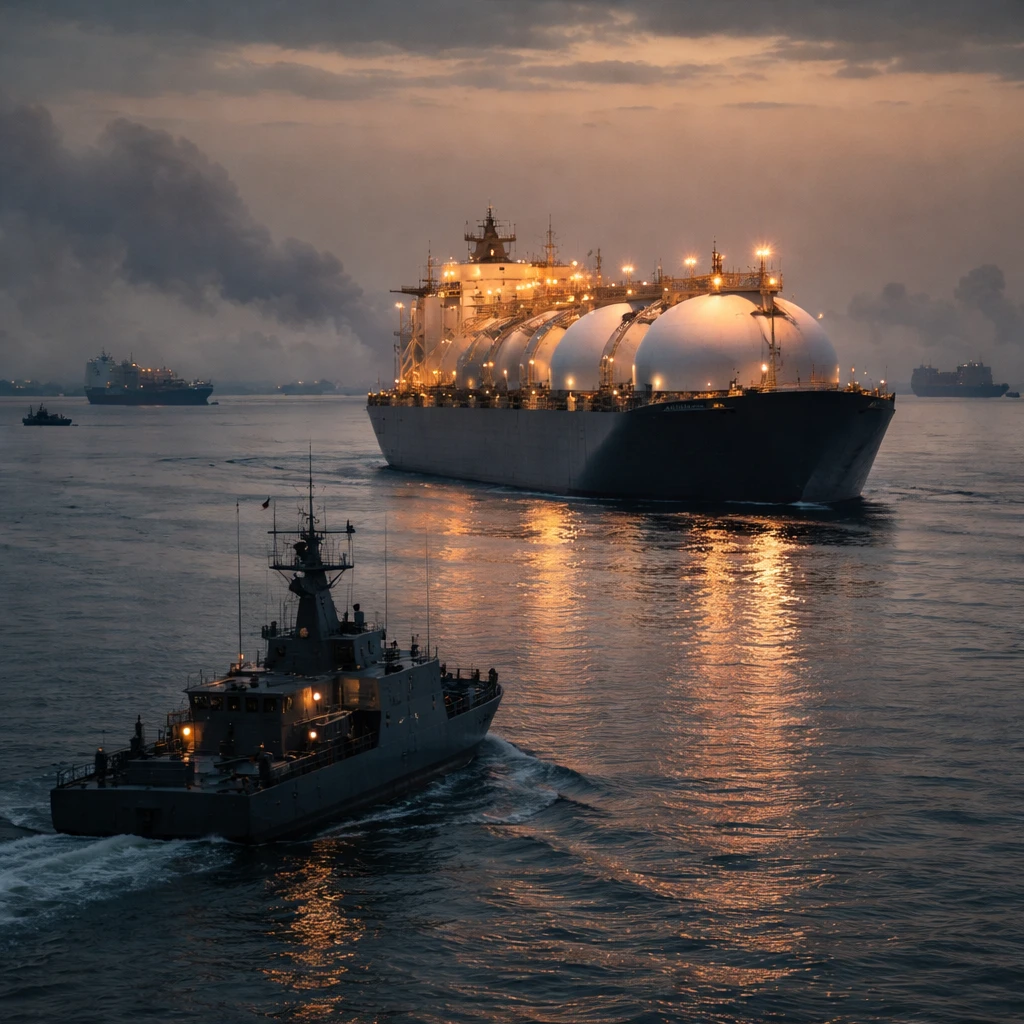
European natural gas markets moved higher on Wednesday as renewed conflict in the Middle East reduced expectations that a U.S.-Iran deal would quickly restore navigation through the Strait of Hormuz.
By 09:17 ET (13:17 GMT), the benchmark Dutch front-month contract at the TTF hub had climbed 2.5% to 48.800 euros per megawatt hour. British natural gas futures likewise increased 2.5% to 117.60 pence per therm.
The recent escalation in hostilities includes U.S. military strikes on an Iranian vessel in the Strait of Hormuz and an attack on a communications tower on Qeshm Island, followed by a missile strike on Kuwait's airport by Tehran, according to the reporting in the source material. These developments have taken diplomatic momentum off the table for an immediate end to the more than three-month old conflict.
With the diplomatic path stalled, the Strait of Hormuz - a key maritime chokepoint for liquefied natural gas - remains effectively closed, cutting vital seaborne routes for roughly a fifth of global LNG flows. That closure, alongside direct impacts of the fighting on infrastructure, has driven a reduction in global LNG supply of around 20%.
Strikes on a major production facility in Qatar are cited as a principal factor behind the supply reduction. The squeeze in volumes has in turn pulled down European gas storage levels, which are materially lower than a year earlier.
Data from Gas Infrastructure Europe show EU gas storage sites were 40.76% full versus 48.88% at the same time last year. The lower inventories have contributed to sustained upward pressure on regional prices as buyers compete to refill storages ahead of the colder months.
For market participants tracking supply, storage and shipping risks, the combination of continuing hostilities, a constrained LNG supply pool and weakened storage positions in Europe are central factors behind the price moves observed on Wednesday.
Key points
- Front-month Dutch TTF gas rose to 48.800 euros/MWh, up 2.5%.
- UK natural gas futures increased to 117.60 pence/therm, also up 2.5%.
- Global LNG supply is estimated to have fallen around 20% because of the fighting, and EU storage stood at 40.76% full versus 48.88% a year earlier.
Risks and uncertainties
- Continued closure of the Strait of Hormuz - impacts shipping, LNG supply and energy markets.
- Further strikes on production facilities - affects global LNG availability and European supply security.
- Persistently low EU storage levels - raises price volatility for utilities and energy buyers in Europe.