
European natural gas benchmarks moved lower on Friday, yet remained set for a weekly advance as traders balanced firm consumption patterns against elevated geopolitical risk centered on the Middle East.
The Dutch front-month contract at the TTF hub traded down 0.3% to 48.605 euros per megawatt hour, according to ICE pricing, while British gas futures slipped 0.7% to 117.13 pence per therm. The price moves came alongside commentary that demand has held steady and liquefied natural gas (LNG) send-out is increasing.
Political and military developments in the Middle East weighed on sentiment. Hezbollah rejected a ceasefire proposal between Israel and Lebanon, complicating the prospects for a broader U.S.-Iran understanding. Tehran, which maintains alignment with Hezbollah, has made a halt to fighting in Lebanon a central condition in its negotiations with Washington.
Earlier escalation in the region has been significant: the U.S. and Israel launched a joint assault on Iran in late February, a campaign that has since extended into other parts of the Middle East, including Lebanon. In reaction to a U.S.-brokered agreement between Israel and Lebanon earlier this week, Hezbollah's leader called the deal "absurd, humiliating, and insulting."
Hezbollah's announcement coincided with reports that Israeli attacks killed at least four people, and that Lebanese troops moved into parts of southern Lebanon that have seen intense fighting for months, according to media reports citing state sources.
Beyond direct combat, the absence of a diplomatic settlement has had consequences for key transport routes. The Strait of Hormuz - a maritime chokepoint that handles roughly a fifth of global oil and LNG flows - has been effectively closed to tanker traffic, constricting supplies on world markets. Market commentary highlights that energy prices have risen sharply relative to pre-war levels as a result of these supply disruptions.
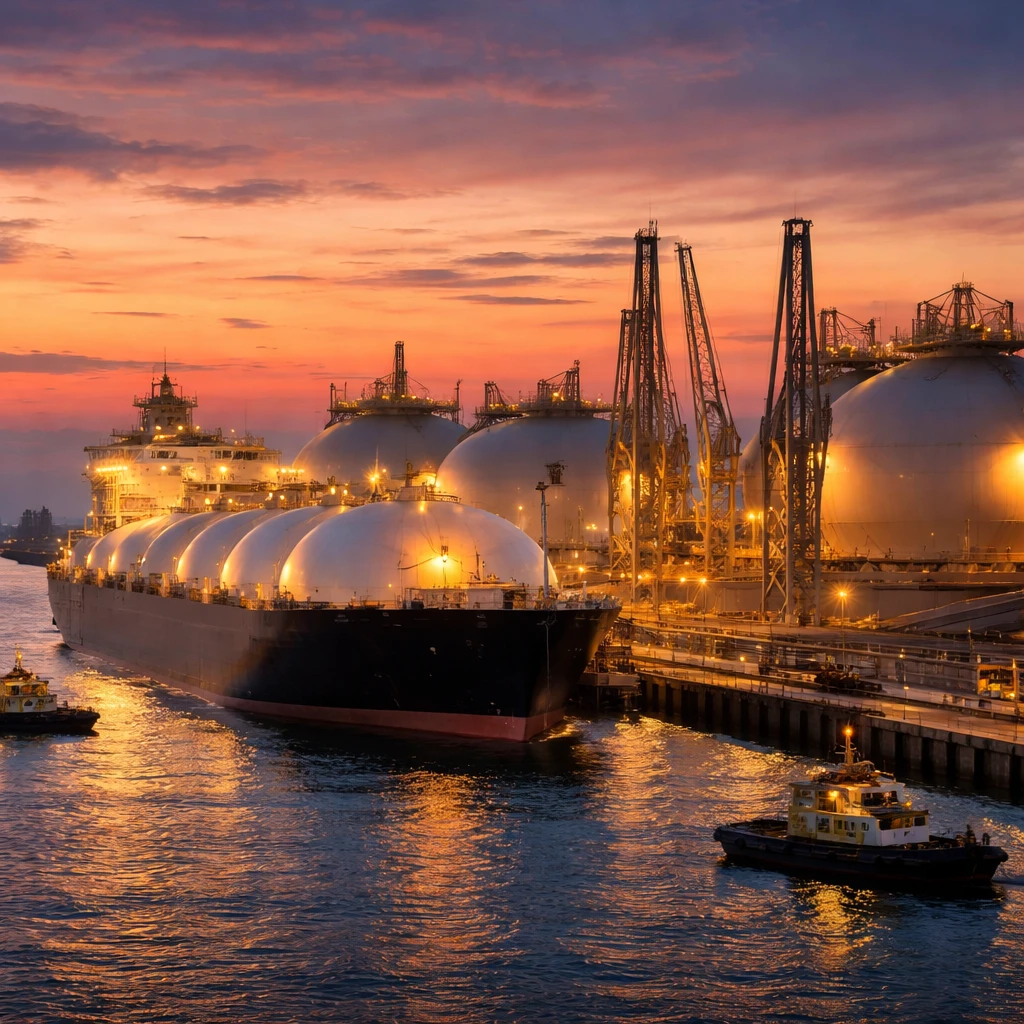
On the supply and demand front, forecasters expect consumption to remain nearly flat despite a slight downward revision to temperature forecasts for the coming week. LNG send-out was projected to rise by about 100 gigawatt hours per day, reaching 1,817 GWh/d on Friday, supported by arrivals of new cargoes in Belgium and Germany.
In short, the market is being pulled between near-term demand stability and elevated supply risk from geopolitical disruption. Prices dipped modestly on the day, but the week-to-date trajectory remained upward as participants priced in the possibility of further interruptions to global flows.
Summary: European gas futures eased marginally on Friday while still heading for weekly gains, as steady demand and increased LNG send-out contrasted with heightened geopolitical risk stemming from fighting and failed diplomatic efforts in the Middle East.