
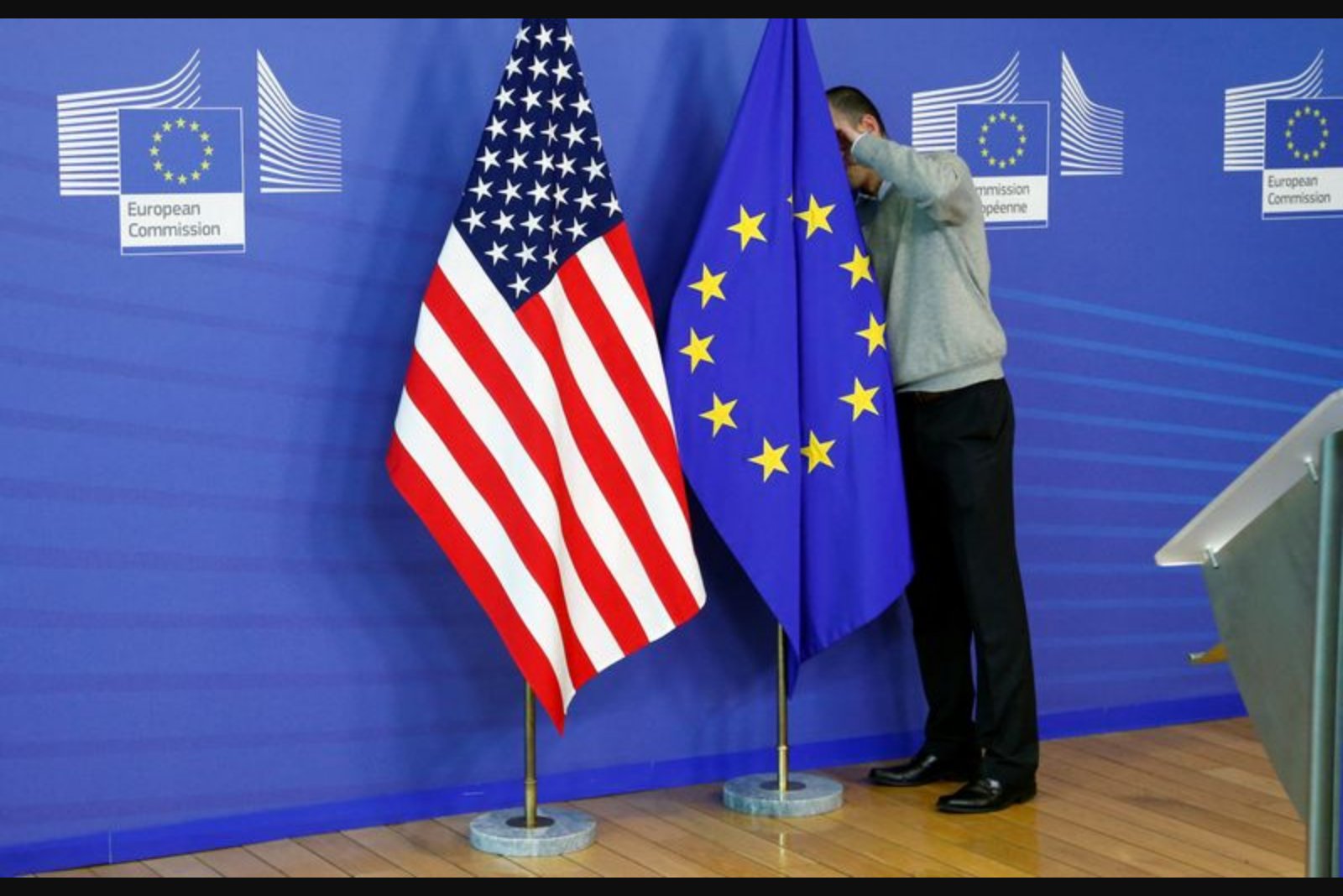
European Union leaders convene to consider a package of measures intended to make the bloc less exposed to economic pressure from the United States and China. Meeting chairman Antonio Costa set out five principal areas for discussion that aim to bolster the EU's economic resilience and reduce its vulnerability to external coercion.
Five priority areas
- Bring down bureaucratic barriers - The leaders were reminded that administrative obstacles restrict trade in both goods and services, imposing an equivalent economic burden the chairman described as comparable to internal tariffs of 44% on manufactured goods and 110% on services.
- Pave the way for EU companies to scale up - The EU's strategy includes encouraging the growth of larger firms so they can better compete with substantial U.S. and Chinese companies, achieve economies of scale and finance expensive research and development.
- Protect strategic industries - A European preference is proposed for sensitive sectors. These sectors include clean-tech and renewable energy, defence and aerospace, semiconductors and chips, critical raw materials, digital technologies and artificial intelligence, energy-intensive industries, biotech and pharmaceuticals, and the automotive industry.
- Stay open for trade - In light of trade frictions with China and the United States, the EU has been advancing trade negotiations to secure alternative partners. Over the past year-plus the bloc has concluded trade deal negotiations with Mexico, Mercosur, Indonesia, Switzerland and India, and is pursuing deals with Australia, Thailand, the Philippines and the United Arab Emirates.
- Tackle strategic dependencies - The agenda highlights heavy EU reliance on the United States for defence and for certain digital services, including entertainment streaming platforms, payment services such as Visa and Mastercard, and capital market services. It also flags dependence on China for rare earths, processing of critical minerals, solar panels, wind turbines and generally manufactured parts integral to supply chains.
Policy responses under consideration
The leaders are due to discuss concrete steps that include introducing procurement preferences for European-made goods when purchases are financed with public funds, rebuilding a domestic defence industry, diversifying supplier bases, developing indigenous artificial intelligence capabilities, launching a digital euro for digital payments and advancing an EU-wide capital market.
The agenda, as articulated by Antonio Costa, focuses on a mix of regulatory, industrial and trade measures intended to reduce reliance on external providers while preserving the bloc's openness to global commerce.