
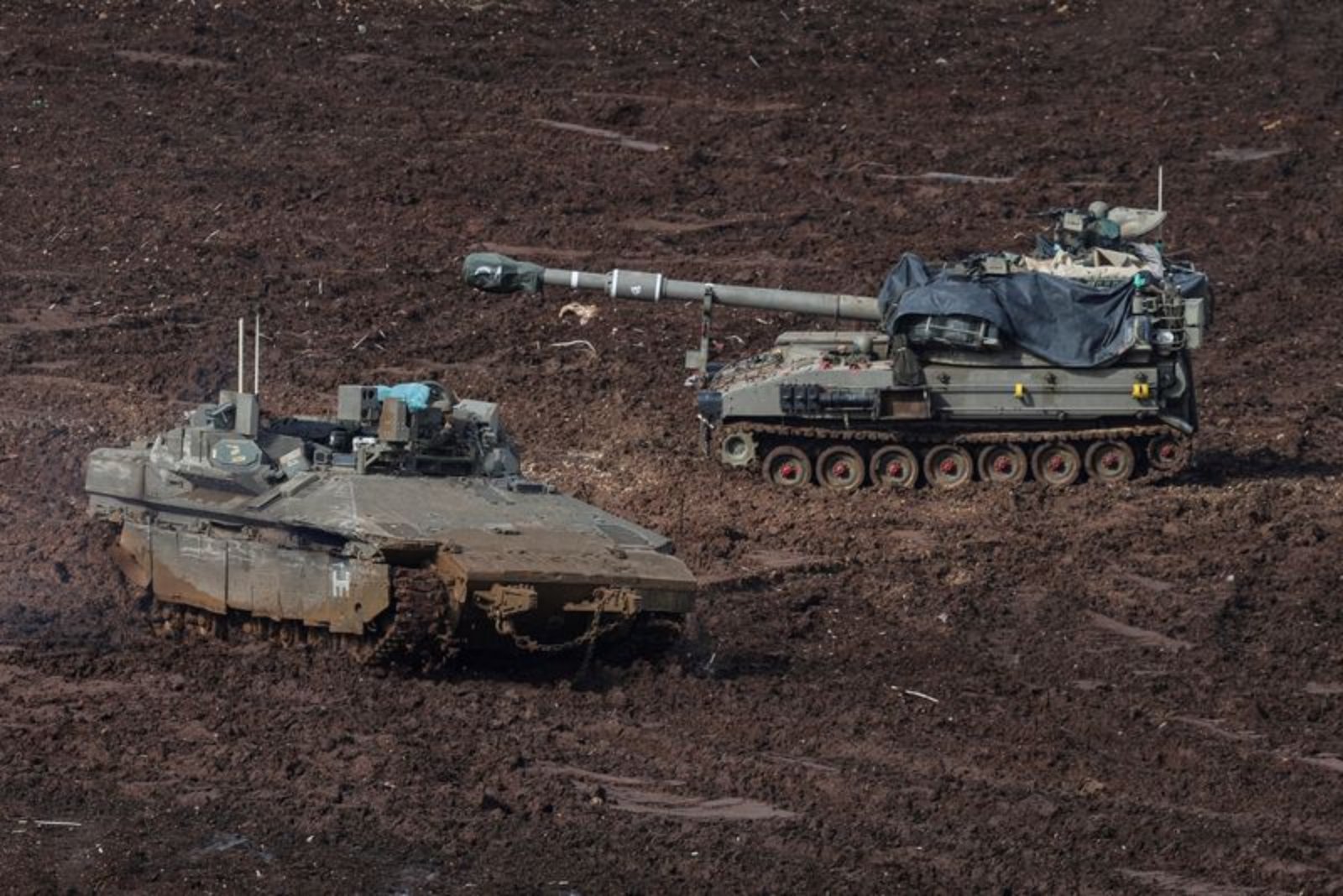
The conflict widened on Saturday as Israeli forces carried out strikes in Iran - including the capital Tehran - and in Beirut, while the United States moved additional military assets into the region. Washington announced the deployment of thousands more Marines alongside the amphibious assault ship Boxer and other warships, a step officials said would bolster U.S. presence amid fierce cross-border exchanges.
Officials report more than 2,000 people have been killed since U.S. and Israeli forces began attacks on Iran on February 28. As the fighting entered its fourth week, public concern in the United States rose over the possibility of an expanded conflict. A Reuters/Ipsos poll showed almost two-thirds of Americans believe the U.S. president will order a large-scale ground deployment, while only 7% support such a move.
On the ground in Lebanon, the Israeli military said its operations on Saturday were directed at Hezbollah positions in Beirut. The military had earlier issued evacuation notices for seven neighbourhoods in the southern suburbs of the Lebanese capital. The intensifying campaign against the Iran-backed militia has produced the deadliest spillover of the war so far, with more than 1,000 people killed in Lebanon and over 1 million displaced by the Israeli attacks.
Iran and Israel exchanged heavy blows throughout the prior days. Israel reportedly launched two large waves of airstrikes on Tehran and central Iran on Friday, and Israeli forces said they endured multiple waves of missile attacks from Iran. Israel confirmed further strikes on Iran on Saturday.
Amid these kinetic events, vital energy infrastructure in Iran and neighbouring Gulf states has been targeted. The Strait of Hormuz - which conveys around a fifth of the world’s oil and liquefied natural gas supplies - has been effectively closed to most shipping since the start of the campaign by the United States and Israel. The closure and attacks on energy installations have pushed oil prices up roughly 50% since the conflict began, raising concerns about a broader economic shock.
In response to the disruption of Iranian oil flows, the U.S. administration said it would waive sanctions for 30 days to permit the sale of 140 million barrels of Iranian oil that are stranded on tankers by the war. The administration said this step followed a previous easing of sanctions on a similar quantity of sanctioned Russian oil, intended to increase supply and ease price pressures.
Transportation sectors are adjusting to the new cost environment. United Airlines announced it would reduce scheduled flights by 5% in the second and third quarters, a direct planning response to sustained higher oil prices.
Diplomatic tensions over securing the Strait of Hormuz have become acute. U.S. President Donald Trump publicly rebuked NATO allies as "cowards" for refusing to assist in re-opening the waterway. Several allies have said they would join "appropriate efforts" to ensure safe passage, but Germany and France insisted that hostilities must stop before they participate in such operations. German Chancellor Friedrich Merz indicated he planned to speak with President Trump over the weekend.
Tokyo-related movements were also in focus. Kyodo News reported that Iran is prepared to allow Japanese-related vessels to transit the Strait of Hormuz, citing Iranian Foreign Minister Abbas Araqchi. Japan receives about 90% of its oil shipments through the strait, a point underscoring the strategic implications of the closure.
Political rhetoric and leadership dynamics inside Iran have added further uncertainty. As Muslims in the region observed Eid al-Fitr and Iranians marked Nowruz, Iran’s new Supreme Leader, Mojtaba Khamenei, issued a defiant statement praising national unity and resistance and saying Iranians had dealt a "disorienting blow to the enemy." Mojtaba Khamenei has not been seen in public since the Israeli attack that killed his father, Ayatollah Ali Khamenei, on the war’s first day. A U.S. intelligence official, speaking anonymously, said that Mojtaba Khamenei’s message raises questions about his condition, noting that his father had traditionally delivered a New Year video address.
U.S. officials speaking on condition of anonymity told Reuters that approximately 2,500 Marines, accompanied by the amphibious assault ship Boxer and additional warships, would deploy to the region. The officials did not specify the role these forces would play. Two U.S. officials said there had been no decision on whether to send U.S. ground troops into Iran. Sources familiar with planning have identified possible targets that could include Iran’s coast or the Kharg Island oil export hub, though officials have not confirmed operational intent.
President Trump, when asked about deploying troops, said on Thursday he was "not putting troops anywhere" and added, "If I were, I certainly wouldn’t tell you." The president also said the United States was close to meeting its stated objectives in the campaign - which include degrading Iran’s military capabilities and preventing Tehran from developing a nuclear weapon - and that Washington might scale back its military effort.
Contextual note: The dynamics described above reflect ongoing hostilities, military movements, and policy responses as reported during the current phase of the conflict. Where available, attributed statements and reported figures have been included to provide an account of developments and their immediate implications for civilians, shipping, energy markets and defense postures.