
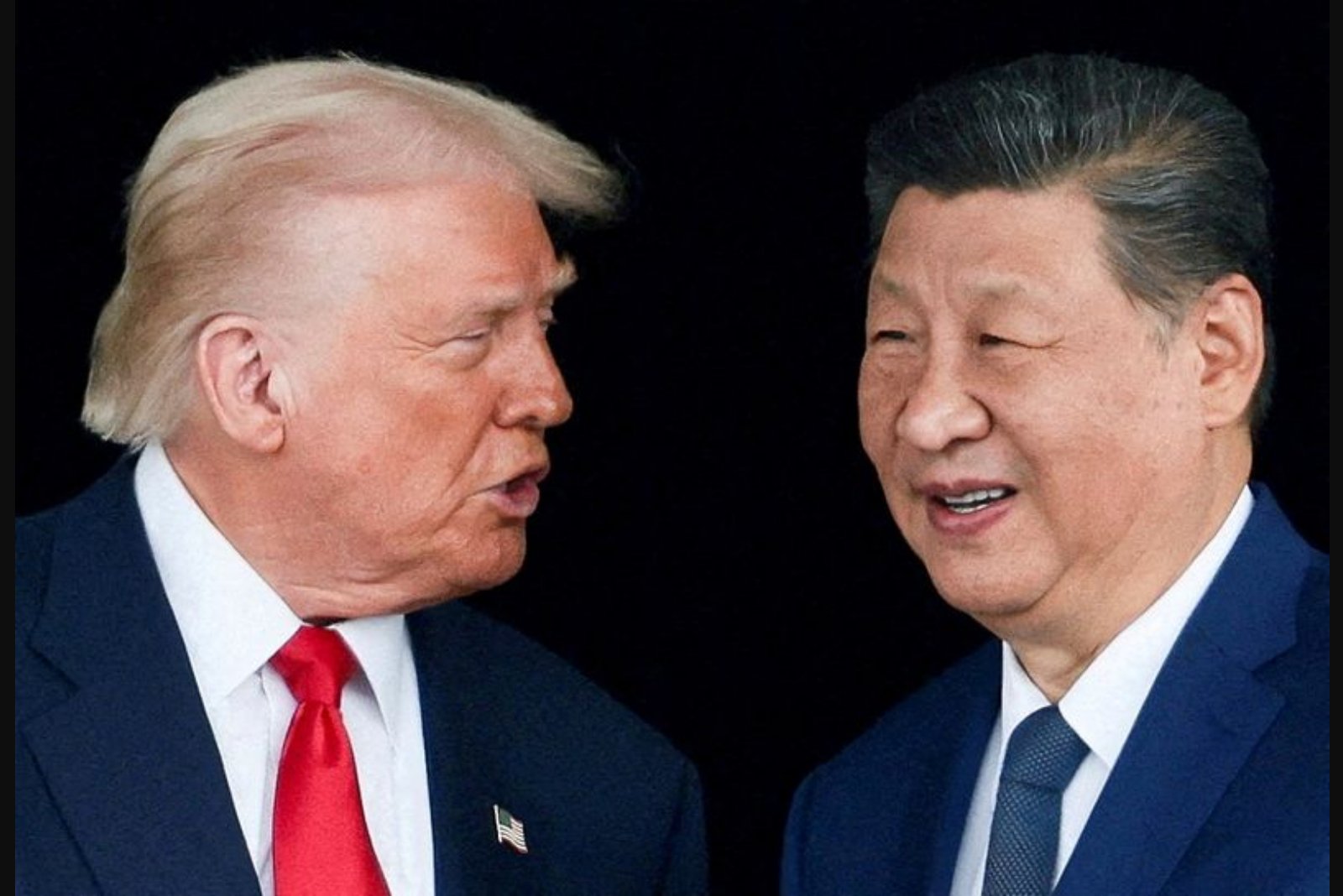
Senior economic representatives from the United States and China opened a fresh round of discussions in Paris on Sunday with a focused mandate - to clear lingering obstacles in the trade truce and facilitate U.S. President Donald Trump’s planned visit to Beijing at the end of March for talks with Chinese President Xi Jinping.
The delegations are led by U.S. Treasury Secretary Scott Bessent and Chinese Vice Premier He Lifeng. They are expected to concentrate on a set of defined issues that include adjustments to U.S. tariffs, the supply of Chinese-produced rare earth minerals and magnets to U.S. buyers, American export controls on high-technology products, and the scale and timing of Chinese purchases of U.S. agricultural commodities.
The meetings are being held at the Paris headquarters of the Organisation for Economic Cooperation and Development - a forum of 38 mostly wealthy democracies of which China is not a member and which China frames as a developing country. U.S. Trade Representative Jamieson Greer is also participating in the talks, which follow a series of diplomatic engagements held in European cities last year aimed at de-escalating tensions that had pushed bilateral trade toward a near collapse.
Observers and trade analysts caution that with limited time ahead of the summit and Washington’s attention partly absorbed by the U.S.-Israeli war with Iran, the prospects for sweeping breakthroughs in Paris or in Beijing are constrained. Scott Kennedy, a China economics expert at the Center for Strategic and International Studies in Washington, said of the current diplomatic objective: "Both sides, I think have a minimum goal of having a meeting, which sort of keeps things together and avoids a rupture and re-escalation of tensions."
Kennedy noted that President Trump may seek substantial Chinese commitments at the Beijing summit - including orders for new Boeing aircraft and increased purchases of U.S. liquefied natural gas and soybeans - but that securing such purchases could require concessions from the U.S. on export controls. He warned that the most likely outcome is a summit that "superficially suggests progress but that really just leaves things about where they’ve been for the last four months."
There remains the possibility of further high-level meetings this year. Trump and Xi could meet on three additional occasions, including an Asia-Pacific Economic Cooperation (APEC) summit hosted by China in November and a U.S.-hosted G20 meeting in December, which may create opportunities for more substantive movement on outstanding issues.
Iran conflict and energy concerns
The U.S.-Israeli conflict with Iran is expected to surface in Paris discussions, particularly in relation to recent spikes in oil prices and the closure of the Strait of Hormuz - a chokepoint through which China receives roughly 45% of its oil. In a related policy move, Treasury Secretary Bessent announced a 30-day waiver of sanctions to permit the sale of Russian oil that has been stranded at sea in tankers, an effort intended to boost energy supplies.
On Saturday, President Trump called on other nations to assist in protecting shipping in the Strait of Hormuz after Washington struck military targets on Iran’s Kharg Island oil loading hub and Iran threatened retaliatory steps. China’s state-run China Daily editorialized in favor of keeping U.S.-China dialogue steady as a stabilizing force amid the uncertainty of the "ongoing crisis in the Middle East." The editorial also described continued engagement as the best means to work through specific differences on strategic materials, technology, market access and agriculture, adding: "In a moment like this, the last thing the world needs is a trade war between its two largest economies."
Review of the October 2025 truce
At the Paris talks, both sides are expected to review progress under the October 2025 trade truce reached by the two presidents in Busan, South Korea. That agreement helped avert a major escalation in tensions by trimming U.S. tariffs on Chinese imports and by putting on pause for one year China’s strict export controls on rare earths. It also paused the expansion of a U.S. blacklist of Chinese firms that would be barred from acquiring advanced U.S. technology such as semiconductor production equipment.
As part of the Busan framework, China committed to purchasing 12 million metric tons of U.S. soybeans during the 2025 marketing year and 25 million tons in the 2026 season, which begins with the fall harvest. U.S. officials, including Secretary Bessent, have stated that China has so far met its commitments under the Busan deal, pointing to soybean purchases that hit initial targets.
Yet discrepancies remain over access to rare earths. Although some sectors are receiving exports of these strategic materials from China - which dominates global production - U.S. aerospace and semiconductor companies report worsening shortages of certain key inputs, notably yttrium, a component used in heat-resistant coatings for jet engines.
William Chou, a senior fellow at the Hudson Institute, said market access and rare earth supplies are likely to top U.S. priorities in Paris. He commented that "U.S. priorities will likely be about agricultural purchases by China and greater access to Chinese rare earths in the short term" at the talks.
New U.S. trade probes complicate engagement
Adding another layer of complexity, U.S. officials Greer and Bessent brought to Paris a new "Section 301" investigation targeting alleged unfair trade practices tied to excess industrial capacity in China and 15 other major trading partners. That probe could ultimately result in a new round of tariffs within months. Greer has also initiated a parallel probe into alleged forced labor practices in 60 countries, including China, a review that could lead to bans on certain imports into the U.S.
The investigations are intended to rebuild tariff leverage after the U.S. Supreme Court found earlier that Trump’s global tariffs imposed under an emergency authority were unlawful. That ruling effectively reduced earlier U.S. tariffs on Chinese goods by 20 percentage points, prompting the administration to immediately impose a 10% global tariff under a separate trade statute.
Chinese authorities on Friday denounced the new probes and said they reserve the right to take countermeasures. The China Daily editorial characterized the investigations as "representative of unilateral actions that complicate negotiations."
Outlook
With the clock ticking toward the end-of-March summit, officials in Paris face the task of narrowing disputes that span tariffs, strategic materials, export controls and agricultural commitments. The immediate aim in the diplomatic choreography appears to be maintaining momentum and preventing a re-escalation of tensions rather than securing sweeping new concessions.
Given the confluence of the Middle East conflict, logistical limits on negotiation time, and the introduction of fresh U.S. trade probes, diplomats and trade analysts expect modest, incremental progress rather than a decisive shift in the bilateral economic relationship during this round of talks.