
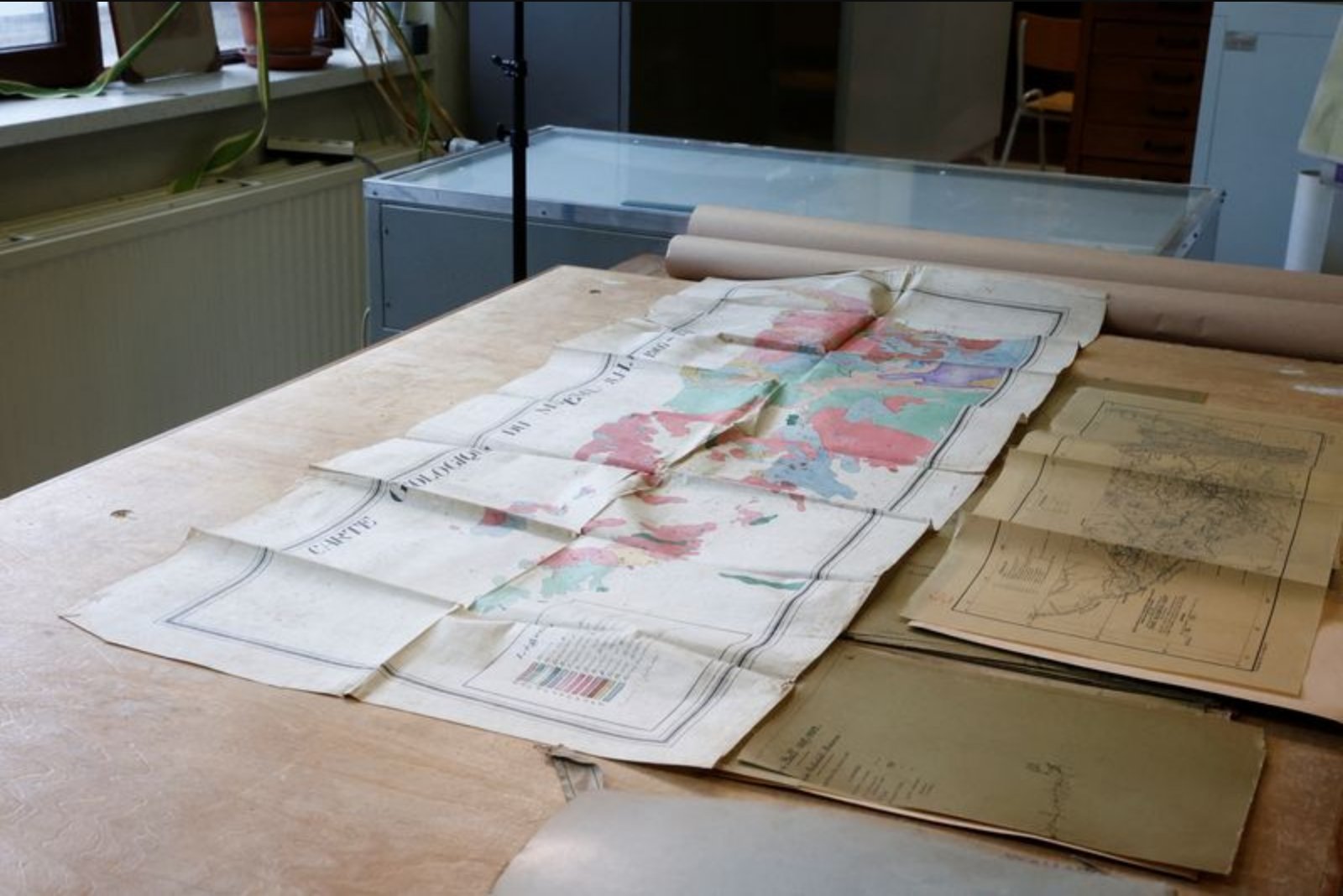
DAKAR, March 4 - A disagreement has emerged between a U.S. mining startup backed by Jeff Bezos and Bill Gates and Belgium's AfricaMuseum over access to and digitisation of colonial-era mapping records that document how the Democratic Republic of Congo's mineral resources were surveyed.
KoBold Metals said it had offered to assist the DRC in digitising the AfricaMuseum's extensive archive, which the company said spans about 500 metres of shelves and contains millions of documents detailing how Congo's mineral wealth was mapped and exploited. Benjamin Katabuka, Director General for KoBold Metals in DRC, told Reuters that the company would scan and digitise the documents and make them publicly available immediately, arguing that broader availability of the data would help attract investment into exploration.
Museum refusal and government-backed alternative
The AfricaMuseum, supported by Belgian authorities, declined KoBold's offer. Museum director Bart Ouvry said the institution already has a distinct project with the DRC to digitise the geological archives, a scheme backed by the European Union. Ouvry told Reuters that delegating the management of collections to private companies would violate scientific and institutional ethics.
KoBold obtained permits last year to explore for lithium and other minerals in the DRC and says it reached agreements with Kinshasa to digitise data, including records held in Belgium. Katabuka said the DRC government requested access to the archives and that KoBold intended to provide technical and financial support to the digitisation effort.
Legal framework and exclusions
KoBold referenced a 2022 Belgian law that established a framework for the restitution of colonial-era collections to African states. However, archives are explicitly excluded from that law, a point Ouvry reiterated while outlining the museum's course of action. He said the museum is collaborating with Congo's National Geological Service to digitise and share the geological archives under a project that could take up to five years to complete, with data to be made available in both countries in line with Belgian and European law.
Ouvry added that the archives are accessible and that copies can be provided on request. He noted that private companies seeking access to geological maps must present a letter of support from the DRC government.
Nature of the materials and access constraints
Located in Tervuren, just outside Brussels, the museum's repository includes fragile, handwritten documents that have not been fully inventoried, according to the head of the museum's earth sciences department. The sensitivity and condition of those materials factor into decisions about handling, digitisation and public access.
A Belgian government foreign affairs spokesperson, Florinda Baleci, described the geological archives as a public asset and said Belgium cannot grant exclusive access to a foreign company or private entity without a contractual relationship.
Context on minerals and international interest
Global competition for critical minerals is intensifying, and the DRC holds significant deposits of lithium, copper, cobalt and coltan. The country's ministry of mines estimates that about 90% of its potential remains untapped. KoBold is among several U.S. firms expanding operations in the DRC as Washington deepens a strategic partnership with Kinshasa to secure supplies and reduce dependence on China for materials used in batteries, electronics and defence.
Congo's ministry of mines did not respond to requests for comment.
Notes on access and process:
- KoBold says it would provide both technical and financial support to digitisation efforts at the request of the DRC government.
- The AfricaMuseum and Belgian authorities maintain they are pursuing a separate EU-backed digitisation project with Congo's National Geological Service that will make the data available within legal frameworks.
- The archives include handwritten and fragile records that are not fully inventoried, which the museum says affects the handling and digitisation timeline.