
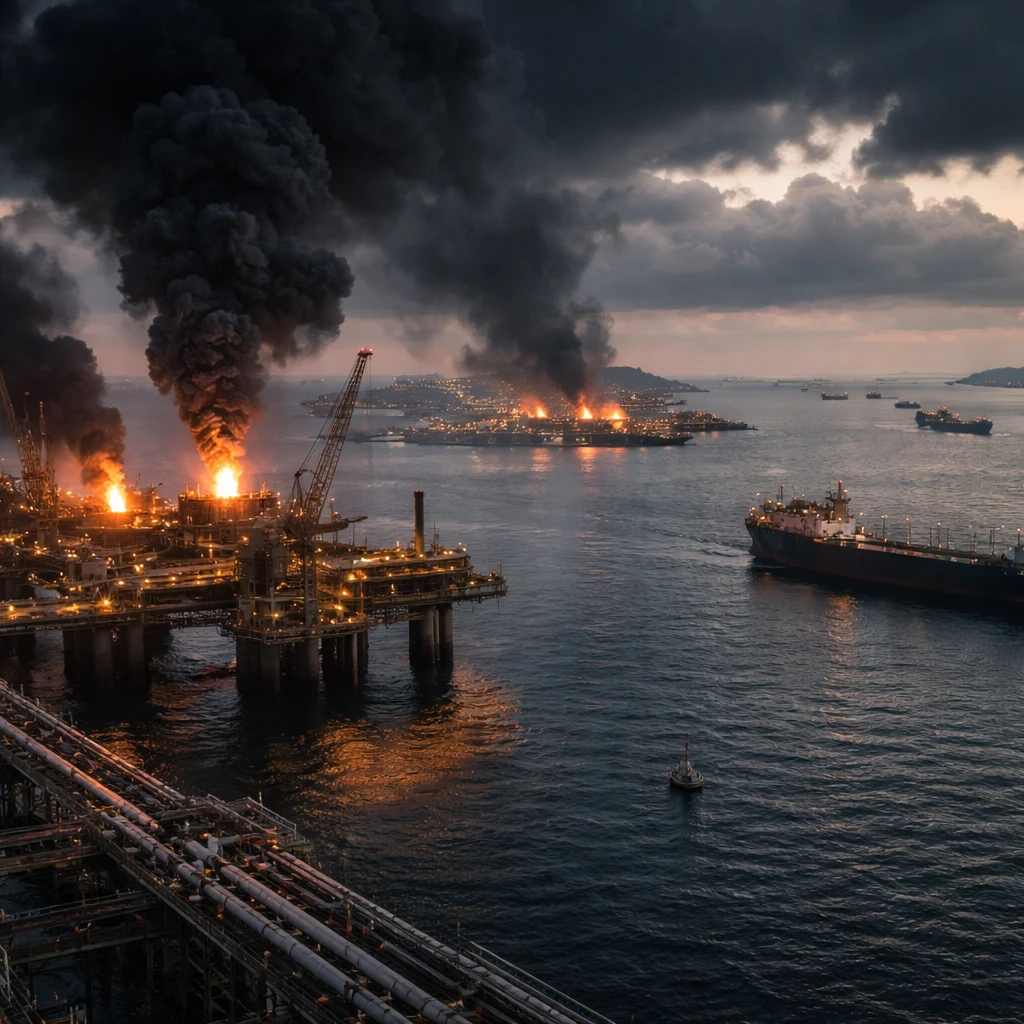
Analysts at Citi have raised the probability of higher oil prices following a series of strikes on energy infrastructure across the Middle East that have dimmed hopes for a rapid resolution to the Iran conflict.
In a research note, Citi strategists Alex Saunders and Dirk Willer said the bank’s commodities strategy team has "become incrementally bullish," and now anticipates greater upside for Brent crude futures, the global benchmark for oil.
Base and stressed scenarios
The analysts set out two main scenarios for Brent:
- Near-term case - If attacks on energy production sites and associated disruptions to flows persist for another four to six weeks, Citi expects Brent to trade higher in the $110 to $120 per barrel range.
- Extended disruption case - Citi assigns roughly a 30% probability to an outcome in which Brent reaches $150 per barrel. That scenario would materialize if additional attacks on energy infrastructure cause sustained supply damage or if the Strait of Hormuz remains effectively closed through June.
On Friday, Brent futures were trading around $108 per barrel. Earlier in the week the contract surged to about $119 per barrel after an Israeli strike struck South Pars, the Iranian sector of the world’s largest gas field. Tehran later carried out retaliatory strikes on several Middle East gas production facilities, including a major site in Qatar.
Impact on regional production
The exchange of strikes has raised concerns that even if naval efforts by the U.S. and its partners reopen shipping lanes through the Strait of Hormuz, tangible supply shortfalls could persist. Qatar, which reported that its Ras Laffan natural gas production facility was hit by Iranian strikes, said export capacity has been reduced by 17% and that repairs could take as many as five years to complete. Qatar is a significant exporter of natural gas, with implications for European gas markets where prices have already surged and contributed to inflationary worries.
Continuing hostilities
Reports indicate Iran has continued launching retaliatory strikes, with countries allied with the U.S. in the region reporting incoming drones and missiles. Those same reports added that Israel had targeted Tehran following overnight missile alerts in Jerusalem and northern Israel.
In a statement cited by the Wall Street Journal, Iranian Supreme Leader Mojtaba Khamenei said "safety must be taken away from our domestic and foreign enemies and given to our people." The statement was presented as a defiant message amid what the report described as systematic Israeli targeting of members of Iran’s ruling regime.
Israeli Prime Minister Benjamin Netanyahu has confirmed that U.S. President Donald Trump requested Israel refrain from further attacks on Iranian energy infrastructure, according to available reporting.
Policy moves and market responses
With warnings from Saudi Arabia that oil could exceed $180 per barrel if the conflict does not end by April, U.S. authorities have stepped up efforts to calm markets. U.S. Treasury Secretary Scott Bessent reportedly suggested the U.S. could release additional emergency petroleum reserves and consider lifting sanctions on some Iranian crude exports to alleviate supply tightness.
Washington and allied forces are reported to be intensifying efforts to reopen the Strait of Hormuz. If the immediate threat of attacks on vessels passing the strait is reduced, American warships may be able to escort commercial shipping in and out of the Persian Gulf, easing transit risks in a region central to world energy supply.
Conclusion
Citi’s updated guidance reflects the bank’s view that sustained disruptions to Middle East energy production and shipping could push Brent substantially higher. The firm’s near-term range of $110 to $120 per barrel assumes a limited period of continued disruption, while a materially longer interruption to flows or closure of the Strait of Hormuz through June is judged to carry a meaningful probability of sending Brent as high as $150 per barrel.