
When North Korea’s leader traveled to Beijing by armored train for a military parade in September, the public display of military hardware and ceremonial pomp signaled a visible softening of relations after years of distance. Alongside the pageantry, Kim Jong Un brought a senior economic delegation to discuss trade and investment. Within weeks, China’s premier visited Pyongyang in return, and Beijing’s ambassador declared the two governments were "writing a new chapter." Those moves mark a clear objective for China: to reassert traditional influence over a neighbor that has drawn closer to Russia since the 2022 invasion of Ukraine.
North Korea has provided troops and weapons to Moscow in exchange for fuel and food that have helped prop up an economy constrained by U.N. sanctions tied to its nuclear-weapons program. At the same time, a combination of satellite imagery analysis, trade statistics and field reporting shows Beijing is deepening practical engagement with Pyongyang - rebuilding transport and customs infrastructure along the border, expanding certain imports from North Korea, and taking operational steps to restart people-to-people links.
Border infrastructure and preparations
On the Chinese side of the border, preparations are visible in a number of locations. Road markings reading "Truck Entry Lane" and "Passenger Vehicle Entry Lane" were painted onto the Chinese approach to the New Yalu River Bridge, which spans the border but has not been opened to traffic. A new sports court was installed at the Dandong New Zone’s dormant customs complex. Construction activity is also apparent at the northernmost Quanhe port, while fresh pavement and new buildings have been added at Nanping and Sanhe.
Across the river, North Korea has been developing its own facilities on the unopened bridge. Work there includes what analysts describe as a customs and immigration building, along with warehouse and cargo-transfer structures. After a 15-year delay, North Korea devoted much of last year to work on the crossing, but construction stopped in November. Observers could not determine the reason for the pause.
Operational steps and limited reopening
Infrastructure changes have been matched by operational moves. Passenger-train services between Beijing, Dandong and Pyongyang have been announced to resume for the first time in six years, with tickets restricted to travelers holding a North Korean business visa, according to a sales-office representative in Beijing. While tourism has not formally restarted - Pyongyang canceled an international marathon that had been scheduled for April - the restoration of the rail link is viewed by travel operators as a positive sign for the eventual return of tourists. Chinese travelers comprised the majority of visitors to North Korea before the border closure.
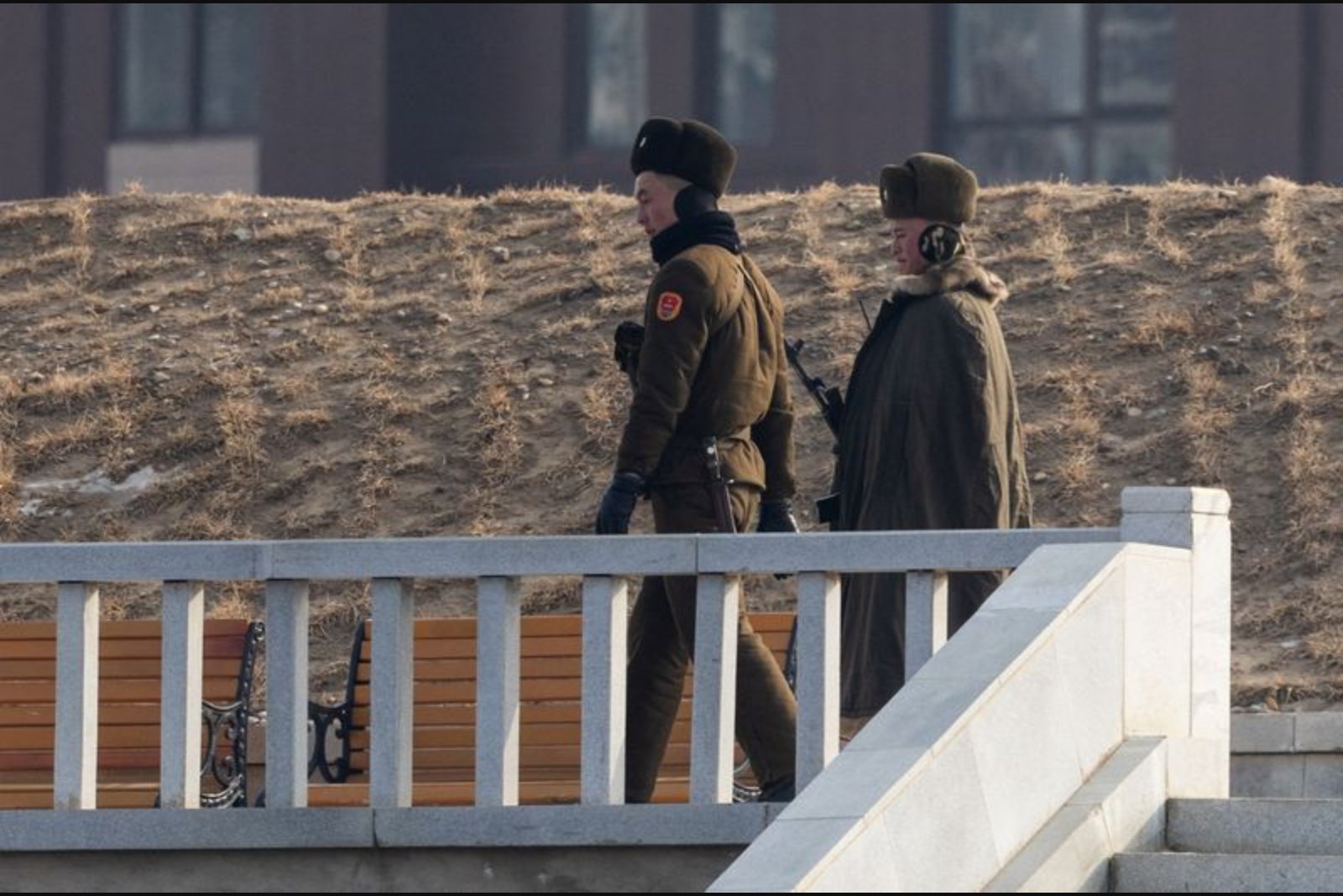
In visits to the border city of Dandong earlier in the year, local vendors on the riverfront were selling lapel pins with the North Korean leader’s portrait, and guides offered boat trips for visitors. Trucks carrying goods such as cloth, soybean oil, tires and frozen duck meat moved across the older Sino-Korean Friendship Bridge toward North Korean guards. At the Songtaoyuan restaurant, five North Korean waitresses served customers; one told reporters she had arrived from North Korea in December.
China’s foreign and commerce ministries declined to address questions about North Korean workers and enforcement of U.N. sanctions, which forbid the issuance of new work permits to North Koreans. The restaurant did not respond to requests for comment.
Shifts in trade composition
China’s official trade figures show a marked increase in economic exchange with North Korea. Chinese exports to North Korea reached $2.3 billion last year, a six-year high and a roughly 25% increase from the previous year. At the same time, the structure of imports has shifted toward labor-intensive items and strategic ores.
Hair products - including wigs, eyelashes and false beards - now represent nearly half of China’s imports from North Korea, rising by a factor of roughly 327 over the past decade. In addition, China has become the principal purchaser of certain strategic metals from North Korea. Official customs records indicate shipments of molybdenum ores and tungsten ores reached $17.2 million and $31.5 million, respectively, in 2025. Analysts say these purchases allow China to build stockpiles at lower cost while keeping those materials out of global markets in ways that could undermine Chinese export controls.
Political signaling and diplomatic shifts
Political symbolism has accompanied the economic engagement. In October, North Korea explicitly endorsed Beijing’s position on Taiwan. Shortly thereafter, China’s arms-control white paper removed its longstanding public call for North Korea’s denuclearization. On March 9, Kim Jong Un sent a message to Chinese President Xi Jinping saying cooperation between the two countries "will become even closer in the future as we advance the common cause of socialism," according to North Korean state media.
Within North Korea, party rhetoric has emphasized the parallel track of military strength and diplomacy. At a party congress in February, Kim vowed to expand his nuclear arsenal and said prospects for better relations with the United States rested entirely on Washington’s attitude. In public comments, Kim has said the U.S. must first drop its demands that Pyongyang relinquish its nuclear weapons.
U.S. political dynamics add another layer to the evolving picture. U.S. President Donald Trump has expressed interest in meeting the North Korean leader again and plans to visit China in late March and early April. A State Department spokesperson reiterated the U.S. commitment to the complete denuclearization of North Korea.
Russia has signaled a neutral-to-welcoming stance toward expanded regional cooperation. Kremlin spokesman Dmitry Peskov said Russia welcomes greater cooperation in the region, which he suggested would contribute to stability and security. Beijing’s foreign ministry said China and North Korea have been "actively advancing border cooperation" to foster exchanges; the ministry did not address North Korea’s relations with Moscow. North Korea’s mission to the United Nations and its embassy in Beijing did not respond to inquiries.
Local economic dynamics in Dandong
Despite the heightened diplomatic traffic and visible infrastructure work, Dandong remains a place of unrealized potential. The New Yalu River Bridge, built by China and completed in 2014, stands unused. From the Chinese shoreline, the bridge appears to end abruptly in a field on the North Korean side. North Korea’s new entry port, planned a decade earlier, appears deserted and without workers.
Residents and local records show the city has weathered boom-and-bust cycles tied to expectations of trade with North Korea. Empty storefronts line its streets, and property prices have slumped to roughly 3,000 yuan per square meter, down from about 10,000 yuan during the previous U.S. administration, according to residents and reviews of property records and local media reports.
Traders who previously moved goods into North Korea describe logistical constraints that remain in place. Before the pandemic, trucks could enter deep into North Korea to deliver and pick up cargo. Today, many Chinese drivers report they are restricted to handoffs at the North Korean customs line. One owner of an eyelash factory with operations in North Korea said the limitations persist, underscoring continued friction in trade logistics.
Some observers attribute North Korea’s cautious approach to reopening in part to frustration that China has not relaxed its compliance with U.N. sanctions more readily. Analysts note that while Beijing has increased trade and removed some public rhetoric on denuclearization, Pyongyang has continued to diversify partners, strengthening ties with Moscow as a political and economic hedge.
Outlook and constraints
Officials who monitor border trade stress that any improvement is likely to be gradual. Qi, a Chinese government official who follows cross-border commerce, said he believes the worst period has passed and expressed hope that conditions "can only get better and better." Yet several practical and political constraints remain: North Korea’s reluctance to fully reopen, its ongoing military buildup, the continued enforcement of international sanctions, and the cautious pace of infrastructure completion on the North Korean side of crossing points.
For China, the combination of visible infrastructure work, rising official trade figures and high-level political exchanges strengthens Beijing’s ability to influence Pyongyang’s economic trajectory. For the United States, which is considering renewed diplomatic contact with North Korea as part of a broader visit to China, Beijing’s expanded role in Pyongyang affairs reinforces the fact that Washington’s outreach would occur in the context of China’s resumed closeness with North Korea.
At the same time, the on-the-ground realities in border cities like Dandong make clear that symbolic diplomacy and targeted trade increases do not immediately translate into broad-based economic revival. Much of the infrastructure remains idle, many projects are incomplete or stalled, and North Korea continues to limit the depth of cross-border logistics and tourism. The result is a cautiously warming relationship that is concrete in select areas but constrained by enduring political and economic frictions.
Summary
China and North Korea have moved to restore a closer relationship through high-level visits, construction and refurbishment of border facilities, and a marked increase in trade. While Beijing appears intent on expanding its influence, Pyongyang’s parallel engagement with Russia, its ongoing military posture, and continued controls over reopening limit how quickly cross-border commerce and travel can return to pre-pandemic levels.
Key points
- Trade and infrastructure: China’s exports to North Korea rose to $2.3 billion last year, a 25% increase, while new roadworks, port updates and bridge-side facilities indicate preparation for expanded cross-border economic activity - a development that affects logistics, commodities and border-trade sectors.
- Composition of imports: Labor-intensive products like wigs, eyelashes and false beards now account for nearly half of Chinese imports from North Korea, and purchases of molybdenum and tungsten ores have reached record official levels, influencing metals and critical-minerals supply dynamics.
- Political alignment and signaling: High-level visits and public statements, including North Korea’s endorsement of China’s Taiwan position and China’s removal of explicit calls for Korean Peninsula denuclearization from an arms-control white paper, reflect closer political coordination that could shape diplomatic interactions involving other powers.
Risks and uncertainties
- Infrastructure and operational uncertainty: Several projects remain incomplete or stalled, including construction on the North Korean side of the New Yalu River Bridge, and practical logistics rules still restrict deeper cargo movement - risks that impact trade, logistics and regional supply chains.
- Sanctions and compliance: Continued enforcement of U.N. sanctions, including prohibitions on new North Korean work permits, and international scrutiny of strategic mineral flows leave room for unpredictability in trade patterns and regulatory responses, affecting commodities and metals markets.
- Geopolitical balancing: Pyongyang’s simultaneous engagement with Russia and China, combined with its stated nuclear ambitions and demands, create political uncertainty that could influence investor sentiment and the strategic calculus of neighboring states.