
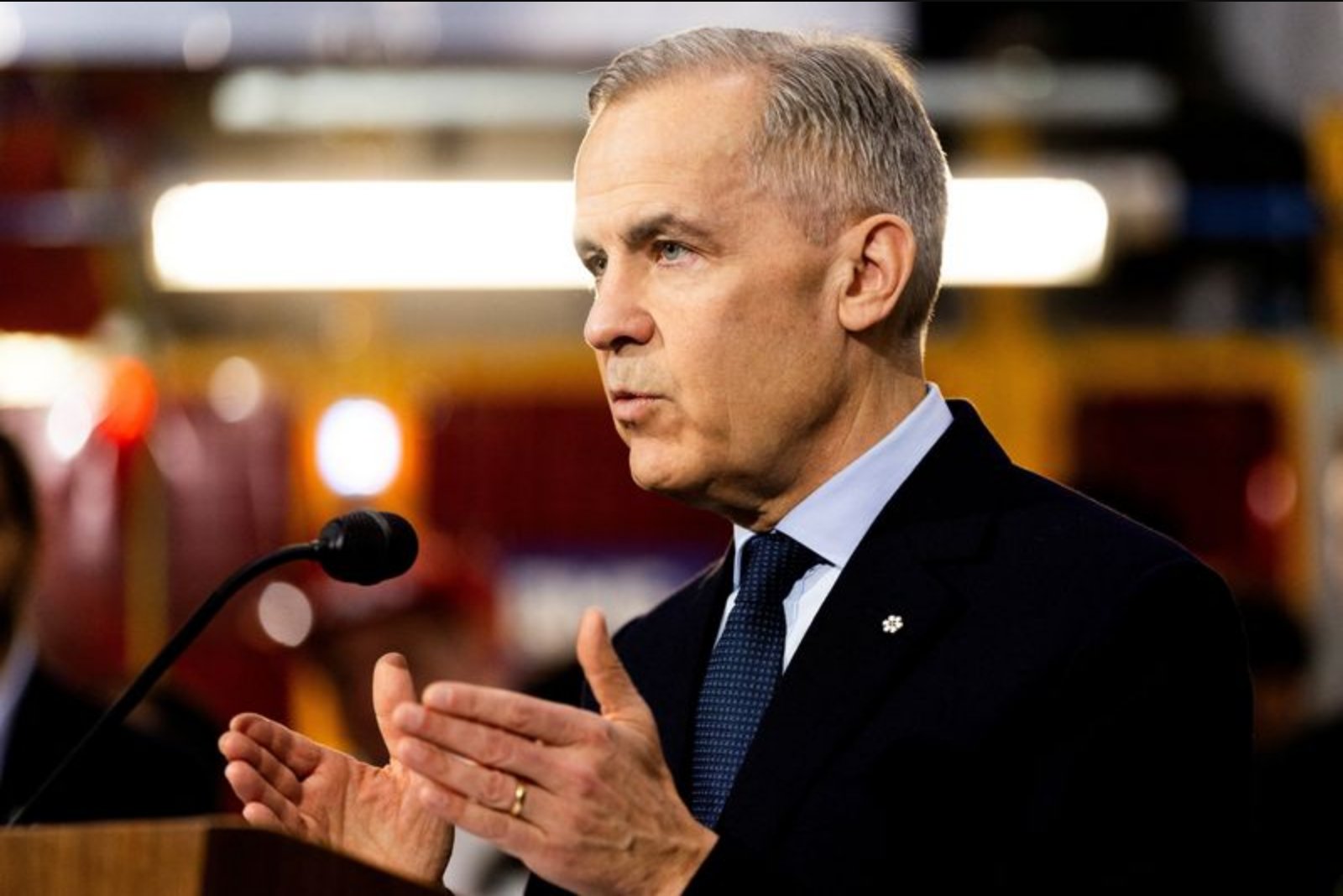
Canadian Prime Minister Mark Carney said on Tuesday that the disagreement with the United States over the new Detroit-Windsor crossing will be settled, following comments from U.S. President Donald Trump threatening to bar the bridge's opening.
Carney said he and Trump spoke on Tuesday morning about a variety of issues, including the bridge. "The situation will be settled," he told reporters, without offering further detail.
The dispute has arisen after the president warned he could block the new Gordie Howe International Bridge, a move that alarmed elected officials in Michigan. Trump pointed to several grievances in explaining his stance: Canada’s financing of the bridge, Ottawa’s refusal to stock some U.S. alcoholic beverages on Canadian store shelves, Canadian tariffs on dairy products, and Canada’s trade talks with China.
The bridge was financed by Canada after the United States declined to pay for it and carries a sticker price of $4.7 billion. It is scheduled to open in the coming months. The project’s construction costs were covered by Canada, and repayment of those costs is planned through toll revenues over a 30-year period.
"I explained that Canada, of course, paid for the construction of the bridge, over $4 billion. That the ownership is shared between the state of Michigan and the government of Canada," Carney said.
The president had suggested the bridge would be owned by Canada, a characterization Carney said was incorrect because legal ownership is shared between the state of Michigan and the government of Canada.
The White House did not immediately comment on Carney’s remarks.
Business groups in Michigan warned of the potential fallout. The Detroit Regional Chamber described the bridge as "the most consequential infrastructure project in the state and region of this generation," and cautioned that any effort to block the project would have "tremendous consequences for the region, state, and country."
In 2012, Michigan’s then-Governor Rick Snyder accepted an offer from the Canadian government to underwrite most of the bridge's costs and used executive authority to bypass the state legislature. Construction work on the crossing began in 2018.
On January 30, the U.S. Department of Homeland Security published a rule designating the bridge as an official port of entry. The rule said the new crossing will reduce congestion and travel time, easing traffic flows and saving travelers $12.7 million annually.
This dispute centers on financing, ownership perceptions, trade complaints and the political threat to impede the opening of a major cross-border transport link. Carney’s assurance that the matter will be resolved leaves unanswered specifics about how the concerns cited by the U.S. president will be addressed.