
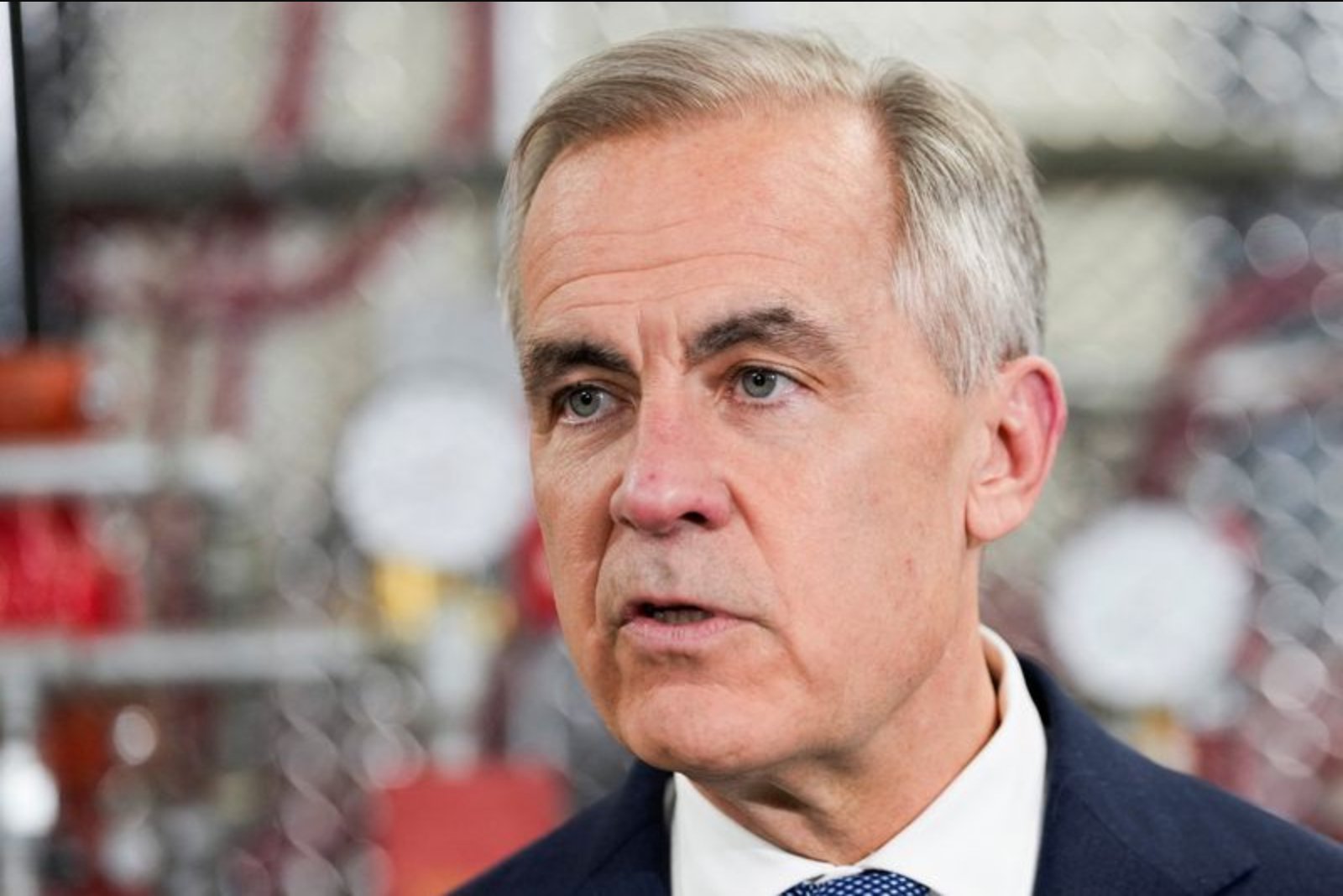
Prime Minister Mark Carney on Monday criticized Alberta’s upcoming non-binding referendum on separation as potentially more harmful than helpful, calling the exercise a possible "dangerous bluff" and warning it could complicate national unity and future negotiations.
Alberta announced last week that it will hold a non-binding referendum in October asking residents whether the province should remain a part of Canada or ask the provincial government to initiate the constitutional legal process required to hold a binding referendum on independence at a later date.
Carney said the referendum, while not legally binding, raises serious risks because it can be used to claim enhanced negotiating leverage without delivering a clear, legitimate mandate. "This is an observation from experience. In these separation issues, it’s often advanced that, 'Vote for this, and it’s a free option, vote for this, and we will strengthen our hand in future negotiation.' That is a very dangerous bluff," he told reporters.
The prime minister drew a direct parallel to the United Kingdom’s 2016 vote to leave the European Union, saying his experience as governor of the Bank of England during that period made him wary of referendums whose full implications are not widely understood by voters. "I saw firsthand what happened in the United Kingdom ... They’re still 10 years later trying to undo what people didn’t think they were voting for, but what they ended up having," he said.
Carney was blunt about the political context within Alberta. He argued the question itself is "not helpful" and emphasized that the issue was not a feature of the provincial election that delivered the current government. "Is it the democratic will of Albertans? Did they vote for this in the last provincial election? No, they didn’t," he said, noting that Alberta’s right-of-center United Conservative Party did not campaign on a referendum during its 2023 election run-up.
Polling released on Monday by Angus Reid indicated a majority of Albertans would opt to stay in Canada if a choice were presented. According to that poll, 60% of respondents said they would vote to remain part of Canada, and 67% said they would vote "no" if a binding referendum were eventually held.
Supporters of separation, the prime minister pointed out, have cited dissatisfaction with the environmental policies pursued by his predecessor, Justin Trudeau, which they say weakened Alberta’s oil and gas sector. The new federal government led by Carney has taken steps to reverse several of those green measures since assuming office in March 2025.
While the October ballot would not have legal force, Carney warned against treating a non-binding result as a straightforward bargaining chip. He said his observations were grounded in the unintended consequences he witnessed during Brexit, and he cautioned that what may seem like a low-cost political option can produce long-term complications.
The planned vote would be the first time a Canadian province outside Quebec has asked the public whether to pursue separation. The referendum is expected to be divisive within Alberta and across Canada as the prime minister seeks to maintain a united national front while the country faces U.S. tariffs and impending talks to renegotiate the U.S.-Mexico-Canada trade agreement in the coming months.
Summary: The prime minister warned Alberta’s October non-binding referendum on separation could be a risky political gambit that creates false leverage and deepens divisions, drawing on his experience during the Brexit process to explain the potential for long-term consequences. Polling suggests most Albertans would remain in Canada, and the vote marks a historic first outside Quebec.