
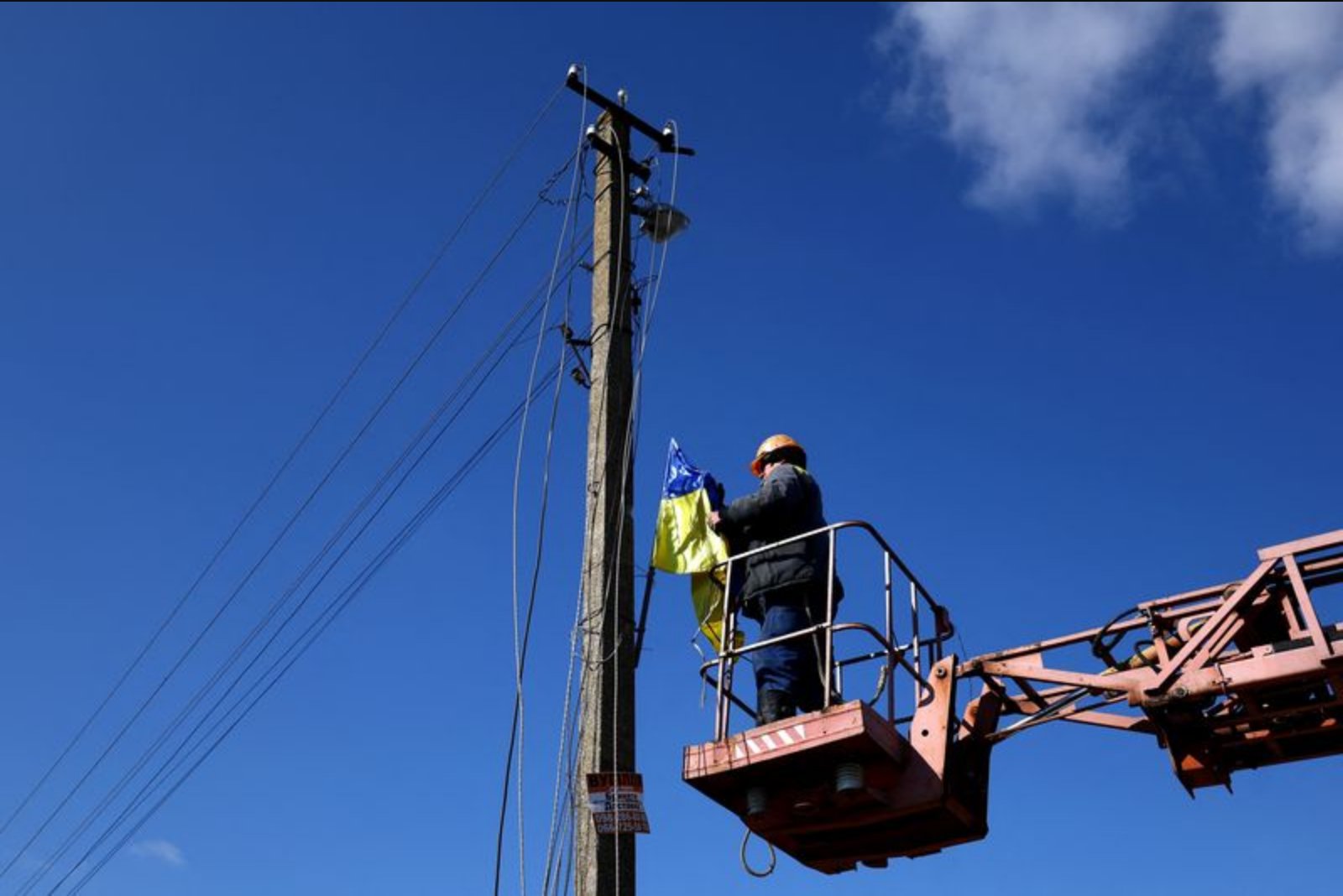
Canada announced a stepped-up program of support for Ukraine's energy sector following talks in Paris, where officials from both countries signed a strategic energy partnership. The agreement outlines Canadian cooperation to supply oil and gas equipment on concessional terms, to promote investments in renewable energy projects and to assist with reconstruction of hydropower facilities.
The need for reinforced assistance comes as Russian forces continue to strike Ukrainian energy infrastructure. The partnership was framed against a backdrop of attacks that have targeted power stations, electricity transmission lines and gas facilities since Russia's full-scale invasion began in February 2022. Recent strikes this week on power infrastructure were reported to have killed three people and left tens of thousands without power and heat.
Under the terms set out in Paris, Canada said it would work with its industry to transfer oil and gas sector equipment to Ukraine on concessional terms and to promote investment in Ukraine's energy security. The agreement also commits Canada to alert domestic industries to opportunities to invest in Ukrainian renewable energy projects and in the reconstruction of hydropower plants.
"This is not simply reconstruction. It is modernization under pressure," said Canadian energy minister Tim Hodgson, characterizing the partnership's focus on rebuilding and upgrading critical energy assets.
The two governments agreed to conduct joint risk assessments and exercises aimed at countering hybrid threats to energy infrastructure. The partnership further contemplates strengthening commercial relations on nuclear fuel supply and sharing technical advice on developing infrastructure to enable non-Russian gas supplies to Ukraine.
Officials cautioned that the agreement is not legally binding. Planned investments identified under the partnership would require follow-up by private companies to move from intention to implementation.
The timing of the partnership coincides with a difficult period for Ukraine's domestic energy situation. The country is emerging from what officials described as its coldest winter since the 2022 invasion. Repeated air strikes have produced outages of electricity, water and heating that have lasted several days in some areas, while temperatures fell to as low as minus 20 degrees Celsius in parts of the country.
For households and businesses that retained supply, the fallout included sharply higher energy bills. The strain on the economy has been reflected in official forecasts: Ukraine's central bank last month revised down its growth projection for the year to 1.8% from 2%, citing the energy crisis as a contributing factor. Separately, the country's energy minister reported that power demand currently exceeds supply capacity by about a third.
The Paris agreement is designed to address multiple strands of Ukraine's energy vulnerability through equipment transfers, investment facilitation and cooperative security work. Its non-binding nature means the proposed support will depend on subsequent commercial decisions by industry participants and on follow-through by both governments and private-sector actors.
Summary of measures agreed:
- Concessional transfer of oil and gas sector equipment from Canadian industry to Ukraine.
- Promotion of investments in Ukrainian renewable energy projects and hydropower reconstruction.
- Joint risk assessments and exercises to counter hybrid threats to energy infrastructure.
- Technical cooperation on developing infrastructure for non-Russian gas supplies and strengthened commercial ties on nuclear fuel supply.