
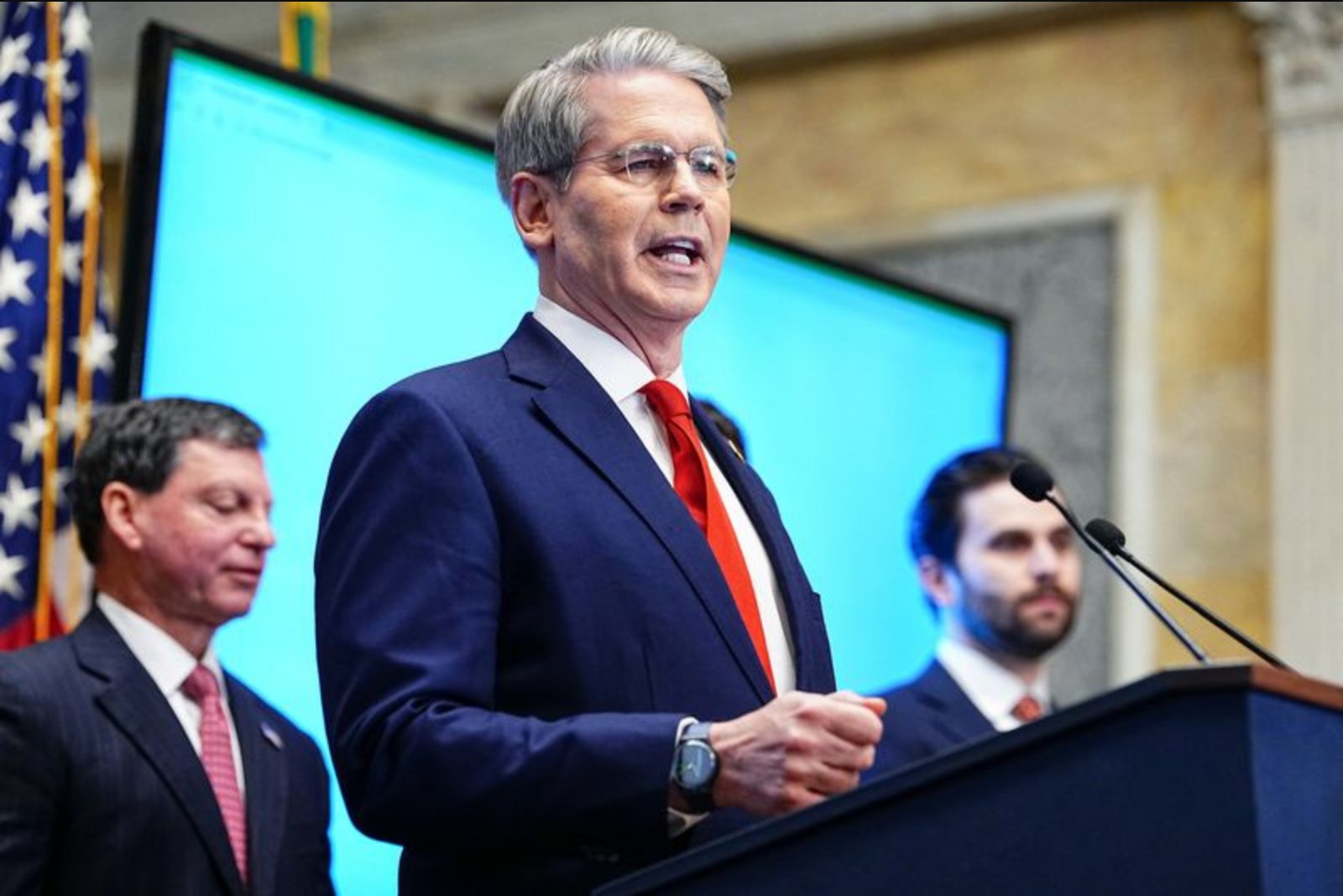
WASHINGTON, March 4 - U.S. Treasury Secretary Scott Bessent told CNBC on Wednesday that crude oil markets are adequately supplied despite the U.S.-Israeli military action in Iran. Bessent emphasized large floating inventories and signaled that Washington will unveil further steps to address market and maritime concerns.
"The crude markets are very well supplied. There are hundreds of millions of barrels on the water away from the Gulf. But more importantly, we have a series of announcements that we’re going to be making," Bessent said in the television interview.
Markets reacted to the strikes with a roughly 1% rise in oil prices on Wednesday as the attacks disrupted supplies from the Middle East. However, the momentum behind those gains eased compared with earlier sessions after President Donald Trump suggested the U.S. Navy could escort commercial vessels through the Strait of Hormuz.
On Tuesday, President Trump said he had instructed the U.S. International Development Finance Corporation to extend political risk insurance and financial guarantees to maritime trade in the Gulf. Those measures aim to reduce commercial exposure associated with transiting the region.
Bessent described a possible role for the government in ensuring safe maritime passage. "So, U.S. government is going to step in, and when it is appropriate, and should it be needed, the U.S. Navy will provide safe passage through the straits for the oil tankers," he said.
The Treasury secretary linked three elements in his remarks: the existing volume of crude already in transit, upcoming policy announcements from the U.S. government, and the potential deployment of naval escorts if circumstances require it. Together, those points formed the basis of his assessment that markets remained well supplied despite the regional instability.
Oil market participants noted the immediate price move higher as supplies were disrupted, but the statement about supply volumes and the possibility of government intervention appear to have moderated short-term price pressure. Bessent did not provide specifics about the timing or content of the additional announcements he referenced.
The public comments from both the Treasury secretary and the president underscore overlapping policy levers being described to address risks to maritime trade and energy shipments, while market indicators show a tempered reaction following those remarks.
Context and implications
Officials point to substantial crude volumes on the water as a buffer against sudden supply shortfalls. At the same time, the administration has signaled readiness to use financial instruments and, if required, naval assets to protect maritime routes that are critical for oil shipments from the Gulf.