
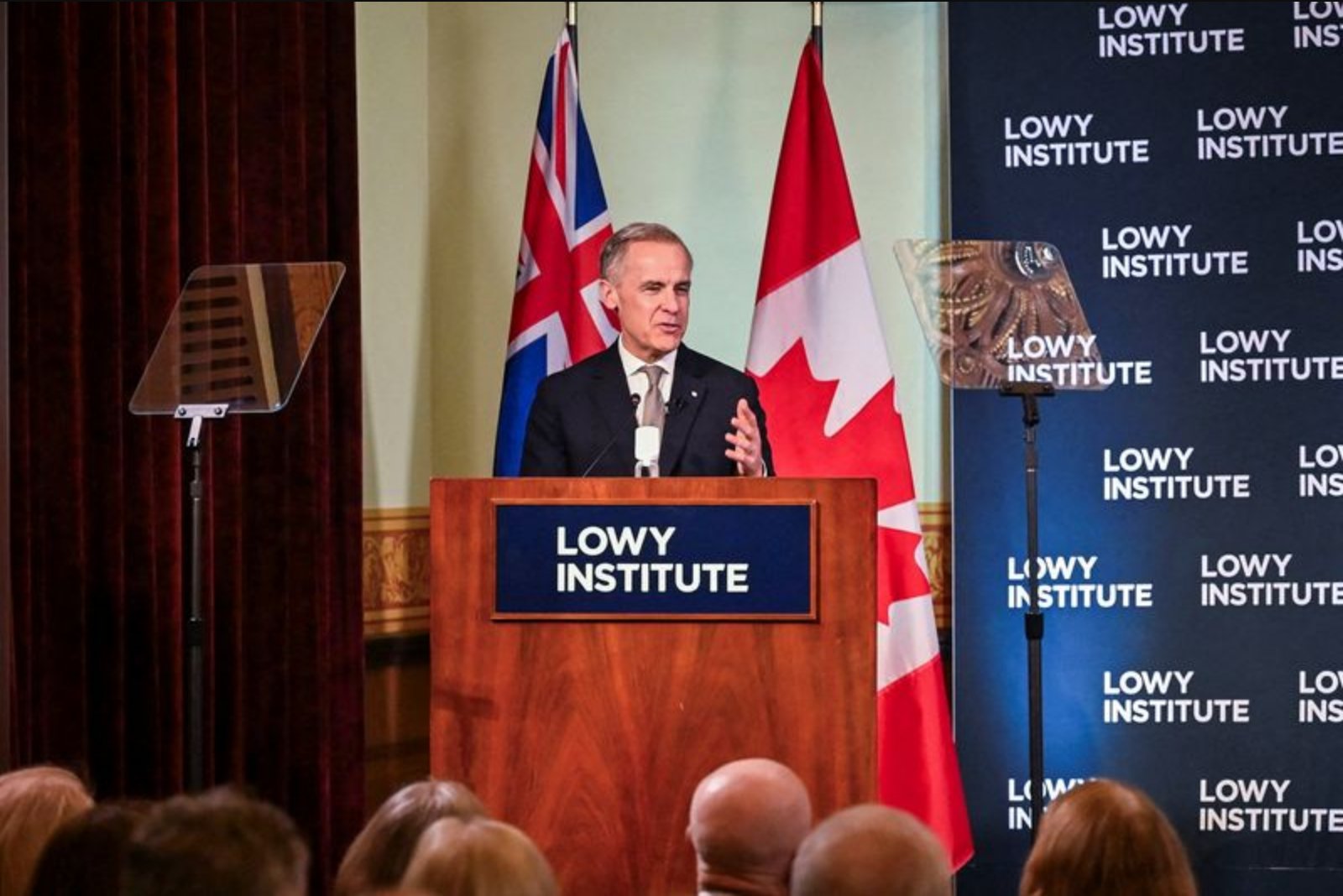
Australia and Canada have formalised a new set of arrangements on critical minerals, Canadian Prime Minister Mark Carney said on Thursday, signalling closer coordination with the G7 critical minerals alliance. Carney made the announcement during an address to Australia’s parliament on the final day of a three-day visit to the country, but he did not provide further details on the specific terms of the agreements.
Carney said: "Earlier today, we signed a series of new agreements on critical minerals, including with respect to the G7 critical minerals alliance... the largest grouping of trusted democratic mineral reserves in the world," highlighting the role the alliance will have in the collaboration between the two nations.
The announcements arrive amid sustained efforts by western governments to diversify supply chains away from China, which remains the dominant producer and processor of many critical minerals that are essential for semiconductors and defence applications. Both Canada and Australia are significant global suppliers: together they produce about a third of global lithium and uranium, and account for more than 40% of global iron ore output.
In addition to the G7 alliance engagement, domestic policy moves are already underway. Australia has set aside A$1.2 billion, equivalent to $850 million, to create a critical minerals stockpile, initially focused on antimony and gallium.
On the Canadian view of how to address concentrated supply, Energy and Mining Minister Tim Hodgson told Reuters on Tuesday that Canada believes a production alliance or a buyers’ club is a better approach than simply establishing a price floor. Hodgson argued that coordinated production and procurement models could help mitigate concentration risks, though he did not outline exact mechanisms in the comments reported.
Australian Resources Minister Madeleine King told Reuters ahead of Carney’s visit: "There’s a lot Canada and Australia can do together on critical minerals as producer nations," underscoring a shared producer-nation perspective on how to approach the sector.
Carney’s visit to Australia is part of a wider Asia-Pacific tour that also includes stops in Japan and India. The trip has been framed by the Canadian leader as efforts to strengthen ties between so-called "middle powers" amid a shifting global order.
Introducing Carney to parliament, Australian Prime Minister Anthony Albanese noted the rarity of a Canadian leader speaking to Australia’s parliament, calling it the first such address since 2007 and a sign of close bilateral relations. Albanese said: "Australia and Canada are middle powers in a world that is changing. We cannot change it back, but we can back ourselves, back our citizens, and back each other."
Carney used his parliamentary remarks to reflect on broader geopolitical strains. He described the conflict in the Middle East as a failure of the international order and observed that in a climate of great power rivalry, middle powers face a choice: "compete for favour or combine for strength."
Beyond critical minerals, Carney’s office said Australia and Canada are expected to expand cooperation in defence and maritime security, trade and artificial intelligence, but the announcement did not provide further specifics on initiatives or timelines in those areas.
The statement on new mineral arrangements and the mention of the G7 alliance point to a policy direction focused on trusted partnerships for resource security, though many practical details remain unspecified. Carney declined to provide further particulars at the time of his remarks.
Exchange rate used in reporting: $1 = 1.4122 Australian dollars.