
Summary: Texas Capital analysts expect a short-lived jump in oil prices to the $70-$80 per barrel range in the days ahead after coordinated U.S. and Israeli strikes on Iran pushed the market to reprice geopolitical risk. The brokerage highlights an existing risk premium already in prices, the limited probability of a prolonged Strait of Hormuz closure, and the potential for tighter balances should Iranian exports be disrupted for an extended period.
Oil markets moved quickly to reflect heightened geopolitical risk after the strikes on Iran, with West Texas Intermediate already trading above $72 per barrel - roughly 7% higher than Friday's close. Texas Capital estimates that around $6 per barrel of a geopolitical risk premium is currently embedded in crude prices, a factor that helps explain the initial rally.
In a research note, analysts led by Derrick Whitfield said they expect a possible short-term price spike up to $80 per barrel over the next week driven by the immediate and continuing U.S. and Israeli operations against Iran. The firm also projects intra-period volatility of about plus or minus $5 per barrel, largely driven by headlines related to escalation.
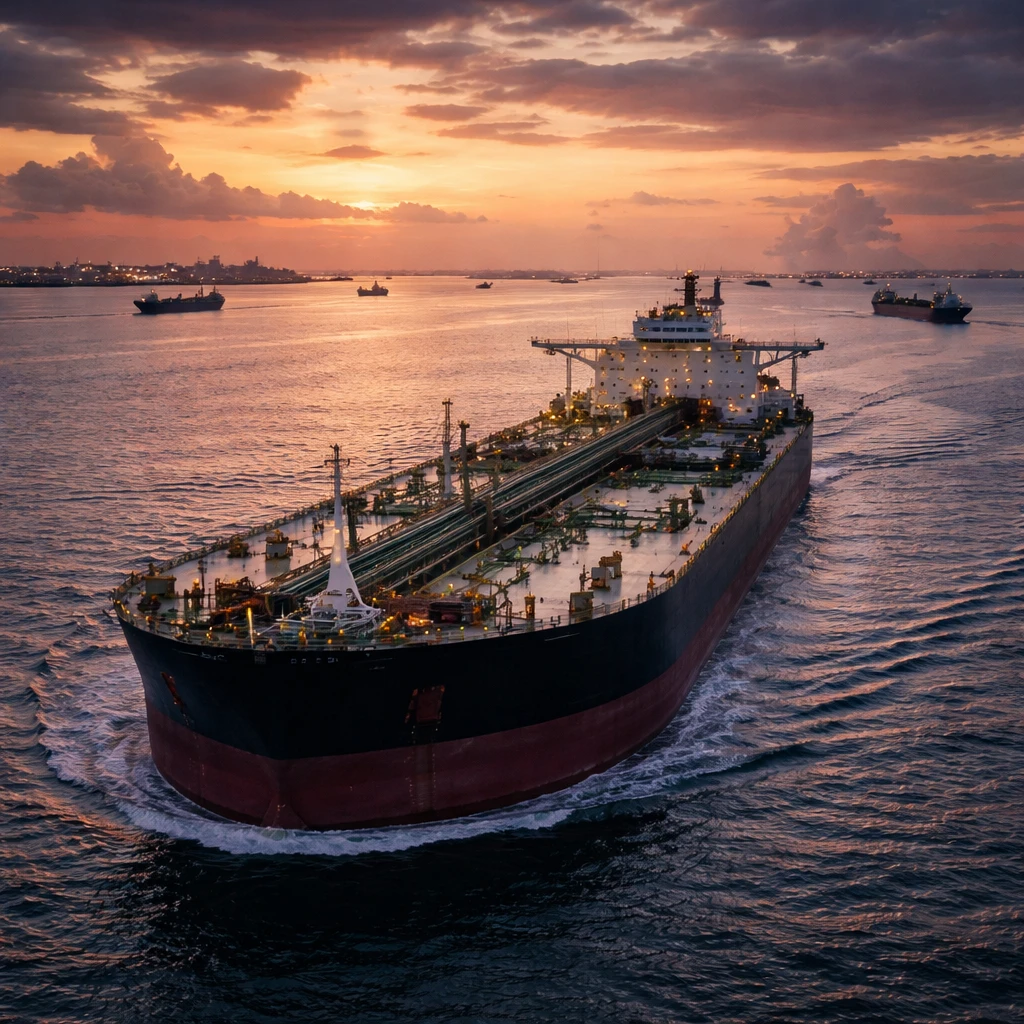
Despite the immediate price response, the brokerage judges the chance that Iran could successfully close or sustain a closure of the Strait of Hormuz to be limited. The route is a major shipping chokepoint that handles more than 20% of seaborne oil flows and roughly 20% of global LNG shipments. Texas Capital notes that Iran has historically been reluctant to close the Strait because doing so would also harm its own export capability.
Supply-side details are central to the firm's assessment. Iran is estimated by Texas Capital to produce about 3.3 million barrels per day, positioning it as OPEC's fourth-largest producer, and to export around 2 million barrels per day, with most of those exports destined for China. The analysts pointed out that China has been accumulating crude stocks over the past year and could also rely on oil already en route if disruptions appear.
Texas Capital cautioned that any prolonged loss of Iranian exports could materially tighten market balances. Their scenario analysis suggests sustained damage to Iranian flows could move the 2026 market from a projected surplus of about 2.7 million barrels per day to roughly balanced in the second half of the year.
On policy developments, OPEC+ has announced a production increase of 206,000 barrels per day. Texas Capital views that adjustment as largely immaterial in the near term, given the group's estimated effective spare capacity of about 3.3 million barrels per day that could be mobilized within 90 days.
The analysts also assessed Iran's military posture following the strikes, describing its capabilities as "materially degraded." They argue that Iranian retaliatory actions against Gulf infrastructure could further isolate Tehran and potentially push the country toward negotiations, a dynamic that would influence the persistence of the risk premium.
Given the uncertainty over the near-term trajectory, Texas Capital expects the elevated geopolitical risk premium to persist for at least one week - in part until Iran elects a new Supreme Leader and markets obtain clearer signals about the prospects for negotiations. In a more severe scenario, involving a disruption to shipping through the Strait of Hormuz, their modeling points to oil rising toward $110 per barrel before supply responses moderate prices.
The firm reiterated that geopolitical risk premiums often recede quickly if physical crude flows remain largely uninterrupted. In the current environment, with a higher and potentially persistent risk premium, Texas Capital favors oil-levered equities, naming Chord Energy, California Resources Corporation, Riley Exploration Permian, Talos Energy and TXO Partners as beneficiaries of sharp oil price increases based on historical performance of higher-levered companies.
Market context and takeaways
- Immediate pricing response has pushed WTI above $72 per barrel, about 7% higher than Friday's close, reflecting an embedded geopolitical premium estimated at $6 per barrel.
- Texas Capital forecasts a likely crude trading range of $70-$80 per barrel for at least the next week, with headline-driven volatility of +/- $5 per barrel.
- Longer-lasting closures of the Strait of Hormuz are seen as unlikely, though sustained impacts to Iranian exports could materially tighten the 2026 balance.
Analyst positioning
The brokerage's scenarios range from a short-term spike to $80 per barrel to a more extreme disruption case where prices approach $110 per barrel, with the caveat that geopolitical risk premiums typically diminish if physical flows are largely unaffected.