
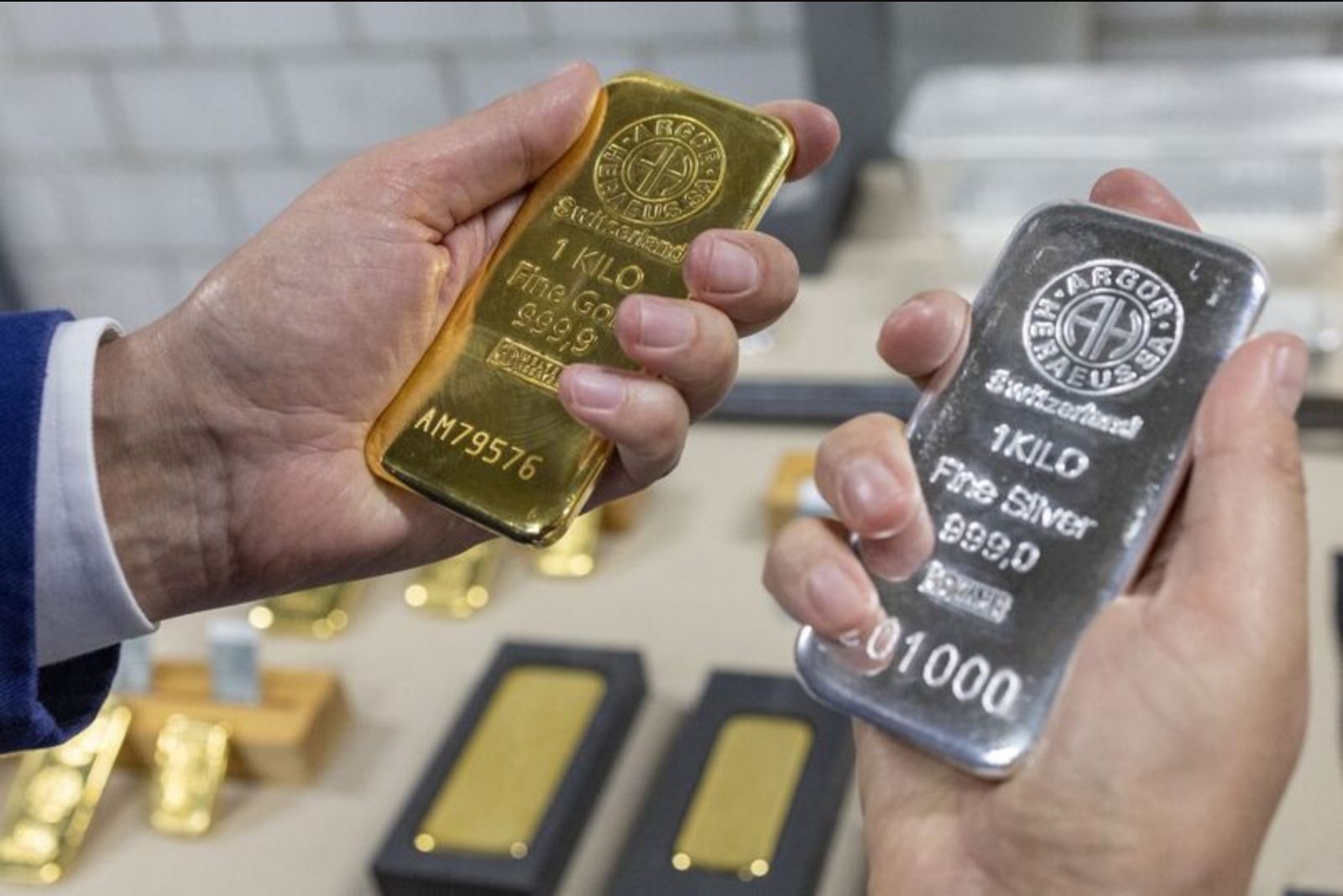
Gold and silver advanced on Wednesday as traders digested fresh geopolitical signals and awaited the release of minutes from the U.S. Federal Reserve's January policy meeting, scheduled for later in the day. By 10:04 ET (15:04 GMT), spot gold had rallied 2.6% to $5,005.44 per ounce, recovering from a slide to $4,841.74 the previous session. April gold futures rose 2.2% to $5,013.70.
Geopolitical developments continued to influence investor positioning. The opening, U.S.-brokered round of talks between Ukraine and Russia in Geneva wrapped up after about two hours. Ukrainian President Volodymyr Zelenskiy described the discussions as "difficult," and accused Moscow of delaying progress. Separately, Iran said it had reached agreement on a set of "guiding principles" with Washington to restart nuclear negotiations, though Iran's foreign minister indicated a full agreement remains some way off. Market participants noted that such diplomatic activity could reduce the appeal of traditional safe-haven assets like gold and silver.
Gold has been sensitive to shifts in investor demand and macro expectations. The metal reached an all-time peak of $5,594.82 on January 29 amid heavy speculative buying. Because gold does not pay interest, it typically benefits from a lower-rate environment. Investment flows into gold exchange-traded funds (ETFs) in China and across other parts of Asia have been highlighted as a prominent driver of price action in recent months.
That earlier rally weakened sharply after the nomination of Kevin Warsh as the next chair of the U.S. Federal Reserve late last month. Prices subsequently fell, touching a low of $4,403.24 per ounce earlier in the month before finding support and stabilizing.
Silver moved even more strongly on Wednesday, with spot prices jumping about 6% to $77.97 per ounce following a decline of more than 4% in the previous session.
To assess the recent price swings and near-term outlook, the publication spoke with Rick Kanda, Managing Director at U.K.-based dealer The Gold Bullion Company. Kanda addressed the sensitivity of gold to ETF flows from Asia, the strength of central bank purchases and the relative trajectory of silver versus gold over the next few years.
Exposure to ETF flows and potential for amplified selling
Kanda warned that investment demand for gold ETFs in Asia has become a central influence on gold prices, and that a slowdown in that demand would leave gold vulnerable. He noted that BCA research has cautioned a reversal could trigger a "meaningful pullback." According to Kanda, Asian investors tend to be momentum-driven and reactive to changes in price, which means a correction could prompt a wave of selling and cause a short-term decline in gold.
Central banks as a stabilising force
On central bank purchases, Kanda said demand remains robust. He pointed to China's central bank increasing its gold reserves last month for the fifteenth consecutive month. He emphasised that central banks take a long-term view when accumulating gold and are less likely to respond to short-term price swings when compared with ETF investors, suggesting central bank buying could limit the depth of any correction.
Relative performance: silver versus gold
Looking ahead, Kanda expressed an expectation that silver will outperform gold over the next few years. He clarified that this dynamic does not imply gold will perform poorly; rather, he anticipates both metals will appreciate under what he describes as favourable economic conditions. Kanda added that silver's gain should be supported by industrial demand on top of its market momentum entering 2026.
Price targets and longer-term outlook
On possible year-end levels, Kanda revisited last year's performance and market forecasts. He noted that silver rose about 130% over 2025, experiencing periods of both drawdown and sharp appreciation. While many had predicted silver would reach roughly $80 per ounce by the end of 2026, Kanda said that with silver trading near $78.50 per ounce at the time of his comments, he expects silver to exceed that $80 projection by a considerable margin. He cited a Bank of America forecast that projects a $135-$309 range for silver in 2026 based on compression in the gold-to-silver ratio, and said he agrees that silver will reach record highs by the end of the year, driven significantly by industrial demand.
Turning to gold, Kanda recalled that the metal posted a historic gain of roughly 64% in 2025, propelled by factors he identified as escalating tariff disputes, geopolitical uncertainty and shifts in global reserve strategies. He said that if central banks continue to accumulate bullion aggressively, he expects gold to approach about $6,000 per ounce by the end of 2026.
The market will continue to weigh shifting geopolitical signals, the Fed minutes due later in the day and flows into and out of ETFs, particularly in Asia. Central bank demand remains a critical backstop, while silver's industrial links add another demand vector that, according to the dealer interviewed, could drive stronger relative gains for silver in the years ahead.