
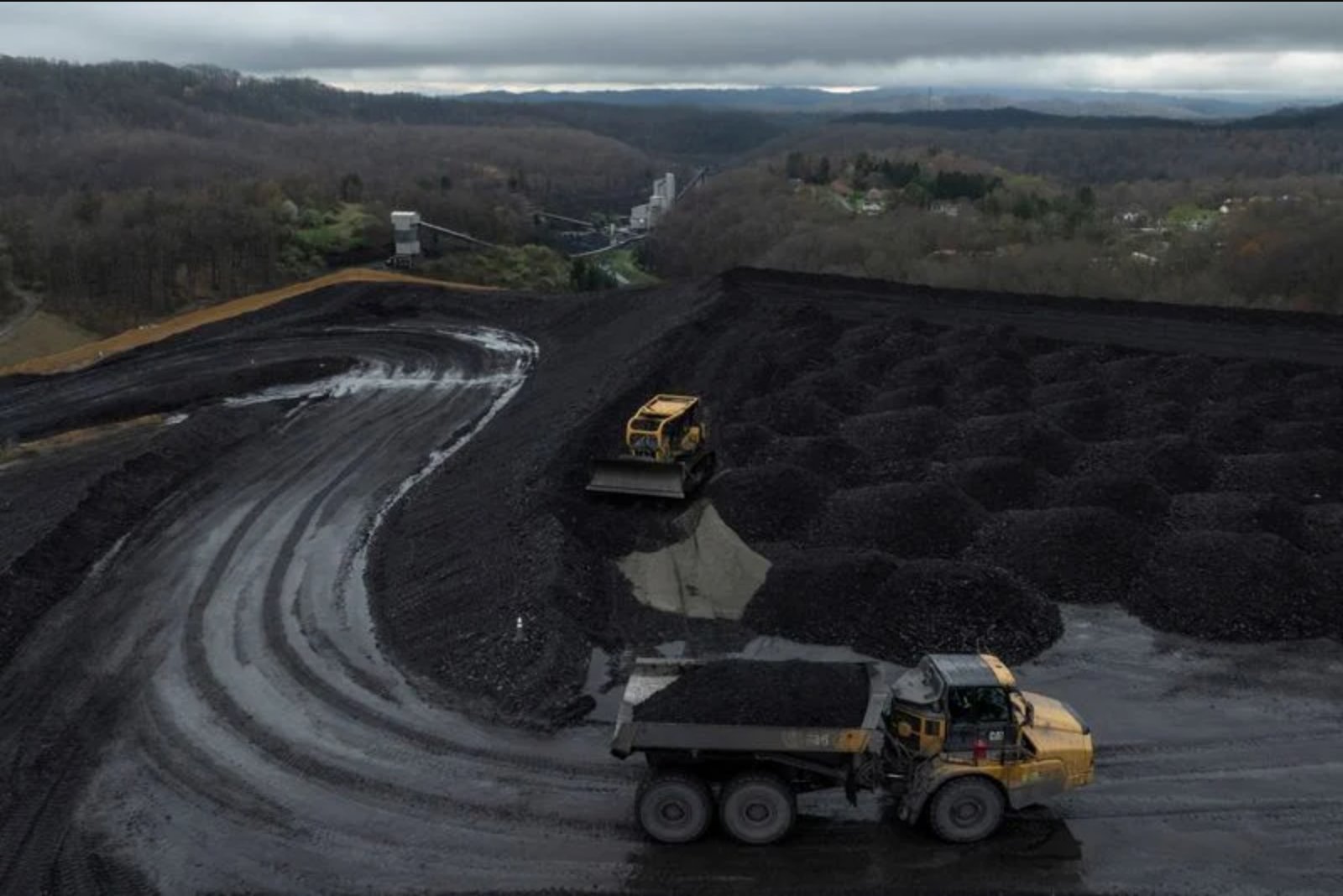
A White House official said the U.S. administration intends to use Cold War-era national defense authorities to allocate nearly $700 million for coal-related projects, a move that could be announced as soon as Thursday, the official said.
Under the plan, the president would invoke the Defense Production Act - the 1950 statute that gives broad presidential authority over industries deemed crucial to national security - to carry out a range of measures aimed at shoring up coal infrastructure. The official said the package would include upgrades to more than a dozen coal-fired power plants, financing to help construct a large West Coast coal export terminal, and programs that would match corporate funds to support new coal power plants.
The source spoke on condition of anonymity so as not to preempt the president’s announcement and warned that details remain subject to change.
Funding breakdown
The official outlined a preliminary allocation of the nearly $700 million. More than half of the total is slated for upgrades at 13 coal power plants. Separately, $185 million would be used to match corporate contributions to coal projects in Alaska, Maryland and West Virginia. Another $75 million is earmarked for the proposed West Gateway export terminal in Northern California.
Administration framing and market context
According to the official, the administration has framed energy policy in existential terms, emphasizing a domestic need to sustain power for energy-intensive artificial-intelligence data centers and seeking to lessen reliance on foreign adversaries that control major fossil fuel reserves. Those themes were described as part of the rationale for invoking the Defense Production Act to support the coal sector.
Yet coal’s role in U.S. power generation has been in long-term decline. Data from the U.S. Energy Information Administration show that coal, which once supplied more than half of U.S. electricity, has fallen to under one-fifth of generation in recent years. Utilities and power producers have shifted largely to cheaper natural gas and renewable sources, citing concerns about fossil fuels’ contribution to a warming climate and vulnerabilities tied to global supply chains.
Implications and uncertainties
The initiative, as described by the official, targets plant-level upgrades, public-private funding matches and export infrastructure. While the plan lays out specific funding allocations, the official’s caveat that details could change highlights uncertainty around final program design and timing.
Given the administration’s stated goals and the EIA’s data on coal’s decline, the proposed measures represent an attempt to bolster a sector that has faced sustained downward pressure from market competition and environmental and supply-chain concerns.