
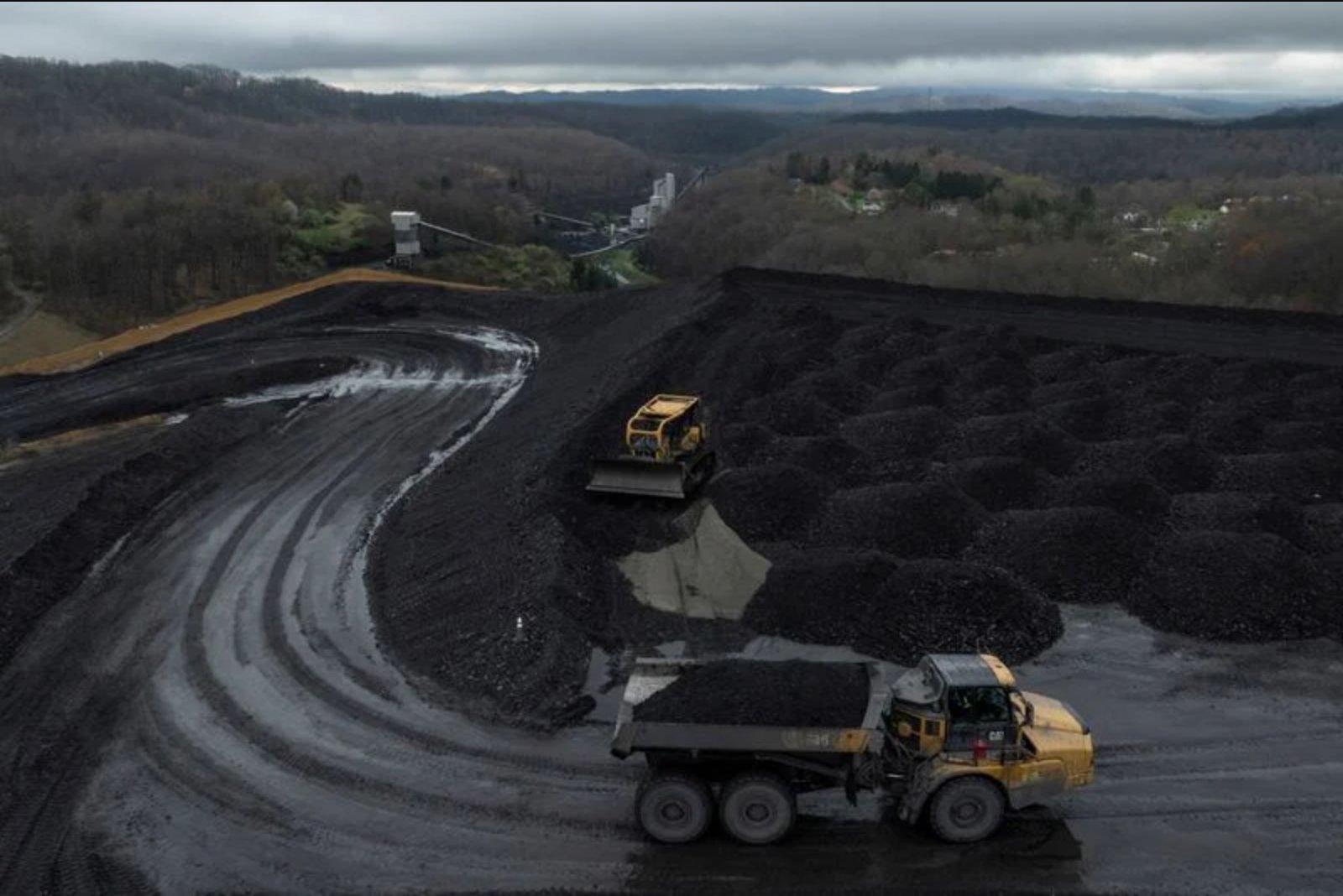
The White House intends to use Cold War-era emergency authority to channel almost $700 million toward the U.S. coal industry, directing funds to both domestic coal-fired power operations and to infrastructure that would enable shipments to Asia, a White House official and an industry source said.
The administration will rely on the Defense Production Act - a 1950 statute that grants presidents broad power over industries deemed important to national security - to support a range of coal-related projects. The announced measures are expected to include upgrades at more than a dozen existing coal-fired power plants, financing for two proposed new coal-fired power stations, and backing for construction of a West Coast coal export terminal, according to the official and the industry source.
The White House public schedule lists a 3 p.m. ET (1900 GMT) announcement by the president on "Beautiful, Clean Coal." Officials have framed the energy initiative as part of a national security agenda, citing the need to ensure reliable electricity supplies for AI data centers and to reduce reliance on foreign energy sources.
More than half of the nearly $700 million would be allocated to upgrade 13 coal-fired power plants. Additional funding would be directed to coal facilities in Alaska, Maryland and West Virginia, and to the long-proposed West Gateway coal export terminal in Northern California, the official said. The administration also plans to assist with construction and port infrastructure so U.S. coal can reach global buyers.
The plan has drawn strong opposition from environmental advocates. Patrick Drupp, climate policy director at the Sierra Club, criticized the proposal as a misuse of taxpayer dollars and vowed legal resistance. Drupp said, "It is disgusting and reprehensible that the president of the United States is giving away our taxpayer dollars to deadly and expensive coal plants."
Industry groups welcomed the action. Rich Nolan, chief executive officer of the National Mining Association, characterized the funding as bolstering a fuel source that helps shield consumers from volatile energy prices while meeting growing electricity demand. Nolan said the administration is taking "decisive action at home to ensure that upgrades to existing energy assets are made, and at our ports to ensure that U.S. coal can answer the world’s needs."
The role of coal in U.S. power generation has diminished significantly over recent decades. Coal accounted for more than half of U.S. electricity generation in 1990; it now produces less than one-fifth of the nation’s power after utilities shifted toward cheaper natural gas and renewable energy sources. The administration’s move seeks to reverse some of that decline by supporting both domestic combustion and exports.
Officials provided no additional specifics on project timelines or the selection process for recipients beyond the broad categories of support described by the White House official and the industry source. Environmental groups have signaled intent to challenge the measure in court, while industry representatives called the action necessary to strengthen production and bolster energy security.
Summary
- The administration will use the Defense Production Act to allocate nearly $700 million to support the coal industry.
- Funds are slated for upgrades at 13 coal-fired plants, financing for two new plants, and support for a West Coast export terminal and other facilities.
- The proposal has provoked condemnation from environmental groups and support from mining industry leaders.