
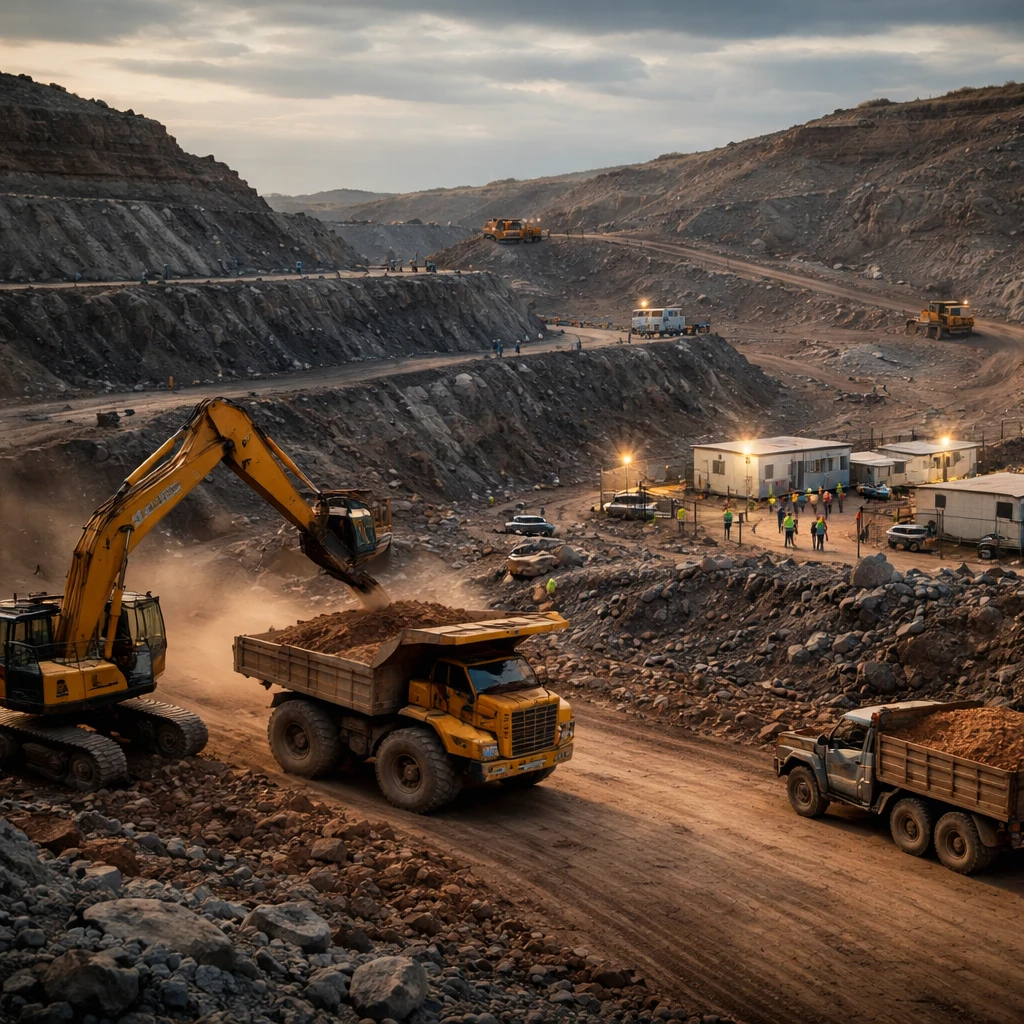
Venezuela's acting government on Monday submitted a proposed mining regulation to the national assembly, which is controlled by the ruling socialist party. The measure is part of a broader package of reforms the acting administration says is designed to open the country's oil and mineral sectors to outside investment.
The draft law, a copy of which was reviewed though not made public in full, would repeal the existing 1999 mining regulation statute. Under the proposal, both foreign and domestic companies would be permitted to exploit gold, diamonds and rare earth deposits. Concession periods for mining projects would be increased from 20 years to 30 years.
Despite expanded access for outside firms, the draft maintains that mineral deposits would remain the property of the state. It also specifies that disputes arising from mining activity will be resolved through international arbitration. The text of the proposal includes new formulas for calculating taxes on mining projects.
The bill must go through two separate debates in the assembly before it can become law. Observers note that approval appears likely because the ruling socialist party holds a majority in the legislature.
U.S. engagement has accompanied the legislative move. U.S. Interior Secretary Doug Burgum, during a recent visit to Venezuela, expressed an optimistic view of the proposed mining law, saying it would create opportunities for companies and that the acting president had pledged to guarantee their security. The administration of U.S. President Donald Trump has publicly supported several initiatives by acting President Delcy Rodriguez intended to attract investors and stabilize the country following a January U.S. raid that captured President Nicolas Maduro, with Trump repeatedly praising Rodriguez for cooperating with the U.S.
Shortly after Burgum's visit concluded, Washington issued a license authorizing certain transactions involving Venezuelan-origin gold. That license permits transactions with the state-owned mining company Minerven and its subsidiaries provided that contracts are governed by U.S. law.
Acting President Rodriguez has pointed to a recent oil sector reform as a model for the mining changes. The oil reform package, she says, lowered taxes, broadened the oil ministry's decision-making authority and granted autonomy to private producers among other measures. Rodriguez has portrayed that overhaul as a blueprint for similar changes in the mining sector.
The proposed mining regulation must still progress through the assembly's legislative process and could be modified in debate. For now, the draft sets out key substantive shifts in concession length, foreign participation, dispute resolution and tax treatment while retaining state ownership of mineral resources.