
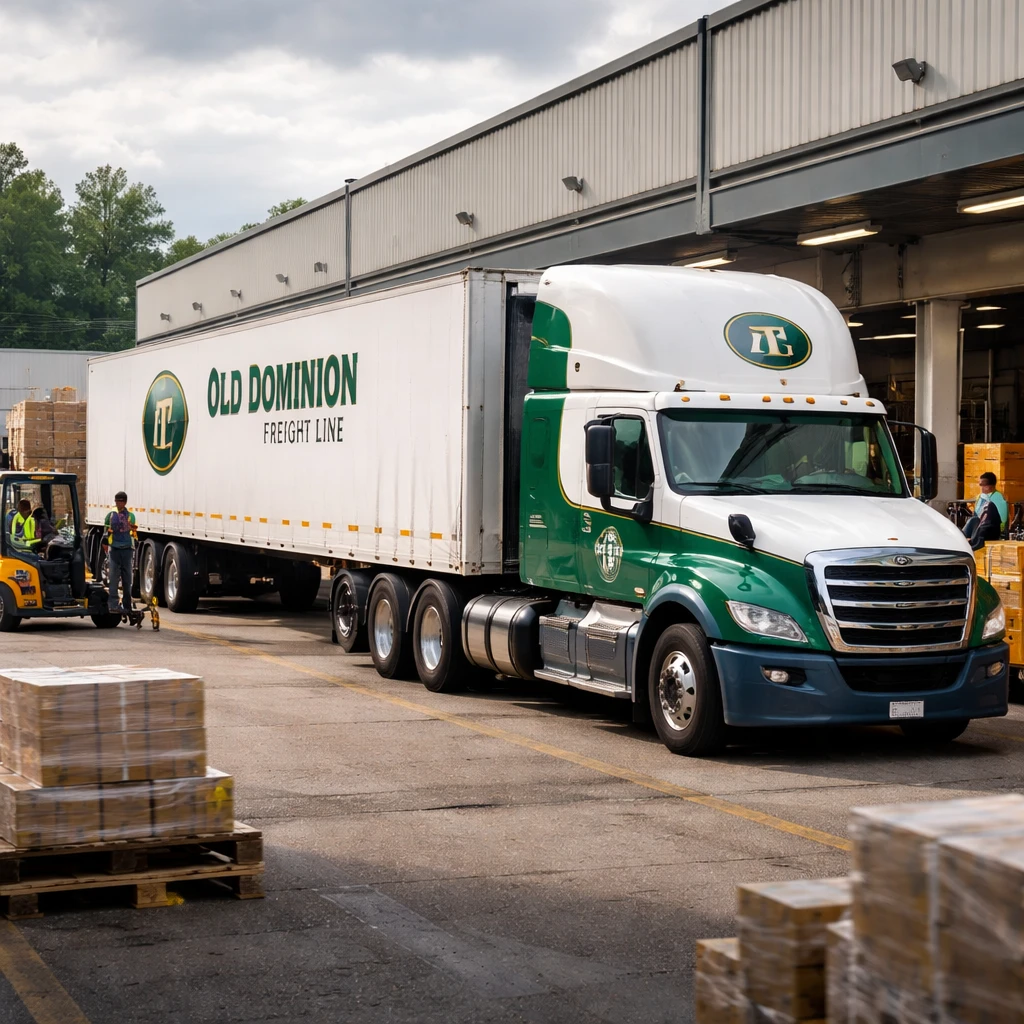
Truist Securities raised its price target on Old Dominion Freight Line (ODFL) to $225.00 from $185.00 and maintained a Buy rating on the freight carrier, even as the firm lowered its 2026 earnings per share forecasts and began publishing estimates for 2027. The shares were trading around $200.41 at the time of the update, and the company's price-to-earnings ratio stood at 43.09, a level InvestingPro data flagged as well above industry norms.
Truist's upward revision of the target reflects a more constructive view of the company's medium-term prospects despite acknowledging near-term volume headwinds. The firm pointed to what it described as a "subtle but important shift in tone" from Old Dominion's recent earnings call, and combined that signal with a positive Manufacturing PMI reading to justify a brighter outlook.
Operationally, Truist highlighted that Old Dominion is entering a demand recovery with roughly 35% excess network capacity, which the firm sees as a runway for substantial operating leverage when freight volumes normalize. In support of that view, Truist emphasised the carrier's service quality and disciplined approach to cost control as structural strengths that should help margins expand as volumes recover.
Despite the more optimistic target, Truist trimmed 2026 EPS expectations and started publishing projections for 2027. InvestingPro-tracked data show a number of recent downward revisions to earnings estimates, with eight analysts lowering forecasts for the upcoming period.
Old Dominion's most recent reported quarter produced mixed results. Fourth-quarter 2025 earnings per share were $1.09, slightly above the $1.06 consensus estimate. Revenue, however, fell far short of expectations: the company reported $307 million versus a forecast of $1.3 billion, a discrepancy that has driven a varied response from market participants.
Analyst reactions to the quarter were split. Benchmark analyst Christopher Kuhn held a Hold rating following the results. Baird moved in the opposite direction on sentiment, downgrading the stock from Neutral to Underperform because of persistent volume concerns, while simultaneously raising its price target to $204.00. Jefferies also raised its target, to $195.00, and kept a Hold rating, citing early signs of a potential freight-cycle improvement. BMO Capital maintained an Outperform rating and noted that the results exceeded its expectations by 4%.
Those divergent stances underscore the mixed signal coming from Old Dominion's performance: an earnings beat on a per-share basis, but a pronounced shortfall in revenue and ongoing pressure on volumes. Against that backdrop, Truist's case for stronger upside rests on excess capacity, operating discipline, and top-quartile service that could deliver leverage as demand recovers.
For investors and market watchers, the juxtaposition of lowered near-term earnings forecasts with a materially higher price target highlights the uncertainty around the timing and pace of freight demand normalization. Analysts continue to weigh service quality and cost control against current volume constraints when forming opinions on the stock.