
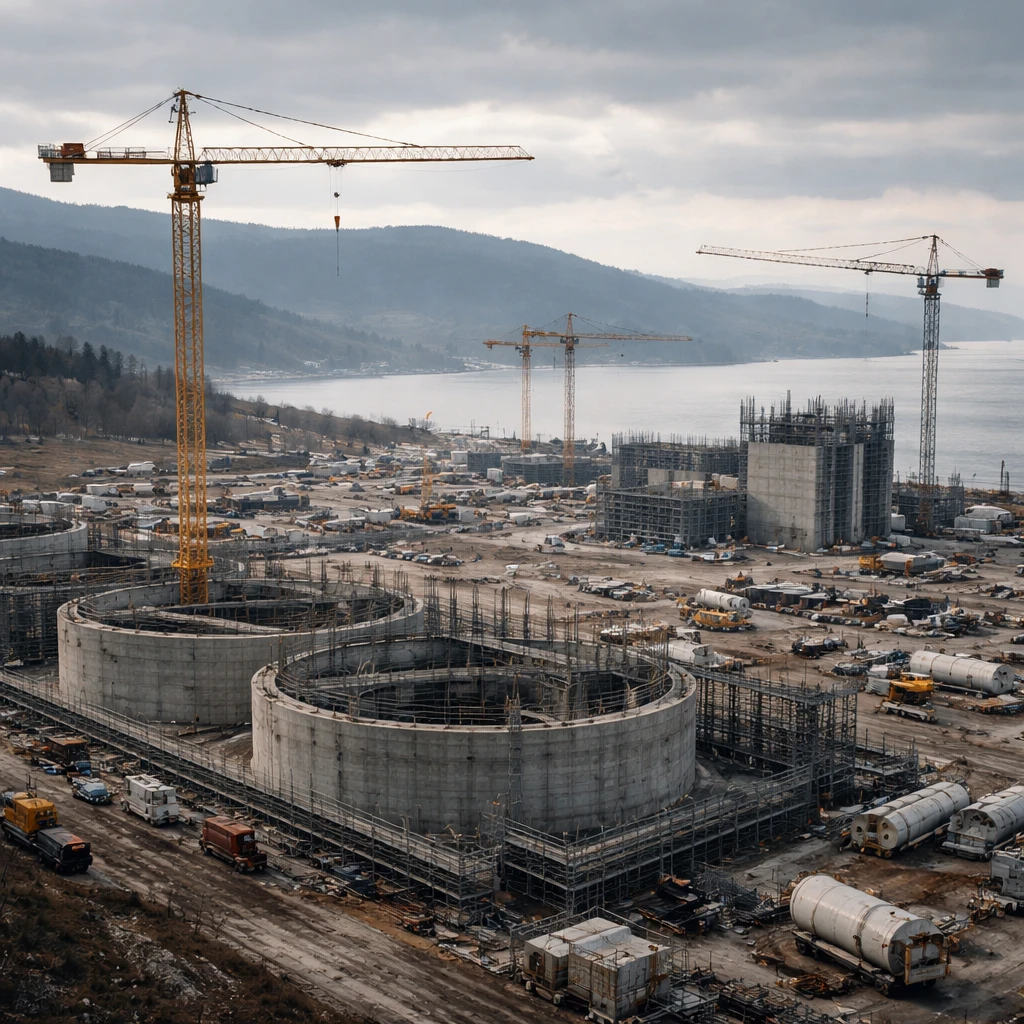
TD Cowen announced a downgrade of NuScale Power (NYSE: SMR) from Buy to Hold, citing new contractual conditions tied to the company's Romanian small modular reactor (SMR) project that would transfer a greater share of project risk to NuScale and delay the timetable for commercial operations.
The downgrade follows a steep decline in NuScale's share price - the stock has fallen over 56% in the past six months and is trading at $16.74, a level TD Cowen notes sits slightly below InvestingPro's Fair Value estimate.
A closely watched shareholder meeting for NuScale's customer, Nuclearelectrica, is scheduled for February 12-13, 2026. At that meeting, shareholders will vote on a Final Investment Decision (FID) for the Doicesti SMR project. TD Cowen's note frames the downgrade as forward-looking, arriving ahead of that pivotal vote.
Contractual shifts and timetable impact
While TD Cowen expects the Doicesti project to ultimately proceed, the firm says newly proposed conditions would place additional obligations on NuScale and push the commercial operation date materially later than previously discussed. Where a 2030 start-up had been referenced as recently as February 2025, the new terms would defer commercial operations to 2033/2034.
The revised conditions create two alternative obligations for NuScale following Nuclearelectrica's purchase of the first Nuclear Power Module (NPM): either NuScale would assume responsibility for five of the six NPMs, or NuScale would be required to reimburse the costs for five modules if the first module does not perform as designed.
Balance sheet and liquidity
TD Cowen's analysis points to a strong liquidity profile at NuScale despite the downgrade. The firm notes roughly $750 million in cash and investments as of the third quarter of 2025, a situation that preceded an updated at-the-market (ATM) facility announced on November 17. InvestingPro data included in the analysis shows a current ratio of 1.62 and indicates NuScale holds more cash than debt on its balance sheet.
The analyst note highlights that investors can access NuScale's Pro Research Report and additional ProTips and metrics ahead of the company's next earnings release, scheduled for February 26.
Other analyst moves and sector context
NuScale has seen a range of analyst actions in recent weeks. Texas Capital Securities initiated coverage with a Buy rating and a $23.00 price target, pointing to NuScale's position as the only SMR approved by the U.S. Nuclear Regulatory Commission. Bank of America upgraded its view on NuScale from Underperform to Neutral and set a $28.00 price target, citing a large share-price correction that aligns with current company challenges. UBS trimmed its price target to $20.00, attributing the change to project delays and other near-term headwinds while retaining a Neutral rating.
Activity among other companies in the nuclear space has also drawn notice. Goldman Sachs reiterated a Neutral rating and a $106.00 price target on Oklo, whose management is concentrating on deploying its Aurora Powerhouse reactors and expects to announce milestones for Project Pluto soon. Broader market interest in nuclear energy received a lift after U.S. President Donald Trump expressed support for nuclear power at the World Economic Forum in Davos, a factor that analysts say contributed to a sector-wide uptick in nuclear energy equities.
What to watch next
- The outcome of the Nuclearelectrica shareholder vote on February 12-13, 2026, and the exact contractual terms approved for the Doicesti project.
- Any further disclosures from NuScale about how the new conditions would be implemented and whether they will seek to renegotiate risk allocation.
- NuScale's liquidity and capital actions between now and its earnings release on February 26, which could influence investor sentiment given the firm's cash position reported through Q3 2025.
The combination of potential contractual obligations, the postponed commercial date, and the pending shareholder decision in Romania frames the near-term outlook for NuScale. Analyst reactions remain mixed, reflecting different assessments of the company's prospects amid shifting project terms and sector dynamics.