
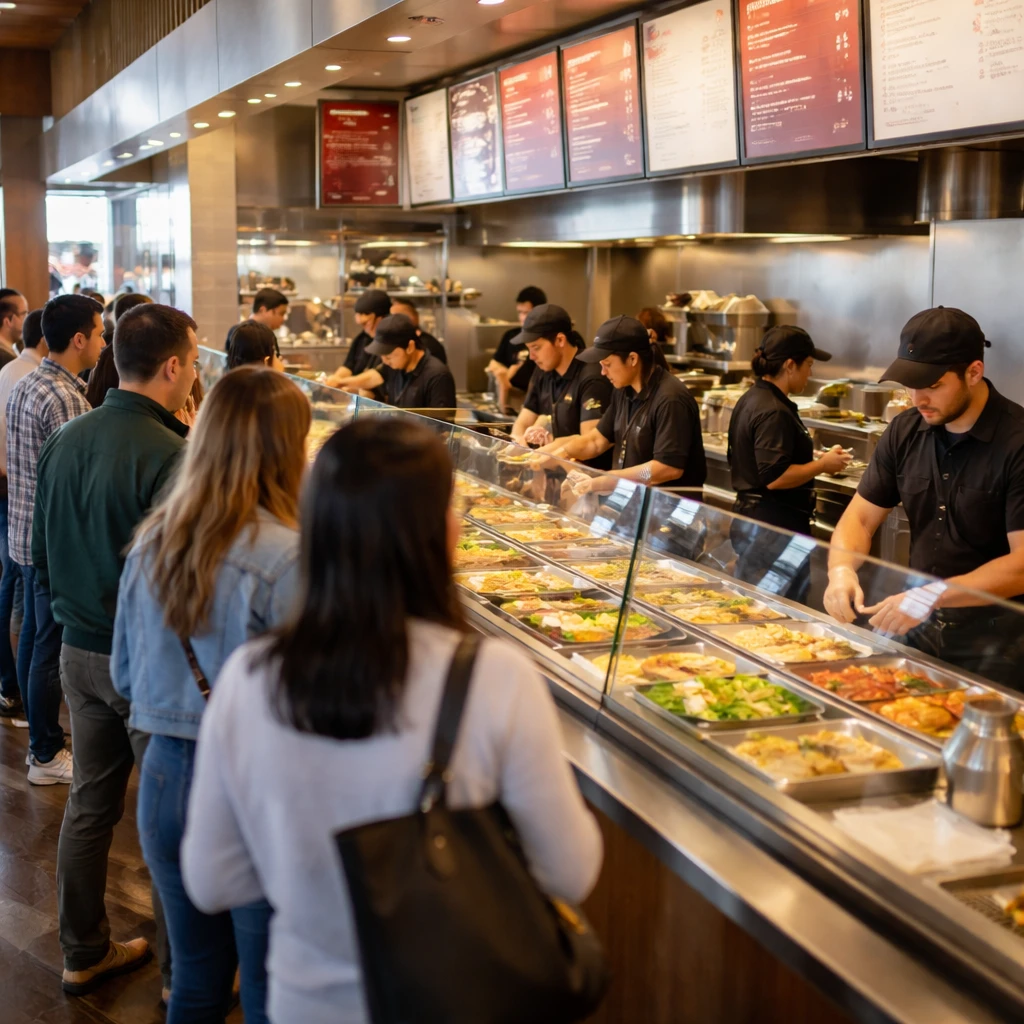
Stifel has trimmed its 12-month price objective for Chipotle Mexican Grill (NYSE:CMG) to $45.00, down from $50.00, while preserving a Buy recommendation on the shares. The stock’s most recent market quote of $39.17 sits below the broader consensus range of $35 to $55, and InvestingPro analysis flags the name as currently undervalued versus that range.
The research house pointed to Chipotle’s FY26 guidance as the central reason for the adjustment. Management’s outlook calls for flat comparable-restaurant sales and anticipates significant margin compression, an outlook Stifel characterized as "realistic rather than conservative." That guidance sits alongside a company-level projection of roughly 5% revenue growth for FY26 and forecasted earnings of $1.17 per share, figures cited from InvestingPro data.
Despite the lower target, Stifel remains constructive on selected operational and product initiatives designed to expand Chipotle’s customer base. The firm highlighted ongoing rollouts of higher-efficiency equipment, operational changes intended to lift throughput, and new lower-price entry products as tangible levers that can help broaden access for hesitant or price-sensitive consumers. Those initiatives are viewed as complementary to the company’s recent top-line performance, which includes 5.41% revenue growth over the most recent twelve months and a five-year revenue compound annual growth rate of 15%.
However, Stifel expressed skepticism about the near-term transactional lift from deeper engagement with the chain’s loyalty program. The firm questioned whether increased emphasis on loyalty and on more personalized marketing will translate into incremental visits, noting that a meaningful rise in transaction frequency will likely require attracting customers who currently visit only once or twice per year.
Stifel said it was maintaining its Buy rating in part because of the visibility of Chipotle’s unit expansion pipeline and its expectation that a newly appointed "world-class" chief marketing officer could help address some of the concerns around customer acquisition.
Chipotle’s own reported results for the fourth quarter of 2025 offered mixed confirmation of momentum. The company posted earnings per share of $0.25, slightly above the $0.24 consensus estimate, and delivered $3.00 billion in revenue compared with an anticipated $2.96 billion. These results prompted moves among other sell-side firms.
Following the earnings disclosure, Telsey Advisory Group trimmed its price target for Chipotle to $48 from $50 while maintaining an Outperform rating, citing operational challenges highlighted in the report. Wolfe Research reiterated an Outperform view as well, setting a $38 price target and underscoring steady comparable-sales momentum and a robust digital channel as supportive elements for future growth.
Taken together, the revisions and commentary underscore a split in analyst emphasis: some firms are focused on near-term margin and operational headwinds embedded in FY26 guidance, while others point to underlying unit growth visibility and digital strength as reasons for continued optimism.
Key points
- Stifel lowered its Chipotle price target to $45 from $50 but kept a Buy rating, citing FY26 guidance that expects flat comp sales and significant margin compression.
- Stifel remains supportive of equipment, throughput, and product initiatives to attract customers, and notes recent revenue strength with 5.41% year-over-year growth and a 15% five-year revenue CAGR.
- Other firms adjusted targets after Q4 2025 results: Telsey cut its target to $48 with an Outperform, while Wolfe Research kept an Outperform and set a $38 target, highlighting comparable-sales momentum and a strong digital channel.
Risks and uncertainties
- FY26 margin compression - the guidance implies notable pressure on profitability, which could affect profitability metrics in the restaurant and consumer discretionary sectors.
- Uncertain transactional uplift from loyalty initiatives - if personalized marketing and loyalty engagement fail to boost visit frequency, the consumer and restaurant sectors could see slower-than-expected demand recovery.
- Operational execution - operational challenges signaled in the quarter could limit near-term upside and influence how investors view unit expansion plans in the restaurant sector.