
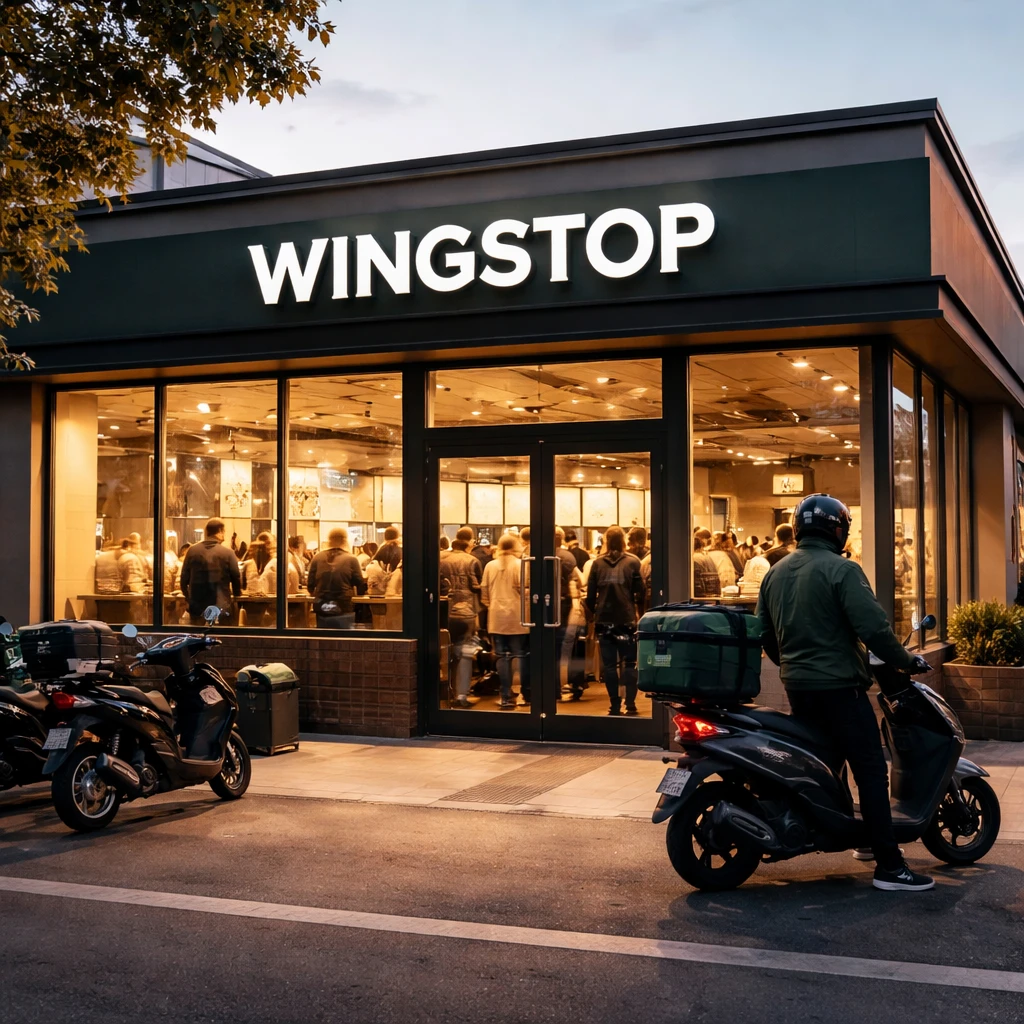
RBC Capital Markets trimmed its 12-month price target for Wingstop Inc. (NASDAQ:WING) to $340 from $350 on Wednesday, yet preserved an Outperform rating on the chicken wing franchise. The firm cited softer quarter-to-date sales trends and increased execution risk around strategic initiatives as the primary drivers of the modest reduction.
Wingstop’s shares have moved unevenly over recent periods. According to InvestingPro figures cited by analysts, the stock has returned -15.55% over the past six months, though it remains up 17.02% year-to-date. At present the company trades at a price-to-earnings ratio of 40.54, which the note characterizes as elevated relative to its assessed Fair Value.
Quarterly performance and operational metrics
RBC noted Wingstop’s fourth-quarter results exceeded a lowered bar. Same-store sales outperformed consensus by 113 basis points, and EBITDA topped expectations by 6.7%, a beat the firm attributes in part to lower general and administrative expenses. Over the trailing twelve months Wingstop generated $210.12 million in EBITDA, and the company reported a current ratio of 3.26, indicating liquid assets comfortably exceed short-term obligations.
The rollout of Wingstop’s Smart Kitchen model has reached full coverage across the U.S., and RBC highlighted a mid-single-digit sales uplift at Smart Kitchen locations compared with the overall store base. The company also ran a loyalty program test in the fourth quarter that produced a 7% increase in customer frequency, according to the firm.
Quarter-to-date trends and guidance implications
Despite those fourth-quarter beats, RBC said quarter-to-date trends remain consistent with the negative 5.8% same-store sales reported for Q4. The firm pointed out that severe weather caused more than 700 restaurant closures, pressuring comparisons. Based on current indicators, RBC estimated implied first-quarter same-store sales likely fall in the negative 6.5% to negative 7% range, a notable delta versus consensus expectations of negative 1.9%.
Management has guided to sequential improvement through the year, which RBC interpreted as a shift that will likely make same-store sales growth more second-half weighted. That profile raises execution risk around both Smart Kitchen expansion and loyalty rollouts, the firm added. Further, RBC observed that stabilization in same-store sales growth - even with easier comparisons - suggests further deterioration in underlying consumer demand to start 2026.
On expansion assumptions, the note said fiscal 2026 guidance implies U.S. unit growth will decelerate by roughly 450 basis points at the midpoint. RBC modestly lowered its model estimates alongside the price-target reduction.
Analyst responses and market reaction
The company’s fourth-quarter results prompted several other analyst adjustments. Truist Securities raised its price target to $375 from $365 and kept a Buy rating, citing strong quarterly results and constructive guidance for 2026. Guggenheim increased its target to $315 from $300 and revised its 2026 EBITDA and EPS estimates following the Q4 results. Bernstein reiterated an Outperform rating with a $350 price target, highlighting that stabilizing macro conditions could benefit the company over time.
Wingstop’s Q4 same-store sales were reported at -5.8%, better than the -6.7% consensus estimate. The quarter featured an EBITDA beat despite a slight revenue miss, underscoring a mixed earnings profile that has drawn varied responses from the analyst community.
Market context and takeaways
RBC’s price-target cut was modest and accompanied by a maintained Outperform rating, reflecting a view that the company retains upside potential despite near-term headwinds. The firm’s emphasis on weather disruptions, softer quarter-to-date comps, and the risks tied to execution of strategic initiatives frames the immediate investor debate: can Wingstop convert Smart Kitchen and loyalty gains into durable velocity while navigating tougher early-year demand and decelerating unit growth?