
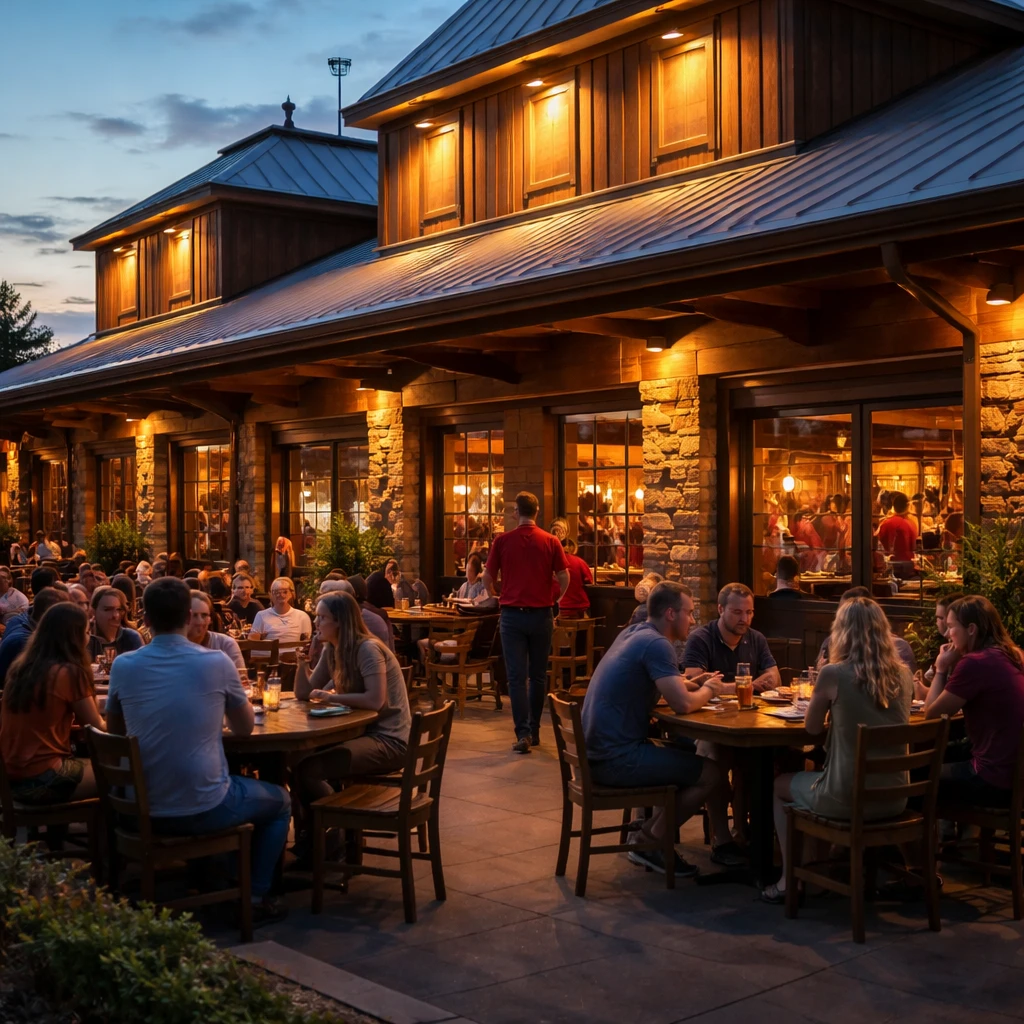
KeyBanc reaffirmed a Sector Weight rating on Texas Roadhouse (NASDAQ:TXRH) after the company released fourth-quarter 2025 results that fell short of Street expectations.
Management reported a quarter in which earnings per share missed consensus estimates and same-store sales growth disappointed relative to forecasts. Inflationary pressure, particularly on food costs, was cited as a material headwind for store-level profitability through the period.
Despite the quarterly shortfall, the company said same-store sales trends reaccelerated in the first quarter, a development that appeared to lift the stock during after-hours trading. Management continues to guide to roughly 7% food inflation as an ongoing input cost pressure.
On the cost side, Texas Roadhouse now anticipates a low-double-digit increase in general and administrative expenses. KeyBanc incorporated that outlook into its model by trimming its 2026 earnings per share estimate to $6.25. The firm noted that this adjustment is partially offset by a modestly lower effective tax rate in its forecast.
Turning to valuation, KeyBanc described the stock as roughly fairly valued at about 29.5 times its 2026 EPS estimate. By comparison, the company is trading at a trailing multiple of 28.3 times and carries a PEG ratio of 2.2, metrics KeyBanc highlighted as indicating premium pricing relative to projected growth.
Separately, InvestingPro analysis referenced in the coverage indicates Texas Roadhouse appears undervalued on a Fair Value basis and places the stock among names identified as undervalued. The platform's broader research was promoted as offering deeper analysis across over 1,400 U.S. equities for interested investors.
Analyst activity and peer notes
Other research shops have taken differing approaches in the wake of the results. TD Cowen initiated coverage of Texas Roadhouse with a Buy rating and set a price target of $215, citing the company’s track record of delivering above-consensus same-store sales.
Stephens raised its price target on the shares to $180 while keeping an Equal Weight rating, though the firm flagged ongoing challenges at the restaurant level for profitability.
In related coverage of the broader restaurant and equipment vendor landscape, Bank of America downgraded Ciena to Neutral and removed its price target, citing concerns over valuation and the company’s business outlook, including potential slower order trends and questions around optionality for AI deployments.
TD Cowen also initiated coverage on Brinker International with a Buy rating and a $192 price target, pointing to expectations for same-store sales above consensus in the coming years and improved consumer perceptions supporting that view.
Market implications
The flow of analyst notes underscores a split in expectations: some firms are willing to look through the near-term margin pressure in anticipation of continued same-store sales strength, while others remain cautious about profitability and valuation. For investors, the debate centers on whether reaccelerating sales will offset sustained food inflation and higher G&A.
KeyBanc’s reassessment of earnings and its view that the shares trade near a fair-value multiple suggest limited upside from current levels absent a clearer improvement in margin trends or faster than-expected sales momentum.
Conclusion
Texas Roadhouse’s fourth-quarter 2025 report left analysts weighing persistent cost pressures against signs of reacceleration in sales. KeyBanc’s decision to hold a Sector Weight while trimming 2026 EPS to $6.25 reflects that balance: cautious on near-term profit dynamics but not bearish on the name. Other firms continue to express divergent views on the company’s near-term trajectory and valuation.