
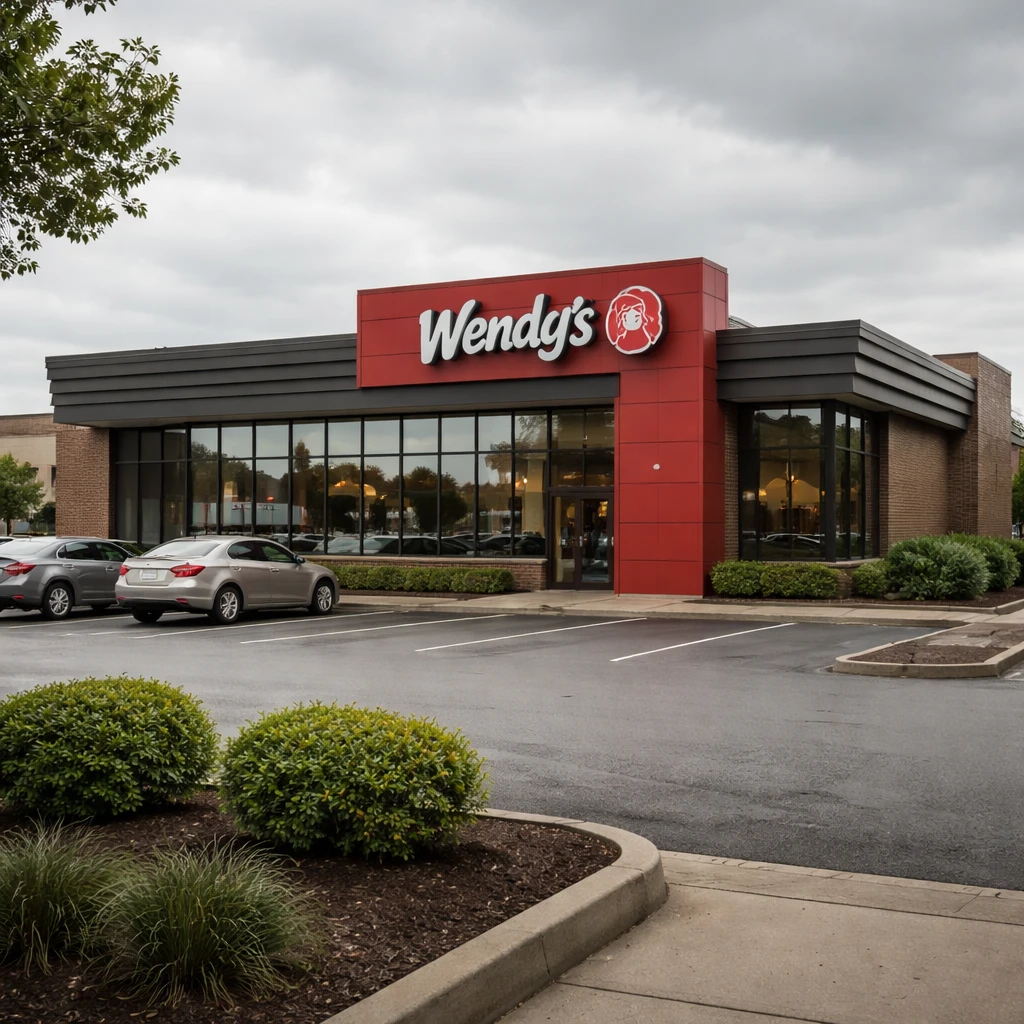
Analyst action and stock context
Bernstein SocGen Group has reduced its price target on Wendy’s Holdings Inc. shares to $9.00 from $10.00 but maintained a Market Perform rating. The stock is trading at $7.48 and sits close to a 52-week low of $7.08. According to InvestingPro’s Fair Value assessment cited by the company’s reporting, Wendy’s is assessed as slightly undervalued at current levels.
Quarterly performance and analyst revisions
Wendy’s reported disappointing same-store sales in the fourth quarter of fiscal 2025, with global comparable-store sales down 10.1%. U.S. locations recorded an 11.3% decline in same-store sales, while international markets posted a 2% contraction - the firm’s first negative international comp in 20 quarters. InvestingPro data indicates that 15 analysts have lowered their earnings forecasts for the upcoming period, reflecting the weaker top-line trajectory.
Guidance and strategic adjustments
Management guided to flat system-wide sales growth for fiscal 2026. The company also announced plans for 5% to 6% of U.S. restaurants to close, with most of those exits expected in the first half of the year. Net unit openings internationally are expected to be roughly in line with 2025 levels. The company has further taken steps to conserve cash and reset priorities, including reducing marketing spend by half in the second half of 2025 and shifting planned chicken innovation initiatives into fiscal 2026.
Management noted several discrete factors embedded in its outlook: the effect of negative weather in January, the presence of a 53rd week, and impacts from reduced operating hours after eliminating a breakfast mandate. The company also increased the size of its field team during the period and said company-operated stores outperformed franchisees by 400 basis points by year-end.
Financial results and market reaction
Despite the soft comps, Wendy’s posted fourth-quarter adjusted earnings per share of $0.16, above a $0.15 consensus and representing a 6.67% beat. Revenue for the quarter was $543 million, topping a projected $537.55 million. Nevertheless, Wendy’s shares declined in pre-market trading following the earnings release, with the drop attributed to broader market concerns and the strategic challenges management discussed on the call.
Summary takeaways
- Bernstein SocGen lowered its price target to $9.00 from $10.00 while maintaining Market Perform.
- Q4 2025 comps were weak: global same-store sales down 10.1%, U.S. down 11.3%, international down 2% (first decline in 20 quarters).
- Company expects flat system-wide sales in fiscal 2026 and plans 5%-6% U.S. restaurant closures; dividend yield remains 7.49% with 24 consecutive years of payments.
Key points
- Operational pressure: Significant same-store sales declines in both U.S. and international markets have prompted analysts to reduce earnings expectations - an issue that affects quick-service restaurant operators and retail consumer spending trends.
- Capital allocation and product timing: Reduced marketing spend and delayed chicken innovation shift planned growth investments into the next fiscal year, influencing product roadmap and customer acquisition dynamics.
- Shareholder income continuity: Wendy’s maintains a 7.49% dividend yield and a 24-year track record of consecutive payments, which is material to income-focused shareholders.
Risks and uncertainties
- Execution risk around store closures - the planned 5%-6% U.S. closures, concentrated in the first half of the year, could create disruption to system-wide sales and margins in the near term.
- Top-line sensitivity to external factors incorporated in guidance - management explicitly included negative weather in January and a 53rd week as headwinds, indicating exposure to timing and macro-weather variability.
- Product and marketing timing - cutting marketing by half in H2 2025 and delaying chicken innovation to fiscal 2026 could slow sales recovery and affect competitive positioning in the short term.
Outlook
Wendy’s reported mixed financials: a modest EPS beat and revenue above expectations contrasted with meaningful same-store sales deterioration and a lowered analyst price target. Management has signaled a cautious near-term stance by trimming marketing, reprioritizing product rollouts, and planning targeted U.S. closures while preserving dividend payments.