
In a damp field in Ukraine's northeast a handful of soldiers huddled around a screen watch red and yellow blips crawl across a radar display. They sip energy drinks, ready for the long night ahead, and stand by small interceptor drones inside the rear of a van. The crew commander, known as Borys, says he often hears the same refrain: expend many interceptors if needed to stop one Shahed. "Even if you use 50 drones to shoot down one Shahed, it’s worth it," he said, reflecting the view that a single incoming Shahed can destroy assets far more valuable than the interceptors used to stop it.
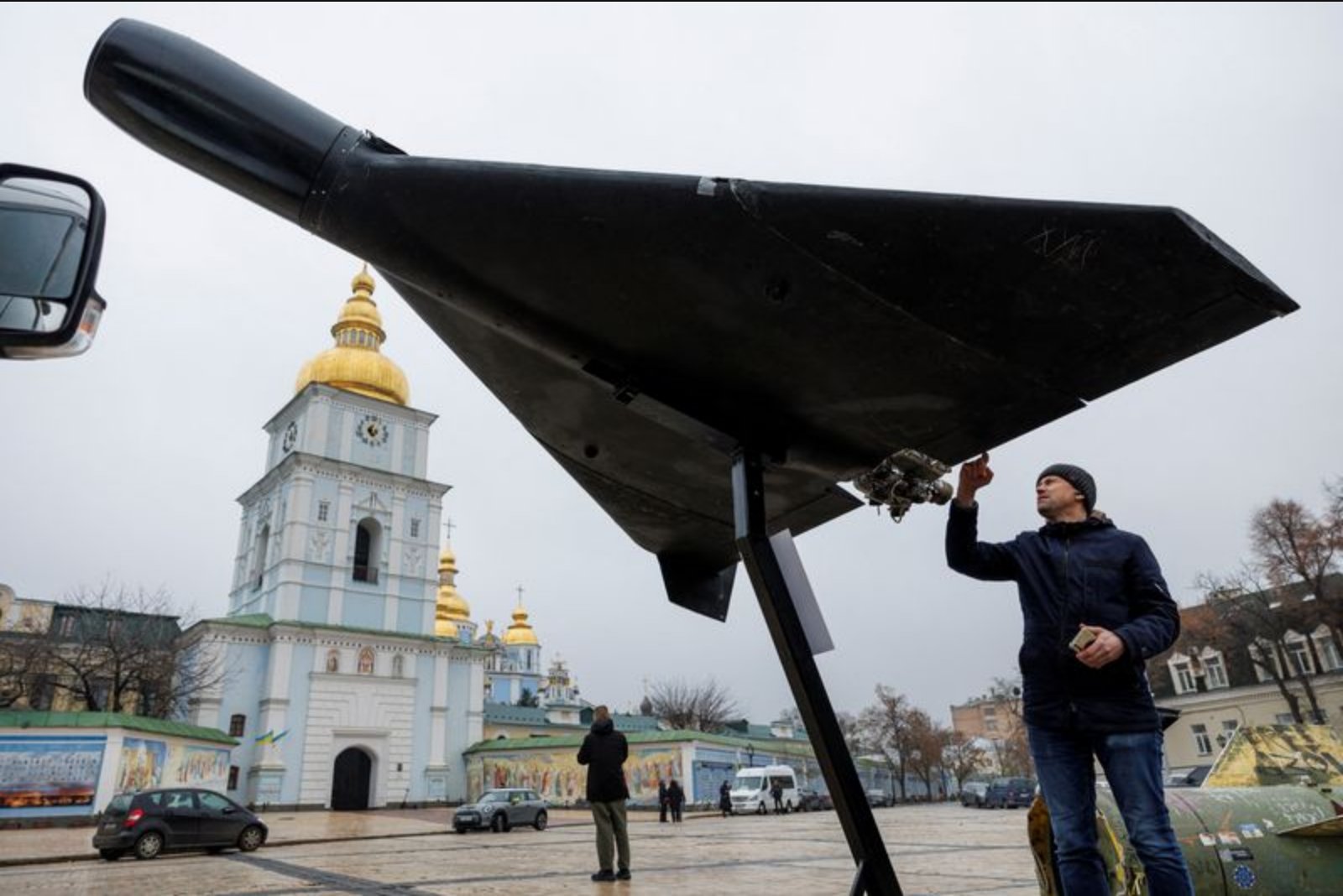
The Shahed - an attack drone design originating in Iran and widely used by Russia under the name Geran - has become one of the most consequential weapons in the skies over Ukraine. Thousands are launched at Ukraine each month, with Russia adapting the basic design to improve navigation, boost propulsion and fit larger warheads. While Ukrainian defences have downed most of these long-range drones, those that penetrate the layers of protection have caused widespread damage to military installations, industrial plants and civilian energy infrastructure, leaving millions without heating or power.
Ukrainian officials have set an ambitious goal of neutralizing 95% of Shaheds and other long-range attack drones. Data compiled by a Ukrainian military charity, Come Back Alive, and Ukrainian air force figures showed that in one month roughly 6,500 long-range drones were launched and more than 1,000 of those got through air defences. In a single month earlier in the campaign the interception rate was reported at just over 85%. Since then, Ukrainian leaders say the interception proportion has climbed toward 90% as the nationwide response is scaled up.
Interviews with a dozen Ukrainian officials, manufacturers and service members involved in the defensive campaign indicate gradual gains are being made, but those involved warn that building a system that operates effectively across the whole country - involving thousands of air-defence teams - will take months. The improvements may also be temporary unless Ukraine continues to respond to changes in Russian drone design and tactics.
Technical adaptation has been a central driver of the cat-and-mouse contest. The first Ukrainian interceptor that managed to destroy a Shahed in early 2025 became ineffective after about four months when Russian operators increased the Shahed’s cruising speed from around 170 kilometers per hour to above 200 kph. Interceptors must travel faster than their targets to intercept them, so Ukrainian developers upgraded interceptor performance to reach speeds of up to 300 kph.
But the challenge did not end there. Approximately 15-20% of the Shaheds Russia sends are now reported to be powered by small jet engines rather than conventional propellers, allowing them to reach speeds near 400 kph. That shift has prompted Ukraine's defence leadership to push for jet-powered interceptor drones, which Ukrainian manufacturers are reported to be developing.
Shaheds first appeared over Ukraine shortly after the invasion began in 2022. The craft resemble miniature planes with pointed noses and triangular wings and are often noted for the distinctive high-pitched sound of their engines, a trait that earned them the nickname "mopeds" among local crews. Russia produces thousands of these drones each month in domestic factories, and they now make up the majority of its long-range aerial attack fleet.
The relative cost differentials between attacker and defender have shaped Ukraine's approach. The Shahed models used by Russia have been estimated by analysts to cost roughly $35,000 each to produce. By contrast, Ukrainian interceptor drones are marketed and built at much lower price points, with unit costs for some models amounting to several thousand dollars and the least expensive variants priced at under $1,500. Many interceptors are simple devices: 3D-printed plastic housings that enclose an explosive payload and are powered by four small propellers.
On the ground, the work of intercepting a Shahed is tense and time-sensitive. Crews typically have only a few minutes from the moment an incoming drone appears on radar before it moves beyond the range at which interceptors can be directed. Operators must steer an interceptor toward the radar blip until the target is visible through the interceptor's onboard camera, then fly the interceptor into the Shahed and detonate the warhead. Success is heavily dependent on visibility. Poor weather can render the camera feed useless. Borys described a night with multiple launches when fog meant his team did not detect a single incoming drone and had to abandon their mission.
To reduce dependence on clear skies and manual direction, Ukraine is working on automated drone guidance systems intended to improve interception capability in adverse conditions.
Beyond crude interceptors, Ukraine's response has evolved into a multi-layered, nationwide system combining electronic warfare, interceptor drones, mobile gun platforms, helicopters and fighter aircraft. Electronic warfare systems, which interfere with the Shahed's navigation, can vary in effectiveness; in some attacks they have neutralized nearly half of the incoming drones. Interceptor drones are reported to account for roughly 40% of the long-range UAVs brought down, up from approximately 25% in the prior winter campaign.
Fighter jets are also engaged in air-defence missions. Each F-16 assigned to this task can reportedly down as many as 10 Shaheds in a single night. Military commanders involved in the defensive effort say the lessons learned from intense drone campaigns last summer and winter have been applied to refine tactics and improve the odds of stopping further attacks.
Yet the Russian side continues to adapt. Commanders describe the use of artificial intelligence to generate novel flight plans and approaches, complicating Ukrainian attempts to anticipate attack patterns. Russia also experiments with mesh networks in which groups of drones relay signals to one another, creating grids that can stretch for over 120 kilometers and help some attacks evade navigation jamming measures.
In response, Ukrainian forces have introduced an operational innovation: remote pilots who control interceptor drones via internet links and can switch between multiple video feeds across regions. Ground teams handle drone assembly and signal antennae, but pilots may be located far from the launch points, allowing experienced operators to be concentrated where they are most needed.
The scale of some Russian barrages has been severe. On nights when over 500 drones are launched, Ukraine has had to rely on a mix of low-cost improvisation and higher-end platforms to protect cities, power plants and arms factories from widespread damage. Military officials and industry participants emphasize that while the interception rate is improving, the campaign remains a technological race in which advantage can shift rapidly.
Those directly involved stress that continued investment in upgraded interceptors, automated guidance, and broader electronic warfare coverage will be essential to maintain and improve the nationwide defence posture. The challenge is operational as well as technical: rolling out sophisticated systems across thousands of teams and ensuring they can operate in all weather and against changing enemy tactics will take sustained effort and time.
Summary
Ukraine has mobilized a broad, evolving defence effort to neutralize Shahed-style long-range attack drones that Russia has used in large numbers. The campaign combines low-cost interceptor drones, electronic warfare, fighter aircraft and remote pilots. Interception rates have improved toward declared targets, but Russian adaptations - faster speeds, jet engines and novel tactics such as mesh networking - create persistent technical and operational challenges.
Key points
- Interception rates have risen from around 85% to near 90% as Ukraine scales a multi-layered defence including interceptors, electronic warfare and fighter jets - sectors impacted include defence manufacturing and energy infrastructure protection.
- Russia has adapted Shahed designs - increasing speed and introducing jet engines - prompting Ukrainian upgrades to interceptor speed and calls for jet-powered interceptors, affecting defence technology and manufacturing supply chains.
- Cost asymmetries influence tactics: attacker Shaheds are estimated to cost roughly $35,000 each, while many Ukrainian interceptors cost only several thousand dollars or less, shaping procurement and resource allocation priorities.
Risks and uncertainties
- Adaptation by Russia could quickly erode current gains - examples include increases in drone speed and the adoption of jet engines that outpace existing interceptors, posing risks to defence procurement and military effectiveness.
- Weather and visibility constraints limit interceptor effectiveness - fog and poor night conditions can prevent visual acquisition of targets, introducing operational risk to air-defence performance and civilian infrastructure protection.
- Scaling a nationwide, multi-layered defence requires time and coordination; rolling out upgrades across thousands of teams may take months and could leave gaps in protection during the transition, affecting energy and industrial sectors dependent on stable power.